
4 min readNew DelhiMar 12, 2026 06:00 AM IST
Last year, director and choreographer Farah Khan reflected on the process of reclaiming her health after years of prioritising work over self-care while sharing her perspective on ageing during an interview with Soha Ali Khan on her YouTube channel.
She looked back at how her appearance had taken a back seat during her busiest professional years. “I see some of my old videos. Though now I feel, ‘Oh my God, I used to be very thin till I had the kids.’ And I had terrible skin, and I would not even go to do a blow-dry because I was working non-stop. Like we used to sometimes shoot day shift, night shift all together and all that. And you know, it’s without the hair tied up and all that… like that. But now, after I hit 50, I decided to look after myself. They say na ‘abhi jab gaadi purani ho jaati hai, uska servicing zyada hota hai. Usko garage mein dikhao.’ (When a car gets old, it needs more servicing. You have to keep taking it to the garage). So I have a skin doctor. I go regularly for hair vitamins and… because you have to (sic).”
She also opened up about becoming a mother at 43 and how that shaped her perspective on ageing. “See, my kids were very young when I hit 50; they were only 7 years old then. But I had my kids at 43. So I was like, when I go to school, my kids should not feel that a grandmother has come to drop them off. So kids also keep us young.” In a lighter moment, she recalled an incident during a family holiday when her husband, Shirish Kunder, was mistaken for her son. “I must tell you, once we had taken the kids for a holiday, and I was literally overweight. And the lady came, Shirish was there, and she said, ‘Can I clean your room? And can you ask your son to leave then?’ And Shirish, he loves it when people do that.”
While her reflections are personal, they echo broader experiences many women face.
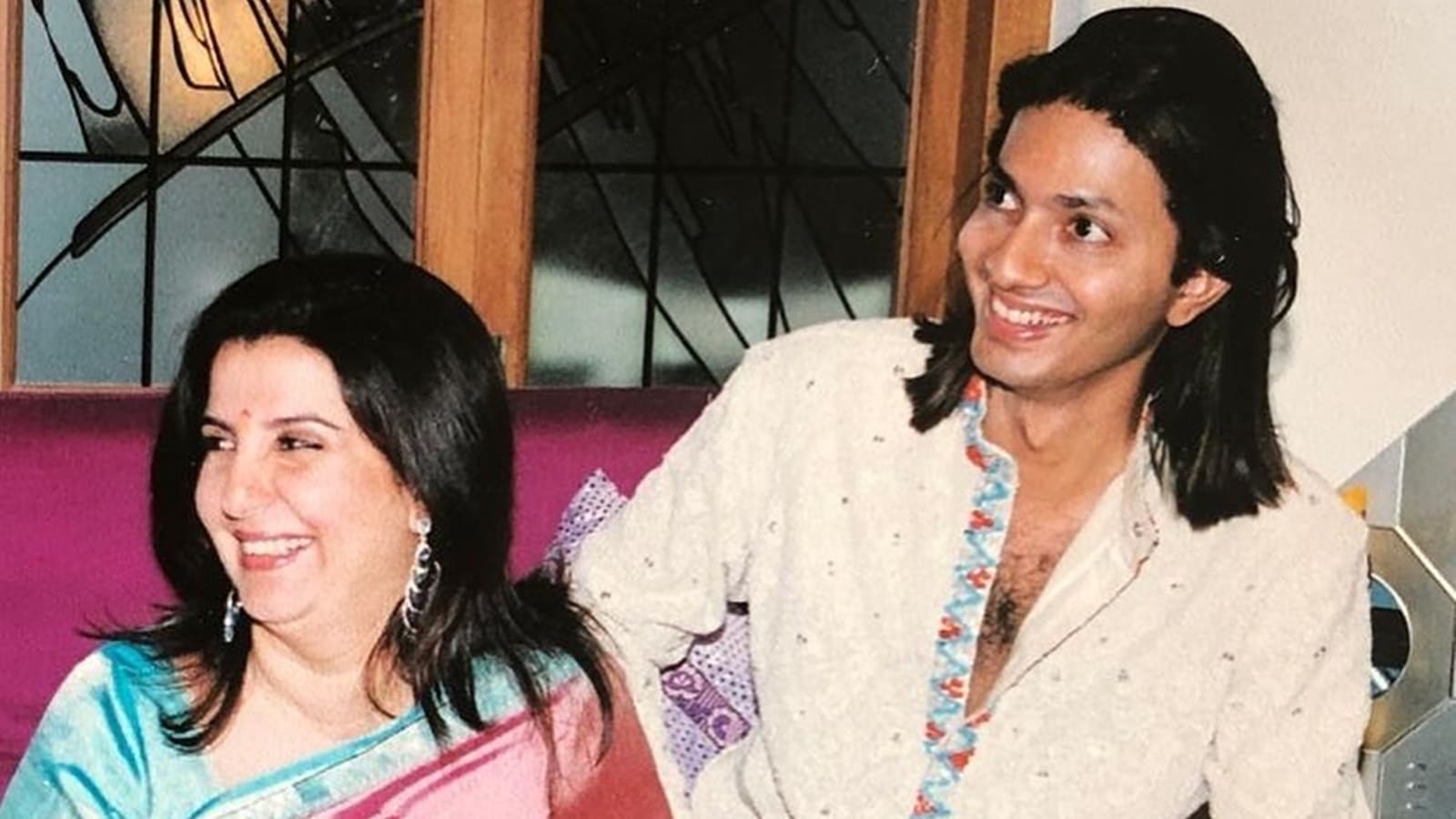
 Farah married Shirish in 2004 at the age of 39 (Source: Express Archives)
Importance of focusing on recovery
Psychologist Rasshi Gurnani tells indianexpress.com, “Late pregnancies often bring shifts like slower metabolism, reduced collagen, fluctuating oestrogen, sleep disruption, and higher fat retention, all of which can affect skin elasticity, mood stability, and physical stamina. Recovery in the 40s and 50s should focus on sustainable rebuilding rather than quick fixes. Strength-based movement helps restore muscle mass and supports hormonal balance, while balanced nutrition aids skin repair and emotional regulation.”
From a psychological lens, she adds, self-compassion is key because the body is adapting to both ageing and motherhood simultaneously. Gentle routines, consistency, and realistic expectations support long-term wellbeing without placing the nervous system under pressure to “bounce back.”
The key to lasting wellbeing is…
Gurnani stresses that procedures like tummy tucks, lymphatic massages, and IV drips are often positioned as recovery tools, “but are not medically necessary for most women.”
Story continues below this ad
Psychologically, she asserts, these interventions may offer reassurance or a feeling of control, but lasting wellness typically comes from lifestyle-based recovery that supports both body image stability and internal regulation.
Navigating body image pressures linked to ageing and motherhood
Ageing and motherhood often shift identity, and comments or comparisons can trigger self-evaluation through a social lens. Psychologically, Gurnani says that women “may internalise external narratives about youth and appearance,” leading to body dissatisfaction. Navigating this requires reframing self-worth away from visual validation toward functionality, resilience, and lived experience.
“Cognitive restructuring helps challenge harsh self-judgements, while emotional boundaries reduce the impact of unsolicited remarks. Acceptance does not mean resignation but recognising the body as evolving rather than declining. Building self-esteem around capability, nurturing roles, and personal growth supports a more stable self-image that is less dependent on external perception,” concludes Gurnani.
DISCLAIMER: This article is based on information from the public domain and/or the experts we spoke to. Always consult your health practitioner before starting any routine.

Leave a Reply