
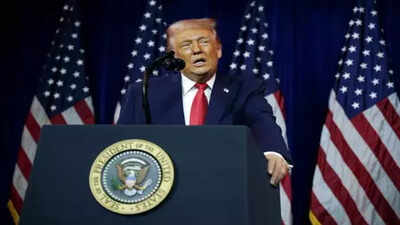
Three Democratic senators have made a request to the President Donald Trump. Senators Tammy Baldwin, Chuck Schumer, and Elissa Slotkin called on Trump to stop Chinese automakers from undercutting American workers and putting national security at risk. They also called on the President to crack down on the manufacture, sale, or operation of these companies and their vehicles on the US soil. The Senators urged the Trump Administration to take action to prohibit Chinese vehicles manufactured or titled in Canada and Mexico from entering the United States and to work with our allies around the world to address the serious threat posed by Chinese vehicles.In the letter, the Senators outlined how America’s automakers, and the supply chains they support, are a vital component of our nation’s economic security. The auto industry is critical to the American manufacturing sector and supports an entire manufacturing ecosystem – including steel, semiconductors, and tires – with the industry amounting to approximately 3% to 5% of United States GDP, and 10.95 million jobs.Here’s the full version of the letter.Dear Mr. President:We write to express our objection to the comments you made indicating that you would welcome Chinese automakers setting up shop in the United States. At the Detroit Economic Forum on January 13, you said “Let China come in.” Previous Administrations, including the First Trump Administration, have already made strides addressing the threat of Chinese autos. Allowing automakers headquartered in China, which operate with backing from the Chinese Communist Party (CCP), to build and sell vehicles in the United States would have far-reaching consequences for our economic and national security. We urge you to stay the course and make it clear that Chinese auto manufacturers and their products present unprecedented dangers to our economic and national security, and their manufacture, sale, or operation on U.S. soil is non-negotiable. Further, we ask that your Administration take further action to prohibit Chinese vehicles manufactured or titled in Canada and Mexico from entering the United States and work with our allies around the world to address the serious threat posed by Chinese vehicles.As you know America’s automakers, and the supply chains they support, are a vital component of our nation’s economic strength. The auto industry is critical to our manufacturing sector and supports an entire manufacturing ecosystem, ranging from the steel used in cars, to the semiconductors used in their technology, to the tires they drive on. This amounts to approximately 3% to 5% of United States GDP, and 10.95 million jobs.We must be clear-eyed that inviting China’s automakers to set up shop in the United States would confer an insurmountable economic advantage impossible for American automakers to overcome, and it would trigger a national security crisis that could never be reversed. China’s automakers do not compete on a level playing field. China’s manufacturing strategy is based on achieving global market dominance built through exploitative and non-market practices across the supply chain, including the repression of independent labor unions, low wages, and nightmarish working conditions. America’s auto industry can compete with peer companies – it cannot compete with a state-backed industrial strategy designed to win at any cost. Allowing China’s automakers to open factories in the United States will only expedite Beijing’s path to global auto industry dominance, while American manufacturing and our workers will pay the price. The Chinese Communist Party’s long-documented state-sponsored use of illegal subsidies eliminates any possibility of a level playing field with the rest of the world. While a new plant opened by a Chinese automaker in the United States may create some assembly and temporary construction jobs, that small number of jobs will not make up for the lasting job loss.For every job on a vehicle assembly line, there are roughly two jobs in the auto parts and supplier network. Thus, if Chinese auto plants develop a presence in the United States, it will alter supply chains drastically. Because Chinese companies like BYD favor vertically integrated supply chains, the increase of Chinese parts, imports and illegally subsidized Chinese steel would directly displace American jobs and production. It would undermine any effort to support American industry through Section 232 and 301 tariffs and manufacturing incentives. Furthermore, allowing Chinese automakers into the country could encourage circumvention of USMCA through Mexico, where China is already cementing an auto supply chain manufacturing presence.The idea of allowing Chinese automakers to manufacture and sell in the United States is especially concerning after Canada recently announced an agreement with China to reduce tariff rates for thousands of Chinese electric vehicles. Canada recently lowered duties from 100% to 6.1% under a quota system for 49,000 Chinese-made vehicles per year, rising to 70,000 per year by 2030. At the United States’ urging in 2024, Canada placed a 100% tariff on Chinese automobiles to align trade policy with the U.S. and to preserve our intertwined auto manufacturing sectors. This was an acknowledgement of our mutual border and shared security interests. Now, that shared vision is in jeopardy and demonstrates Canada’s perception that its interests are no longer aligned with the United States – its closest ally and trading partner. While Chinese EVs only represent 3% of the Canadian domestic market, this warning sign is critical to address. In 2024, Chinese brands accounted for 62% of global electric vehicle market share. Their presence is growing rapidly in Mexico as well. Fewer than 500 Chinese EVs and plug-in hybrid electric vehicles were shipped to Mexico in 2021, but in 2025, that number reached nearly 100,000 with Chinese automaker BYD accounting for 84% of Mexico’s EV imports.The threat to national security posed by the presence of China’s automakers in the United States is grave. The ICTS Connected Vehicle rule appropriately recognized that modern vehicles contain technology that can connect with systems outside of the vehicle itself, sending information about our infrastructure and built environment to external entities. If these vehicles are driven near military sites, government buildings, or power stations, sensitive information could easily be gathered and make its way to the Chinese Communist Party and the People’s Liberation Army. Furthermore, connected vehicles can be controlled remotely, adding an additional layer of security risk. Recently, a public transit operator in Norway found that buses made by Chinese manufacturer Yutong were able to be shut down remotely by the manufacturer. China banned Teslas and other foreign-made EVs from being driven near government buildings for their own national security purposes, which was lifted only after passing China’s internal data security tests. It is imperative we continue to use the ICTS Connected Vehicle rule to address the national security risk posed by connected vehicles.Additionally, China’s automakers and suppliers participate in the People’s Liberation Army’s military-civil fusion strategy, meaning their commercial activities and research support and subsidize the activities of the Chinese military. China emphasizes the development of dual-use technology and integrates civil and military supply chains, to a degree where they are inseparable. The proceeds from each Chinese auto sale will go toward sustaining an industrial base and R&D system that the People’s Liberation Army could employ in a future conflict with the United States. Facilitating further Chinese incorporation into our supply chains, and those of our allies, creates vulnerabilities and choke points that could cripple domestic industries. The United States must continue to build domestic manufacturing capacity and create resilient supply chains like those for semiconductors and critical minerals, and reduce reliance on our adversaries. Inviting China’s automakers to enter the country would do the exact opposite.In February, the Department of Defense named BYD as a Chinese military company under Section 1260H, then withdrew the designation from public view almost immediately, without explanation. That reversal illustrates the risks of delay and indecision. The Administration should move without hesitation to designate BYD and other Chinese automakers as military‑connected entities and ensure those findings are not subject to quiet reversal.Lastly, a key component of China’s strategy for global economic dominance is its abominable treatment of workers. The country’s history of labor repression is underpinned by state-sanctioned forced labor, suppression of wages, the lack of collective bargaining, and state-controlled labor unions. The use of state-sanctioned forced labor in China’s automotive industry and related supply chains, combined with these poor labor conditions, provide an insurmountable economic advantage through exploitation. At BYD’s Changsha plant, workers earn the equivalent of $2 per hour. Even outside of China, BYD has been found to have employing conditions similar to forced labor in a plant in Brazil. The Administration must work eliminate forced labor and other exploitative labor conditions from our supply chains, not invite known offenders to do business.These existential threats are why in 2025 the Department of Commerce’s Bureau of Industry and Security issued a final rule to restrict the import and sale of certain connected vehicles and related hardware/software linked to Chinese connected vehicles to the United States, beginning in Model Year 2027. We urge your Administration to maintain, or if possible accelerate, this timeline and expand these connected vehicle restrictions to commercial vehicles. The United States must reaffirm our clear position – that Chinese vehicles of all types and automakers are not welcome to operate here in any capacity. In addition to banning Chinese connected vehicles, we must work with our allies to counter the global threat posed by Chinese vehicles, and we must spur a new generation of automotive innovation to ensure that U.S. auto industry remains the world’s best.Thank you for your consideration of this urgent matter.

Leave a Reply