
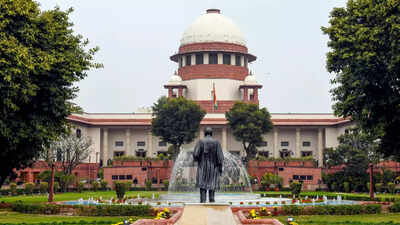
NEW DELHI: The Supreme Court of India on Friday declined to entertain a public interest litigation (PIL) seeking a nationwide policy that would grant menstrual leave to women students and employees.While the court did not examine the issue in detail, it outlined several reasons why it was reluctant to mandate such a policy through judicial intervention. Here are the reasons listed:
Concern over unintended impact on women’s employment
A bench led by Chief Justice of India Surya Kant and Justice Joymalya Bagchi said making menstrual leave compulsory through law could have unintended consequences for women in the workforce.The CJI cautioned that employers might become reluctant to hire women if they were legally required to provide additional paid leave.
Israel Iran War
“Voluntarily given is excellent. The moment you make it compulsory in law, nobody will give them jobs,” he observed during the hearing.The court warned that such a move could end up harming women’s professional opportunities rather than helping them.
Risk of reinforcing gender stereotypes
The bench also expressed concern that legislating menstrual leave could reinforce stereotypes about women being less capable in professional settings.According to the court, framing menstruation as a mandatory ground for leave might lead to perceptions that women are less productive or less reliable in workplaces.“These pleas are made to create fear, to call women inferior, that menstruation is something bad happening to them,” the bench observed.
Court says policy decision lies with government
Rather than directing the government to frame a policy, the court said such issues fall within the domain of policymakers who must consult various stakeholders.However, the bench noted that the petitioner had already submitted a representation to the authorities.The court said the competent authority may examine the representation and consider whether a menstrual leave policy should be framed after consultations.The PIL was therefore disposed of without further directions.
Petitioner’s argument: Some states and companies already allow it
During the hearing, senior advocate M R Shamshad, appearing for the petitioner Shailendra Mani Tripathi, argued that menstrual leave was already being implemented in certain places.He pointed to measures adopted in Kerala, where some educational institutions have introduced relaxations for menstruating students. He also said several private companies have voluntarily adopted menstrual leave policies.The court acknowledged these examples but maintained that voluntary policies were preferable to a mandatory legal requirement.For now, the Supreme Court has left the matter to policymakers rather than intervening directly.

Leave a Reply