
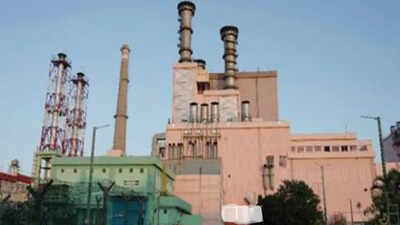
NEW DELHI: India has taken a major step towards nuclear fuel self-reliance after its indigenously developed Prototype Fast Breeder Reactor (PFBR) at Kalpakkam attained criticality, marking the start of a controlled nuclear reaction and advancing the country’s long-term atomic energy programme.The milestone, confirmed on Monday, marks a crucial stage before full power generation begins. Once operational, the reactor is expected to play a key role in India’s plan to scale nuclear power capacity to 100 gigawatts by 2047, from the current level of around eight gigawatts.Prime Minister Narendra Modi described the development as a turning point in India’s nuclear journey. In a post on X, he said, “Today, India takes a defining step in its civil nuclear journey, advancing the second stage of its nuclear programme.”“The indigenously designed and built Prototype Fast Breeder Reactor at Kalpakkam has attained criticality,” he added.
A key step towards energy independence
The PFBR is central to India’s three-stage nuclear programme, particularly the transition to the second stage focused on fast breeder reactors that generate more fuel than they consume.Modi underlined this capability, saying, “This advanced reactor, capable of producing more fuel than it consumes, reflects the depth of our scientific capability and the strength of our engineering enterprise.”The development is expected to reduce dependence on imported nuclear fuel and strengthen long-term energy security as demand continues to rise. Nuclear energy remains a key pillar of India’s clean energy strategy.
What is a fast breeder reactor and how does it work?
A fast breeder reactor (FBR) is designed to produce more fuel than it consumes by using fast neutrons instead of slowed ones. It typically uses plutonium-239 or mixed oxide fuel, while a surrounding blanket of uranium-238 converts into plutonium-239 for reuse.Unlike conventional reactors, FBRs do not use a moderator and often rely on liquid sodium as a coolant. This improves fuel efficiency, extends uranium utilisation, and allows the burning of long-lived nuclear waste.Examples include India’s PFBR, Russia’s BN-800 reactor, and France’s Phénix reactor. However, the technology is complex and expensive, with safety concerns linked to sodium coolant and proliferation risks due to plutonium production.
Why it matters
The project also reflects the dedication of significant number of scientists, engineers, technicians and industry partners who have contributed to the design, fabrication and construction of the reactor using predominantly indigenous technologies and components. Their efforts highlight the nation’s growing capability in advanced nuclear engineering and reinforce India’s commitment to technological self-reliance complying with Atmanirbhar Bharat.Beyond power generation, the fast breeder programme strengthens capabilities in nuclear fuel cycles, advanced materials, reactor physics and large-scale engineering. The expertise developed is expected to support future reactor designs and next-generation nuclear technologies.As India expands its clean energy mix, fast breeder reactors are expected to provide reliable, low-carbon base-load power with higher efficiency. The attainment of first criticality represents not only a technological milestone but also a major step towards a sustainable and self-reliant energy future for Viksit Bharat.
Unlocking India’s thorium potential
A key advantage of fast breeder reactors is their ability to support the eventual use of thorium, a resource India has in abundance.Highlighting this, Modi said, “It is a decisive step towards harnessing our vast thorium reserves in the third stage of the programme. A proud moment for India. Congratulations to our scientists and engineers.”In the breeder process, uranium-238 and thorium-232 can be converted into fissile fuel, enabling both power generation and fuel creation. The PFBR will initially operate using uranium-plutonium mixed oxide fuel while paving the way for thorium-based cycles.
Built indigenously under Aatmanirbhar push
The reactor has been designed and constructed by Bharatiya Nabhikiya Vidyut Nigam Limited, reflecting India’s push for self-reliance in critical technologies.More than 200 Indian industries, including MSMEs, contributed to the project. The company was set up in 2003 to develop advanced nuclear reactors such as the PFBR.Officials said the reactor includes advanced third-generation safety features, including passive systems designed for safe shutdown during emergencies.
What criticality means
Attaining criticality indicates that a sustained nuclear chain reaction has begun under controlled conditions. The reactor will now undergo testing and gradual power increase before reaching full capacity.The Kalpakkam reactor had earlier reached the core loading stage in 2024, when nuclear fuel was first introduced.
Global significance and next steps
Once commissioned, India will join a small group of nations with operational fast breeder reactors, with Russia currently the only country running such reactors commercially.The next phase involves scaling up operations and integrating the reactor into the national grid, supporting India’s goals of reducing carbon emissions while meeting rising energy demand.With the PFBR moving closer to full operation, India’s long-term plan to utilise its thorium reserves is gaining momentum, marking a key step towards a sustainable and self-reliant nuclear energy future.

Leave a Reply