
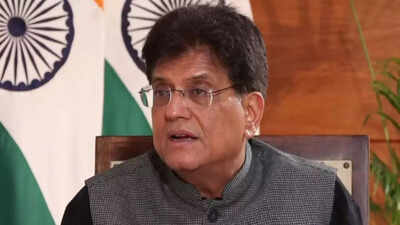
NEW DELHI: The govt on Thursday said amendments in the White House fact sheet on the framework for an interim India-US trade deal reflected the shared understandings contained in the earlier joint statement that formed the basis of the agreement reached by both sides.The fact sheet issued days after the joint statement had stirred up a controversy as the text seemed to deviate from the joint statement issued on Feb 7. MEA spokesperson Randhir Jaiswal said, “Both sides will now work towards implementing this framework and finalising the Interim Agreement.”India will get concessional duty access for garments made by using American yarn and cotton under its trade agreement with US, similar to the facility extended to Bangladesh, commerce minister Piyush Goyal said on Thursday.“Just as Bangladesh enjoys a benefit where, if raw materials are purchased from the US, processed into fabric, and then exported, they are subject to zero reciprocal tariffs, India will also receive the same facility,” he said. “Once our interim agreement is finalised, you will be able to see this clearly in the fine print,” Goyal told reporters.His remarks come amid concerns within sections of textile industry after Bangladesh secured a 19% reciprocal tariff from US, along with exemptions for garments made using American cotton and man-made fibre. While India’s reciprocal tariff stands at 18%, exporters were watching whether Dhaka’s additional exemption would give it a pricing edge.Goyal said the agreement was carefully calibrated. “Around more than almost all the products grown by Indian farmers, from millets to meat… about 90-95% of products grown by farmers are out of the US trade deal,” he said. “What India needs and what we import even now, and items that will not hurt farmers in India in any way — only those items were opened in a calibrated manner after careful consideration that will ultimately benefit our farmers,” he said.He added that the arrangement would also benefit Indian farmers, as many processed products could find markets in the various nations with which an FTA was signed, such as the US, the EU, Switzerland and Norway.The minister said the deal with the US strikes a balance between protecting sensitive sectors and expanding export opportunities, particularly in labour-intensive industries like textiles and apparel.Goyal’s clarification is expected to allay fears that Indian exporters would be at a disadvantage. Trade research body GTRI had said earlier that even in Bangladesh’s case, the benefit may be limited, as it applies only to the value of US-origin raw material, which typically accounts for a fraction of overall garment imports of Bangladesh.

Leave a Reply