

NEW DELHI: India remains among the countries with the highest number of maternal deaths globally, a major study published in The Lancet Obstetrics, Gynaecology & Women’s Health has found, with progress slowing down post 2015 after years of rapid decline.Around 2.4 lakh women died globally in 2023 due to pregnancy and childbirth-related causes, the study estimates. India accounted for about 24,700 of the 2.4 lakh deaths, placing it among the highest-burden countries alongside Nigeria, Pakistan and Ethiopia.India’s long-term numbers reflect both progress and persistent gaps. Maternal deaths fell sharply from about 1.19 lakh in 1990 to 36,900 in 2015 and further to 24,700 in 2023.
Israel Iran War
And the maternal mortality ratio declined from 508 in 1990 to 116 per one lakh live births in 2023, indicating substantial gains but also unfinished work.
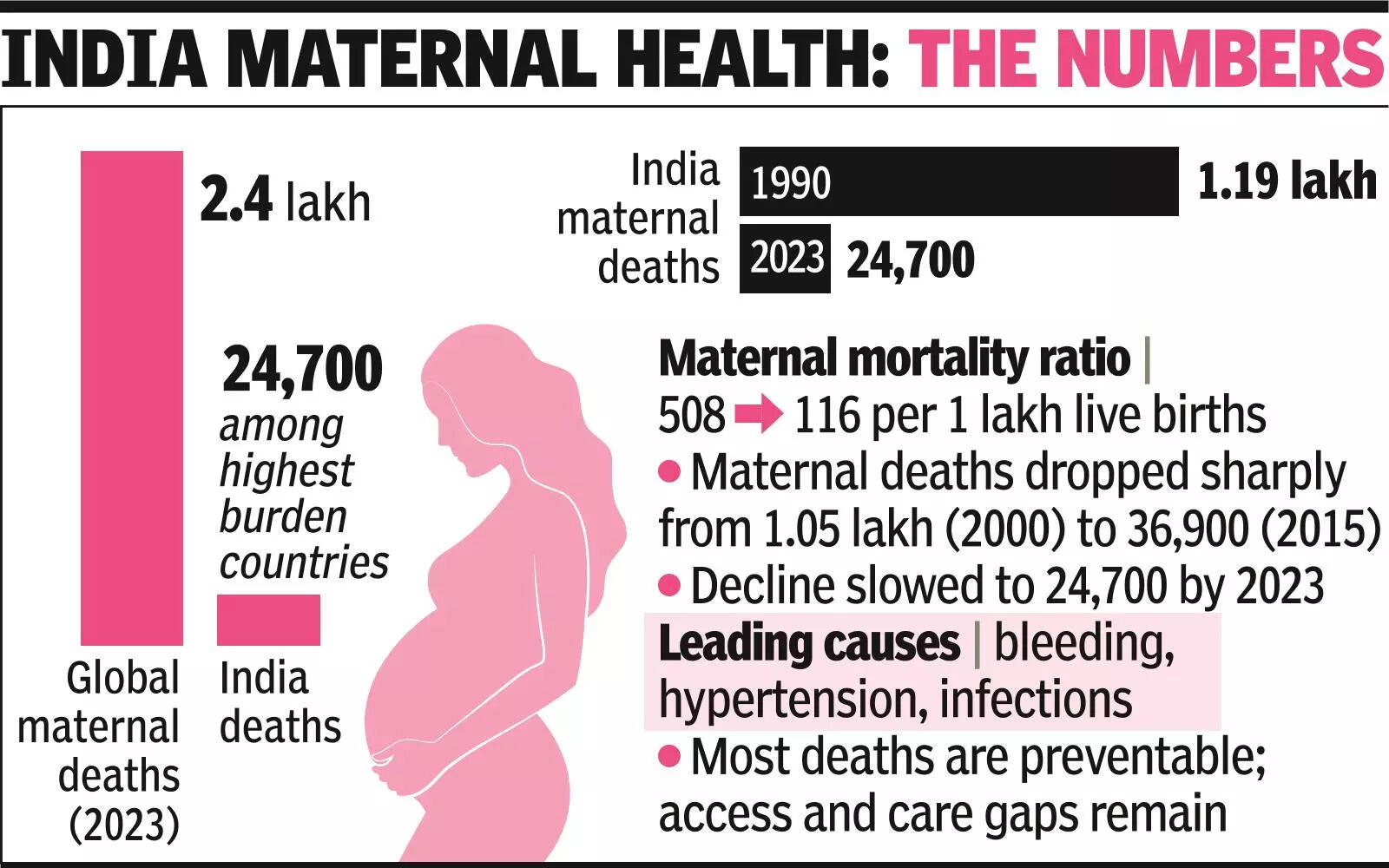
Deaths Continue To Be Driven By Largely Preventable Causes, Says Study Published In The Lancet
“Maternal mortality has declined significantly since 1990 due to better awareness, institutional deliveries and govt programmes, although progress remains uneven across states, with some like Kerala and Tamil Nadu nearing global targets while others such as Uttar Pradesh, Bihar and Madhya Pradesh continue to report higher maternal mortality,” said Dr Abha Majumdar, director, Centre of IVF & Human Reproduction, Sir Ganga Ram Hospital.The steepest decline happened between 2000 and 2015, driven by expanded institutional deliveries, improved antenatal care and wider public health interventions. However, the pace has slowed down in recent years, pointing to systemic challenges that are harder to address.The study points to a persistent pattern in India, where deaths continue to be driven by largely preventable causes such as haemorrhage, hypertensive disorders, infections and complications linked to pre-existing conditions. Delays in receiving care, gaps in quality of services and uneven access across regions remain key concerns.Globally, the maternal mortality ratio stood at 190 deaths per one lakh live births in 2023, still far above the Sustainable Development Goal target of fewer than 70. More than half of the countries have not reached this level yet. Researchers also flagged the impact of the Covid-19 pandemic, which disrupted maternal health services and contributed to additional deaths in several regions during peak years.Experts say the findings underline the need for India to sustain gains in maternal health, strengthen public health systems and improve quality of care, particularly for high-risk pregnancies and underserved populations. With progress slowing down and risks persisting, the study warns that without renewed focus, countries may fall short of the 2030 goal of making childbirth safer for all women.

Leave a Reply