
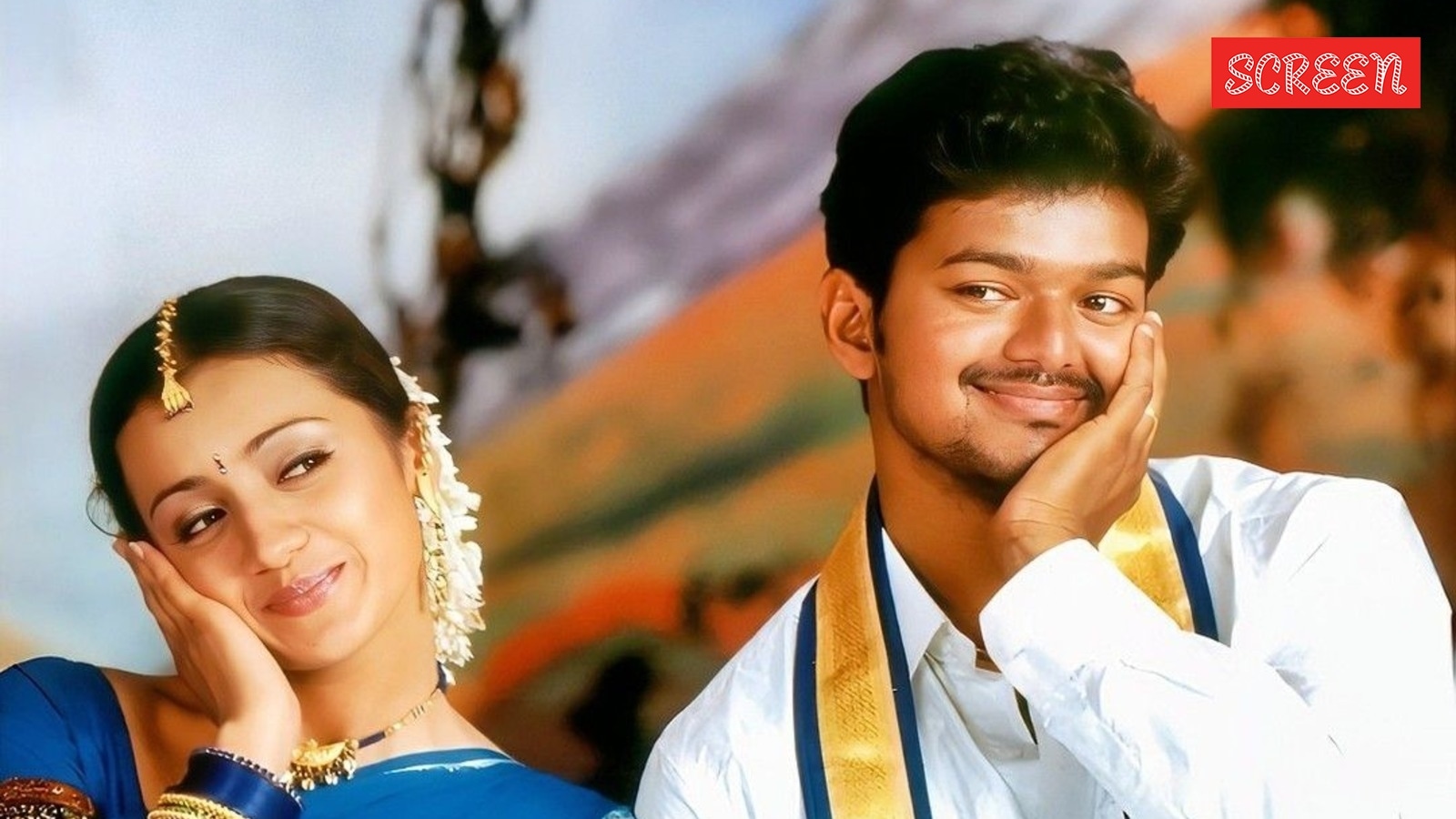
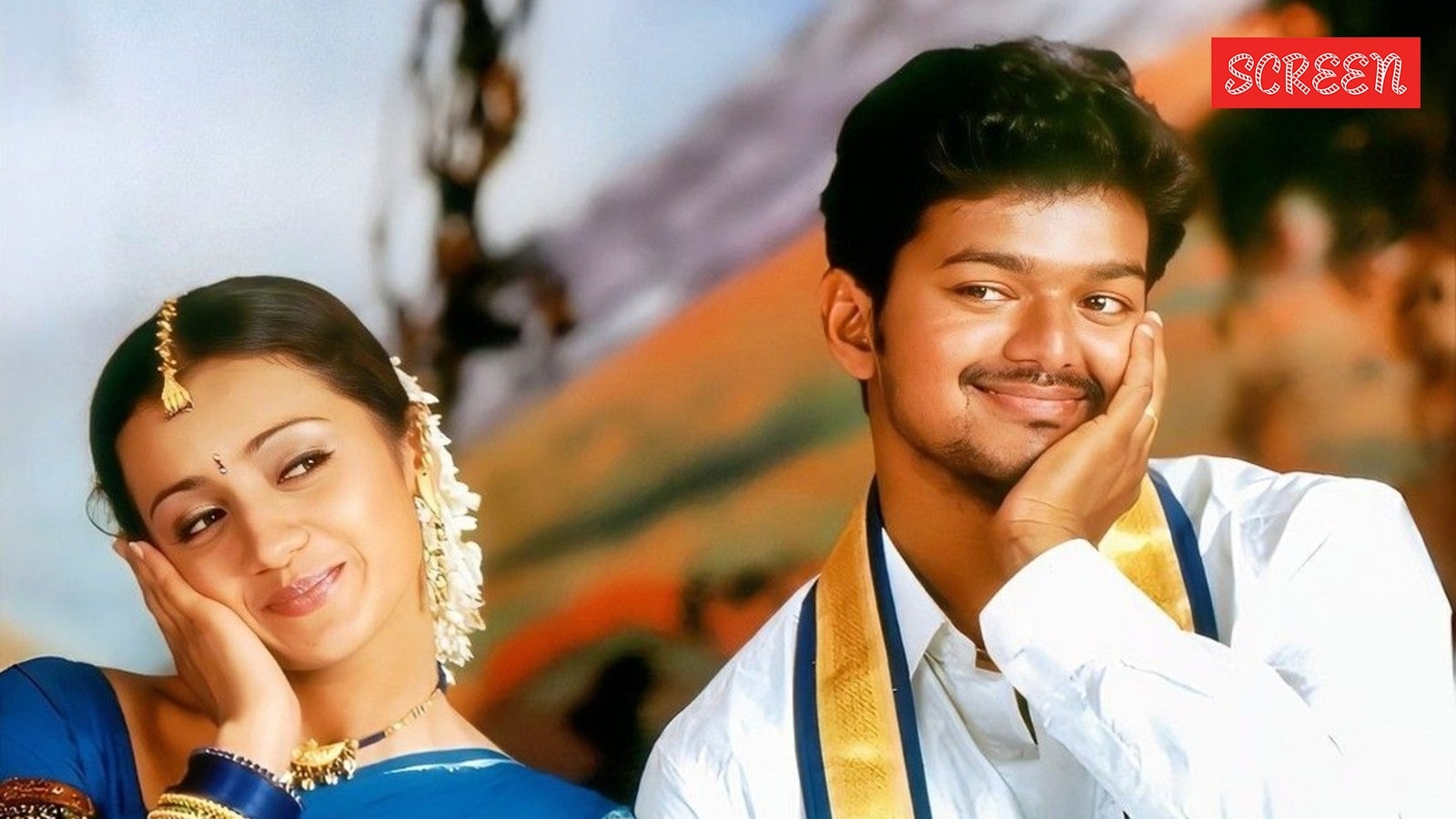
The story of how Ghilli came to be is, in many ways, the story of how the best accidents in Tamil cinema happen. Director Dharani had watched the Telugu blockbuster Okkadu (2003), directed by Gunasekhar and starring Mahesh Babu in the lead, and immediately saw in it the bones of a Tamil film waiting to be made. For the lead roles, Vikram and Jyotika were the first choices, a pairing that made sense given the star equity both carried at the time. Due to other commitments, both were unavailable, and the movie almost did not happen. Then Vijay and Trisha were brought in to replace them. It was a replacement that nobody made much of in the moment.
Vijay, at the time of Ghilli’s release in April 2004, was at an interesting stage of his career. The early 2000s had brought Tamil cinema a new generation of directors and a new kind of filmmaking, with names like Gautham Vasudev Menon, Selvaraghavan, and Ameer redefining what a Tamil film could look like and what it could say. The mass-action genre was under no threat of extinction, but the emergence of these new voices meant that actors like Vijay were operating in a more competitive landscape than they had been even a few years earlier, with both Suriya and Vikram gaining significant critical and commercial ground.
In Ghilli, Vijay plays Saravanavelu aka Velu, a state-level kabaddi player from Chennai who travels to Madurai for a tournament, crossing paths with Dhanalakshmi, played by Trisha, who is desperately trying to escape from Muthupandi, a powerful local factionist determined to claim her as his own. What follows is a sustained chase across two cities, blending sports drama, comedy, and action in a way that keeps the film moving at a pace that rarely allows you to question its logic.
Prakash Raj reprised his villain role from the original Telugu version, bringing to Muthupandi an intensity and unpredictability that gave the film a genuine antagonist rather than a cardboard obstacle for the hero to overcome. His habit of addressing Dhanalakshmi as “Chellam,” spoken with a possessive menace that made the word feel entirely different from the term of endearment it normally is, entered the cultural vocabulary in a way that spoke to how completely the veteran actor owned the character.
For Trisha, who had announced her arrival with Mounam Pesiyadhe in 2002 but had not yet found the film that would properly establish her as a consistent leading presence in Tamil cinema, Ghilli was the role that changed how she was perceived within the industry.
“Appadi Podu” became something beyond a film song, spreading across South India in the way that only a handful of songs from any given decade manage to do. Following the internet phenomenon of “Kolaveri Di” in 2011, “Appadi Podu” was cited alongside “Oh Podu”, “Nakka Mukka”, and “Ringa Ringa” as one of the South Indian songs considered to have achieved genuine national mainstream reach.
Story continues below this ad
Ghilli became the highest grossing Tamil film of 2004 and the first in the industry’s history to cross Rs 50 crore domestically, a benchmark that placed it in a different category from anything Tamil cinema had produced up to that point commercially. It ran for well over 200 days in theaters.
The success of the pairing was not treated as a one-off. Vijay and Trisha went on to work together in Thirupaachi in 2005, Aathi in 2006, and Kuruvi in 2008, making them one of the most consistently paired actors in Tamil cinema during that period. Each film found a slightly different register for the pairing.
The fifteen years that followed Kuruvi were marked by notable silence between the two on screen. Their reunion, when it finally arrived with Lokesh Kanagaraj’s Leo in 2023, was treated by the industry and by audiences as an occasion worth marking in its own right, a recognition of how much ground the pairing had covered and how long the gap between them had been.
Even before Leo brought them back together on screen, Ghilli itself had kept finding new audiences. Its 4K re-release in 2024 set records for the highest-grossing re-release in Indian cinema history, earning Rs 32 crore worldwide and becoming one of the highest-grossing Tamil films of that year despite having first released two decades earlier. The film returned to theaters once more in February 2026 for a third theatrical run, once again finding audiences willing to pay to watch something they have already seen, which is perhaps the clearest measure of what a film has genuinely meant to the people who grew up with it.

Leave a Reply