
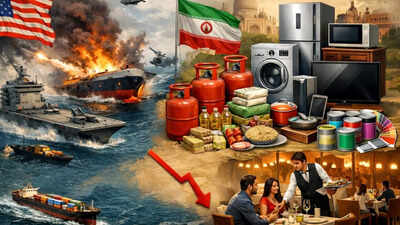
US-Iran war impact: The ripple effects of the ongoing Middle East tensions, LPG supply issues, rising oil prices and closure of Strait of Hormuz are being felt across industries in India. India’s manufacturing sector is on high alert as the war involving Iran threatens to disrupt key maritime routes used for global trade.For factories whose operations depend heavily on raw material supply chains, energy flows and shipping routes that pass through volatile regions, the situation has turned into a cautious wait-and-watch phase.The scarcity of commercial LPG has emerged after shipments from the Gulf region were disrupted amid the ongoing conflict in West Asia. India relies heavily on imports from this region for its LPG requirements.
Israel Iran War
How is the ongoing US-Israel-Iran war impacting India Inc? We take a look:1. Auto industryThe escalating crisis has prompted automobile manufacturers and component suppliers to urgently evaluate their dependence on supply chains connected to the Gulf region.Leading car and two-wheeler manufacturers have circulated advisories to their vendor networks, urging them to review exposure to critical inputs that pass through Gulf ports. These include aluminium alloys, copper, petrochemical derivatives, PVC resins, lubricants, adhesives and electronic components.The energy shortage is creating difficulties for automakers and their supplier networks, including foundries, forging units and paint shops. Switching from gas to oil as a fuel source requires additional capital investment, regulatory approvals and time, which many smaller units do not have.2. Consumer goods & electronicsExporters in consumer goods and electronics have already begun facing direct disruptions, with shipments suspended and production lines halted as rising war-risk surcharges erode profit margins. Industry associations have started approaching the government for urgent assistance to ensure adequate supplies of industrial fuel.Electronics contract manufacturers have paused production lines meant for overseas markets. Godrej Appliances and Haier Appliances India have also revised their production plans. Consumer goods producers have started reducing output tied to exports after suspending shipments to the Gulf and certain European markets. 3. Gas distributorsCity gas distributor Adani Total Gas has directed commercial and industrial customers to restrict natural gas consumption to 40% of their contracted volumes. The company warned that any usage beyond that threshold would be billed at significantly higher spot market rates, said an ET report. Contracted prices stand at about ₹40 per standard cubic metre, compared with spot LNG prices of nearly ₹120.Last week, Gujarat Gas declared force majeure on certain gas supply agreements after supplies of regasified LNG tightened sharply. 4. MedicinesAccording to an ET report, medicine prices could rise following a sharp increase in the cost of essential raw materials, or active pharmaceutical ingredients (APIs), which have surged about 30% over the past two weeks. The spike has largely been attributed to a shortage of container vessels after the Iran war disrupted global shipping.Senior industry executives said the scarcity of ships has slowed the movement of raw materials from China, the largest supplier to Indian pharmaceutical manufacturers. This disruption could affect domestic production and may also lead to higher medicine prices if companies pass the increased input costs on to consumers.Prices of several important inputs have risen sharply, with some increasing by more than 60%. For example, glycerine prices have climbed 64% since December, while the cost of paracetamol has increased by 26%.5. Ceramics industryIndian Oil Corp has also stopped supplying propane, a decision that could severely affect the ceramics industry, where 70–80% of manufacturers rely on propane.6. FMCGFast-moving consumer goods companies such as Parle Products, Emami and Marico, which have operations in the Gulf region, are also experiencing the impact.Packaged food manufacturers across India have either suspended or scaled back production at facilities that depend on LPG due to a severe shortage of the fuel. Some companies have also reported disruptions in the availability of alternatives such as piped natural gas.“Manufacturing in plants that use LPG has been stopped because there is no supply,” said Mayank Shah, vice president at biscuits and confectionery major Parle Products. He added that concerns are now extending to other fuels as well, with rationing being imposed even on PNG and other options that are also becoming difficult to obtain.Deepak Agarwal, managing director of Bikaji Foods, said the snacks and sweets manufacturer is trying to shift production wherever possible away from gas-based burners toward equipment such as induction systems, kettles and fryers.“For sweets and cookies which rely on cooking gas, we are reducing stocks,” he said.7. FertilizersSeveral fertiliser producers in India are bringing forward their annual plant maintenance shutdowns as supplies of LNG have been disrupted due to the ongoing conflict in West Asia, according to industry executives.“As supplies of LNG have been cut down, we are moving our annual shutdown for repair and maintenance work from April to mid-March,” a leading urea manufacturer told ET. The executive added that the company had originally planned to use March to build up inventories and prepare stock for the upcoming kharif season.LNG serves as the primary input for producing ammonia, which is a key component in the manufacture of urea.8. Paint makersProducts derived from crude oil are widely used in the manufacture of paints and make up roughly one-third of the industry’s overall input costs. Domestic paint manufacturers, which had been anticipating a stabilisation in earnings after a phase of intense competition, are now encountering new challenges as rising input costs threaten to put pressure on margins.“Retaining profitability guidance becomes more challenging if crude oil remains elevated,” said Poonam Upadhyay, director at Crisil Ratings. “While the impact will be with a lag, higher raw-material costs would gradually start feeding into the cost structure,” she said.Several key materials used in paint production, including solvents, binders, resins and titanium dioxide, are derived from crude oil.9. Restaurants and caterersWith LPG supplies directed more for domestic use, commercial LPG cylinders are facing a supply issue. Restaurants around the country have said that they are being forced to curtail operations.The shortage of LPG is also beginning to disrupt a wide range of social and hospitality events, including large weddings, iftar gatherings and high-end hotel banquets. Hotels, catering services and banquet venues are rushing to arrange additional cylinders, often paying higher prices or switching to alternative fuels in order to continue operations. Some businesses have also started reducing the scale of their menus in response to the supply constraints.10. Positive impact: Induction cooktops gainQuick commerce platforms have witnessed a sharp rise in demand for induction cooktops. “We have seen a 10x spike in induction sales today compared to business-as-usual,” an Instamart executive said. The company has also been pushing targeted notifications to users to highlight the offers.Tata-owned BigBasket reported a similar surge in demand, noting that sales of induction cooktops had increased fivefold.Ecommerce platforms have also recorded a rise in purchases as LPG supply constraints and higher prices prompt consumers to seek alternatives.

Leave a Reply