
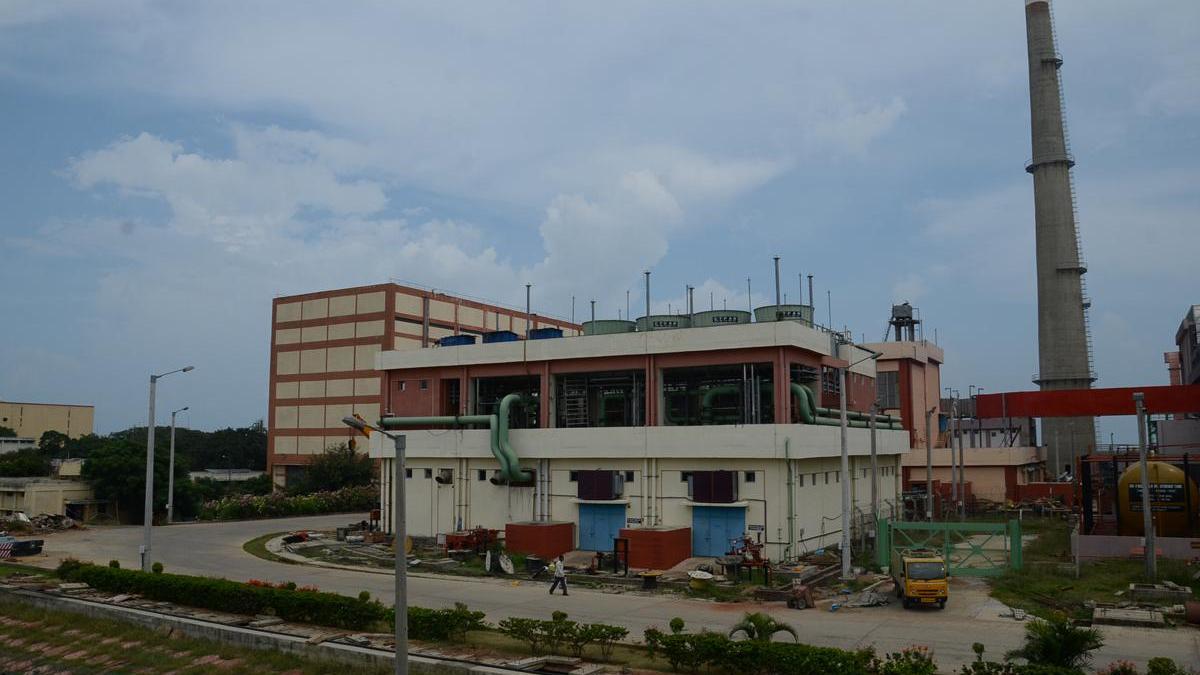
Marking a significant step forward in India’s nuclear power programme, Prime Minister Narendra Modi, via a post on X, late on Monday (April 6, 2026), said that the prototype fast breeder reactor (PFBR) at Kalpakkam, Chennai, had achieved ‘criticality.’
This means that the nuclear reaction in the reactor had become safely self-sustaining and was on its way to being able to produce electricity.
Also read: Is India finally entering stage II of its nuclear programme? | Explained
“Today India takes a defining step in its civil nuclear journey advancing the second stage of its nuclear programme…the PFBR at Kalpakkam has attained criticality…it is a decisive step towards harnessing our vast thorium reserves,” he posted.
While it will be some months before the PFBR is powered up to its full capacity and even longer it produces useful electricity — multiple experiments have to be conducted at low power to check if it is running as expected which must be evaluated by the Atomic Energy Regulatory Board (AERB), which must give its go-ahead for commercial power operation – this is the beginning of the second stage of India’s nuclear programme.
Since it was first formally approved as a project by the government in 2003, it has taken over two decades to reach this stage.
India’s nuclear reactors are heavily dependent on importing enriched uranium. India’s three-stage programme, conceived in the 1950s, envisages being able to be independent of imports and be energy secure through the use of thorium, of which has vast stores. The PFBR serves as an essential bridge.
“This is a historic moment,” Anil Kakodkar, Member, Atomic Energy Commission and former head of the Department of Atomic Energy told The Hindu, “What this means is that we are now on our way to extract 80-100 times more energy from a given quantity of uranium.”
The PFBR is a 500 MWe sodium-cooled, pool-type fast breeder reactor designed by the Indira Gandhi Centre for Atomic Research (IGCAR) and built by Bharatiya Nabhikiya Vidyut Nigam Limited (BHAVINI), both operating under the Department of Atomic Energy (DAE).
Unlike conventional thermal reactors, the PFBR uses Uranium-Plutonium Mixed Oxide (MOX) fuel. The core of PFBR is surrounded by a blanket of Uranium-238. Fast neutrons convert fertile Uranium-238 into fissile Plutonium-239, enabling the reactor to produce more fuel than it consumes. The reactor is designed to eventually use Thorium-232 in the blanket. Through transmutation, Thorium-232 will be converted into Uranium-233, which will fuel the third stage of India’s nuclear power programme.
Currently India has a fleet of 18-20 Pressurised Heavy Water Reactors (PHWRs) that use natural uranium as fuel and produce plutonium-239 (Pu-239) as a by-product in spent fuel. India’s full fleet of 23 nuclear reactors have a combined capacity of 7.48 GWe.
In the second stage, plutonium recovered from Stage I spent fuel is combined with uranium-238 in FBRs. These reactors “breed” more fissile material than they consume by converting fertile U-238 into Pu-239 and, eventually, converting thorium-232 into fissile uranium-233 (U-233).
“Beyond energy generation, the fast breeder programme strengthens strategic capabilities in nuclear fuel cycle technologies, advanced materials, reactor physics and large-scale engineering. The knowledge and infrastructure developed through this programme will support future reactor designs and next-generation nuclear technologies,” the science ministry conveyed in a statement.
A significant technological challenge that has led to delays in the PFBR is the use of liquid sodium as a coolant to manage the extremely high heat from fissioning uranium atoms in the PFBR. In India’s current reactors, the heat is largely absorbed by ‘ heavy water’ or in some cases ordinary water.
Sodium is a great choice: Its heavier atoms allow fast neutrons to persist and is more suitable for breeding greater quantities of plutonium. It can efficiently remove heat from the reactor core and can keep the reactor safe for longer even if coolant flow is temporarily lost; the range between its melting and boiling is wider than water, meaning larger safety margins. It eliminates the thick, high-pressure containment vessels required by water-cooled reactors, enabling thinner vessel walls and more compact designs and can ultimately, produce more electricity for every unit of heat produced. It also does not corrode the stainless steel reactor components and in fact can protect metals from corrosion, provided the sodium is kept pure and free of oxygen impurities.
On the flip side, sodium is extremely chemically reactive. It burns on contact with air and reacts violently with water, producing sodium hydroxide and hydrogen gas (an explosion risk). This requires sealed, inert-atmosphere systems and rigorous leak prevention. The 1995 Monju accident in Japan, where a sodium leak caused a fire and 15-year shutdown, underscores this risk. Liquid sodium is opaque, making visual inspection of the reactor core impossible. Operators must rely on specialised ultrasonic and electromagnetic inspection and monitoring techniques. The coolant must be kept exceptionally free of oxygen, hydrogen, and carbon impurities. Contaminants can form corrosive compounds or solid precipitates that clog pipes and damage components. The reactor design uses two sodium ‘loops,’ specialised pumps (including electromagnetic pumps), inert gas cover systems, advanced leak detection, and stringent quality requirements – all of which add to the capital cost and operational complexity compared to conventional water-cooled reactors.
Before achieving criticality, the PFBR was loaded with fuel on October 18, 2025. Once fully operational, the PFBR is expected to generate 500 MWe of electricity with a design life of 40 years. Current plans call for building six FBR-600 units, co-locating two reactors at each site to share common auxiliary systems and reduce costs. The first twin unit is planned at the BHAVINI premises at Kalpakkam, close to the PFBR.
Simultaneously, the Fast Reactor Fuel Cycle Facility (FRFCF) at Kalpakkam, which is designed to reprocess spent fuel from fast breeder reactors, is under construction and is expected to be completed by December 2027. This facility will be essential for closing the fuel cycle and extracting bred plutonium for use in future FBRs, according to documents on the DAE website.

Leave a Reply