
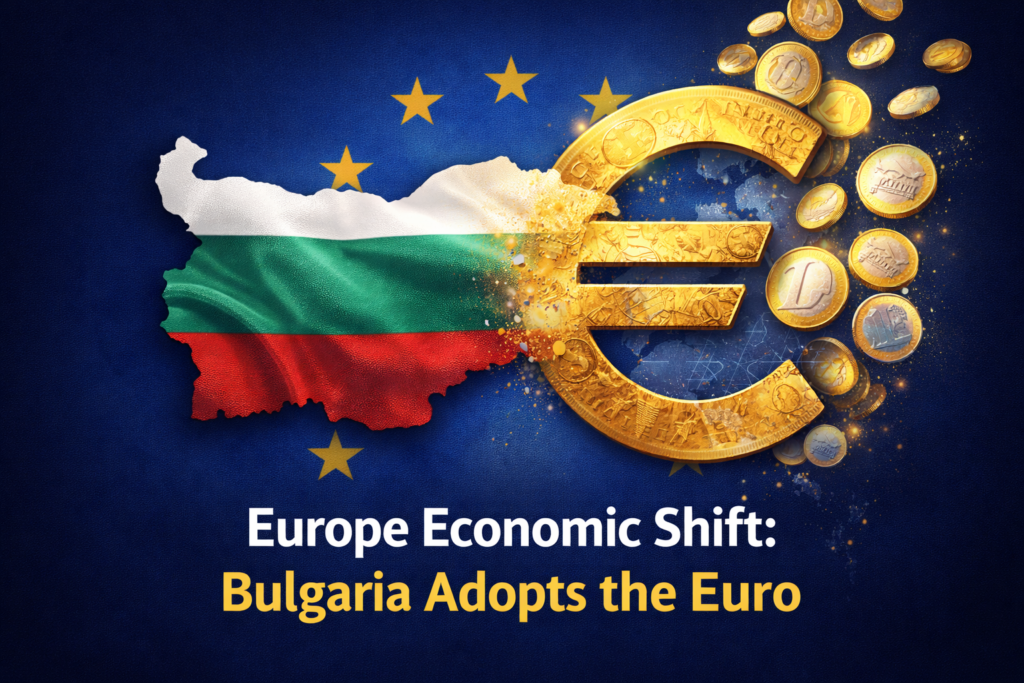
Bulgaria has taken a major step in its economic journey by officially adopting the euro as its national currency, marking a significant shift in the country’s financial and monetary framework. The move aligns Bulgaria more closely with the European Union’s core economies and represents a milestone in its long-standing integration process.
With the adoption of the euro, Bulgaria transitions away from its national currency, the lev, and becomes part of the eurozone’s shared monetary system. The change is expected to simplify cross-border trade, reduce currency exchange risks, and enhance investor confidence in the country’s economy.
Economic and Financial Impact
Economists note that joining the eurozone can help strengthen price transparency, lower transaction costs for businesses, and improve financial stability. Bulgarian companies engaged in trade with other EU nations are expected to benefit from smoother financial operations and greater market access.
At the same time, authorities have emphasized measures to ensure a smooth transition, including price monitoring and public awareness campaigns, to protect consumers during the currency changeover.
Public and Regional Significance
The adoption of the euro places Bulgaria among the growing number of EU member states using the single currency, reinforcing economic cooperation within Europe. While public opinion has shown mixed reactions, the government has stated that the move supports long-term economic growth and deeper European integration.
A Broader European Context
Bulgaria’s transition reflects a broader trend of economic alignment within the European Union, as member states seek stronger coordination in response to global economic challenges. Analysts say the shift could enhance Bulgaria’s role in regional trade and finance in the years ahead.

Leave a Reply