
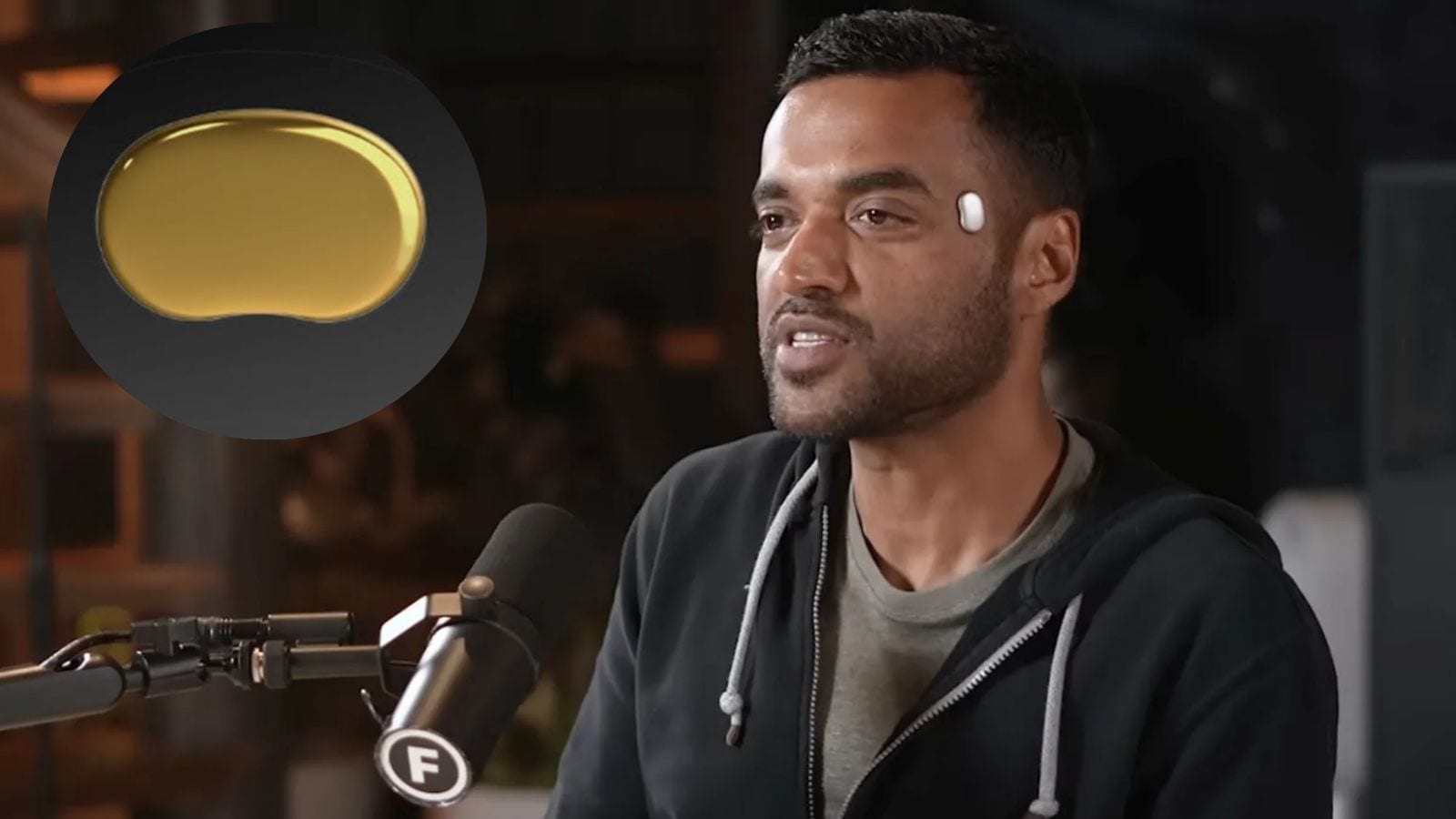
Deepinder Goyal’s recent appearance on a podcast drew public attention and sparked curiosity, as he was seen wearing a small device — named Temple — fixed near the temple region of the head. According to several reports, the experimental wearable health gadget, developed by a private research initiative backed by the Zomato founder and CEO, continuously measures brain oxygenation, which indirectly reflects blood flow to the brain when the person is upright and moving, or sitting for long durations.
According to Goyal, the core idea is “Gravity Ageing Hypothesis“, which aims to track minute fluctuations in cerebral blood flow and oxygenation, generating real-time data that could help researchers understand how posture, activity and lifestyle affect brain health over time.
Goyal has mentioned previously that he has been wearing the device for nearly a year as part of ongoing testing. Notably, the device is not currently available for sale; it is only positioned as a research prototype, not a medical product.
Story continues below this ad
Given the ongoing research, experts on social media have cautioned against relying on what you see.
Taking a dig at the device’s “0 scientific standing”, Dr Suvrankar Datta, an AI researcher and radiologist from AIIMS Delhi, wrote on X, “As a physician-scientist and one of the earliest researchers in India in Arterial Stiffness and Pulse Wave Velocity (2017) which predicts cardiovascular mortality, I can assure you that this device currently has 0 scientific standing as a useful device and do not waste your hard earned money to buy fancy toys billionaires can afford to waste money on. If you are one, then go ahead.”
Story continues below this ad
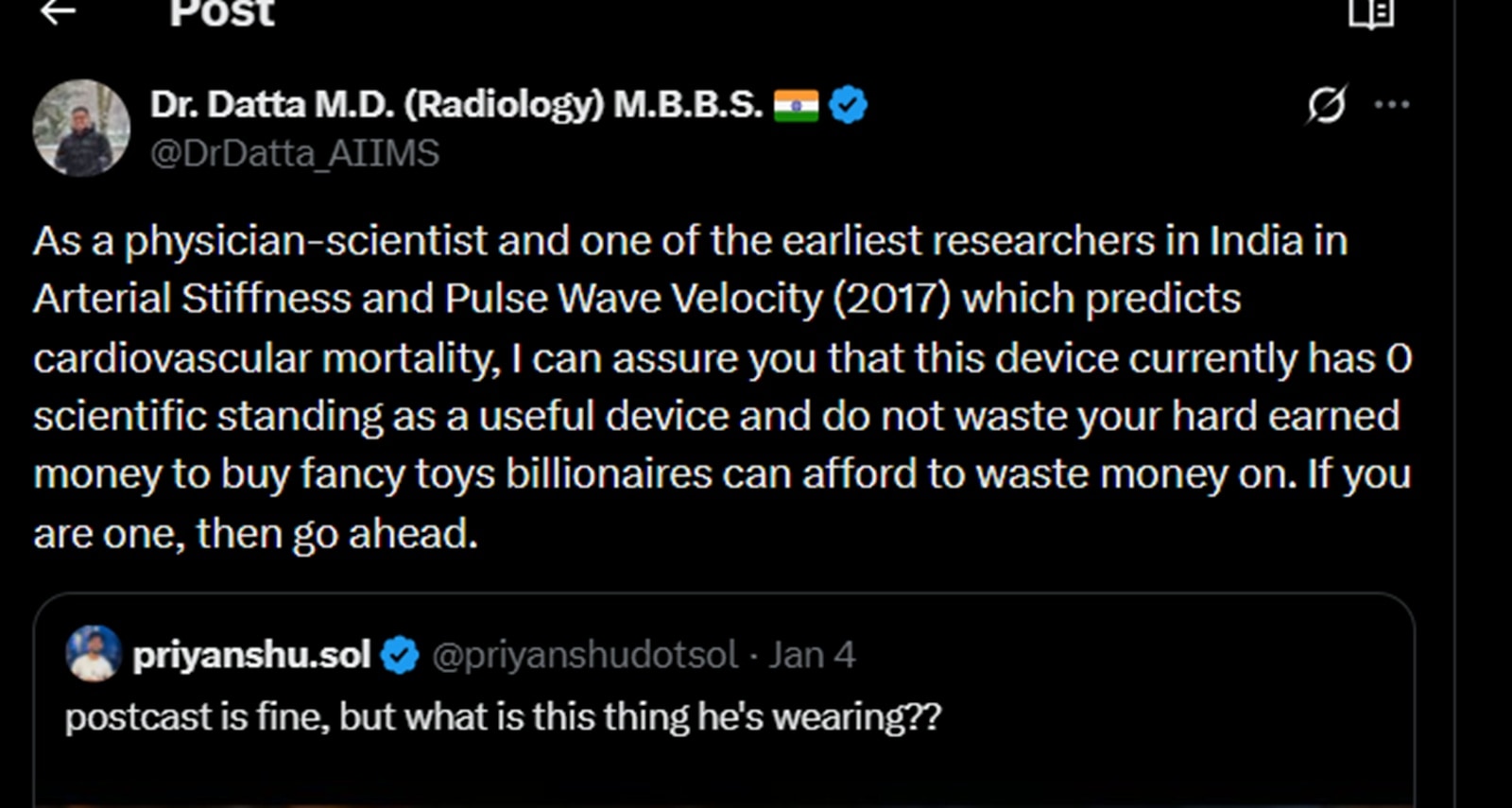 Dr Datta’s post on X (Photo: X)
Celebrity nutritionist Ryan Fernando had a more watered-down response to many of the queries he received about the gadget’s viability. “Some say it is still based on hypothesis, some say there are no large-scale reviews yet. What I think is that any brain health tech must grow through serious credibility checks and testing before strong claims are made. But if it is safe and time-tested, then I genuinely do welcome innovation in the brain health space,” he said in a post on Instagram.
Taking a cue from the varied responses, we turned to neurological experts for a better understanding.
Dr Sudhir Kumar, a consultant neurologist at Apollo Hospitals, Hyderabad, explained that the device worn on Goyal’s temple is based on near-infrared spectroscopy (NIRS). “It uses light to estimate changes in brain oxygenation, which indirectly reflects cerebral blood flow, but does not measure blood flow directly. There is some scientific backing, mainly in research, anaesthesia, and ICU settings. However, in real-world use, readings are influenced by scalp blood flow and motion, limiting accuracy. These devices are not diagnostic,” said Dr Kumar.
Dr Sheetal Goyal, consultant neurologist at Wockhardt Hospitals, Mumbai Central, said that in clinical neurology, changes in blood flow are studied in conditions such as stroke, dementia, and traumatic brain injury, always using validated imaging tools in controlled settings.
Story continues below this ad
According to Dr Kumar, in clinical neurology, there are “robust and validated tools, such as Transcranial Doppler, CT perfusion, and MRI angiogram, that provide far more accurate and actionable information on cerebral blood flow”.
 Here’s what you should consider (Photo: Freepik)
“For healthy individuals, there is no current medical need to monitor cerebral blood flow. The brain has strong autoregulation, and routine monitoring does not improve health outcomes. At present, such wearables are better viewed as experimental or wellness gadgets, not medical devices,” said Dr Kumar.
Concurring, Dr Goyal said that even if some data is collected, there is currently no evidence that monitoring blood flow through a consumer device improves cognition, mental clarity, or emotional regulation. “The biggest worry is that people may misunderstand the information. They might think the device is diagnosing or improving brain health, but it hasn’t been tested for medical use,” emphasised Dr Dipesh Pimpale, consultant neurologist, KIMS Hospitals, Thane.
Story continues below this ad
They may find future niche roles in research or high-risk environments, but they do not add value to routine clinical practice today, Dr Kumar said.
Simple, proven methods enough sleep, regular exercise, mental stimulation, managing stress, and getting timely medical advice are much more effective than relying on unverified devices, said Dr Pimpale.
DISCLAIMER: This article is based on information from the public domain and/or the experts we spoke to. Always consult your health practitioner before starting any routine.

Leave a Reply