
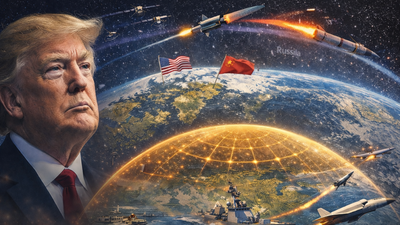
NEW DELHI: Donald Trump’s presidency has been defined by decisions that appear impulsive on the surface but often reveal a deeper, if blunt, strategic instinct. One such episode is the renewed Greenland controversy, which has re-emerged alongside Trump’s ambitious proposal for a multi-layered US missile defence shield dubbed the “Golden Dome.” Trump’s renewed focus on Greenland has reignited global debate over whether the Arctic island is being viewed as a source of untapped natural resources or as a pivotal node in a future missile defence architecture aimed squarely at Russia and China. Trump himself has now explicitly linked the two.
“The United States needs Greenland for the purpose of National Security. It is vital for the Golden Dome that we are building,” Trump wrote on Truth Social on January 14. “Nato becomes far more formidable and effective with Greenland in the hands of the UNITED STATES. Anything less than that is unacceptable.” The statement has sent ripples through Moscow and Beijing, where analysts see Greenland not as a commercial asset but as a potential cornerstone of a US-led strategic shield that could alter the global balance of deterrence.Why Greenland matters in missile defence logicGreenland’s value lies less in what is beneath its ice and more in where it sits on the map.Located between North America and Eurasia, Greenland occupies a central position along the shortest ballistic missile trajectories between Russia and the United States. Intercontinental ballistic missiles (ICBMs) launched from Russia towards the US would typically travel over the Arctic, making early detection in this region crucial.For decades, US military planners have viewed Greenland as an irreplaceable early-warning outpost. Under a 1951 defence agreement with Denmark, the US operates the Pituffik Space Base (formerly Thule Air Base) in northern Greenland. The base houses advanced missile warning and space surveillance systems, including the AN/FPS-132 radar, a critical component of the US ballistic missile defence network.

These systems are designed to detect missile launches within seconds, track objects in space, and feed data into US command-and-control networks. In any future missile defence architecture that seeks to intercept threats in their earliest phases, Greenland offers a vantage point that few other locations can match.Trump’s argument rests on this geography. In his telling, failure to tighten US control over Greenland risks allowing adversaries to exploit the same strategic advantages.“We need that because if you take a look outside of Greenland right now, there are Russian destroyers, there are Chinese destroyers, and, bigger, there are Russian submarines all over the place,” Trump said. “We’re not gonna have Russia or China occupy Greenland, and that’s what they’re going to do if we don’t.”While defence experts have questioned the immediacy of such threats, the strategic logic behind Greenland’s importance is widely accepted across military circles.Trump’s Greenland pitch: Less real estate, more dominanceTrump’s Greenland push has often been dismissed as a real-estate fantasy. Yet his own framing makes clear that this is not about property acquisition in a commercial sense.The White House reinforced this messaging on January 14 by releasing a photograph suggesting Greenland’s future lay at a crossroads between alignment with the US or falling into the orbit of Russia and China.Trump’s worldview favours territorial control over alliance management. Where previous administrations relied on treaties, basing agreements, and multilateral frameworks, Trump has consistently signalled a preference for direct control that cannot be reversed by political change.
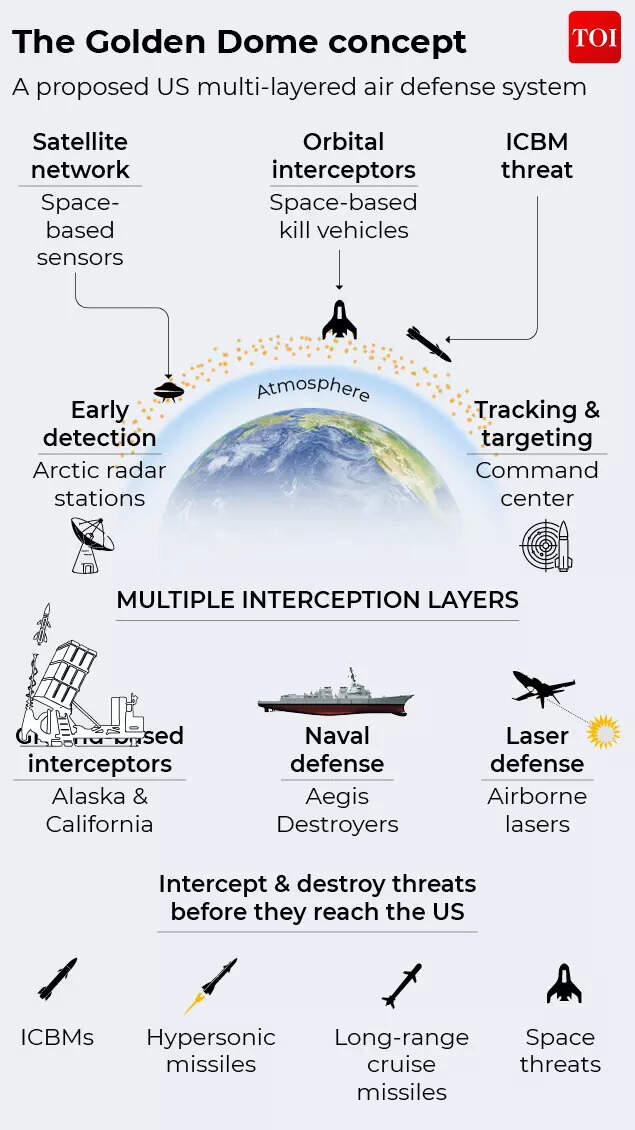
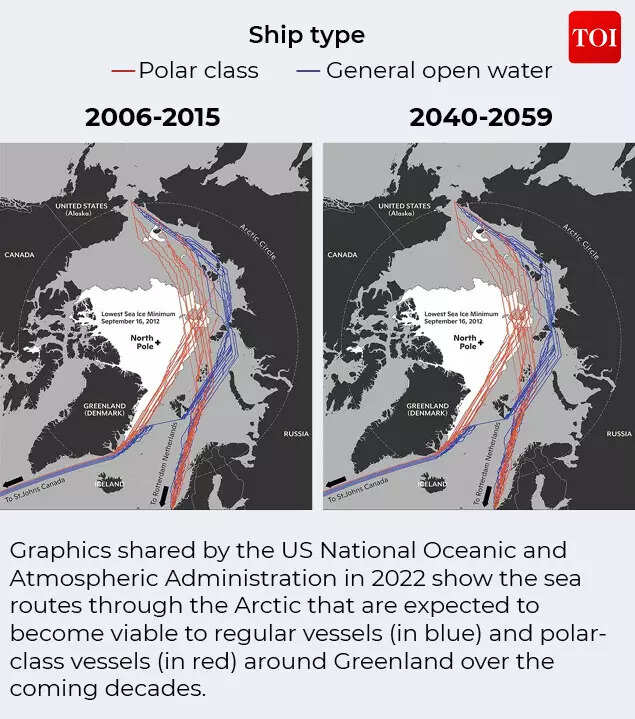
In this context, Greenland represents permanence. Defence cooperation agreements can be renegotiated; sovereign territory cannot.For Trump, Greenland’s value is magnified by the Arctic’s transformation into a zone of strategic competition. Melting ice has opened new maritime routes, expanded access to undersea resources, and increased naval and submarine activity. Russia has steadily expanded its Arctic military footprint, while China — despite being geographically distant — has labelled itself a “near-Arctic state” and invested heavily in polar research, infrastructure, and partnerships.From Washington’s perspective, any missile defence system designed to counter future threats must be Arctic-centric. Greenland fits squarely into that calculation.What exactly is the ‘Golden Dome’?The Golden Dome is not an operational weapons system. It is a proposed concept for a comprehensive, layered missile defence architecture designed to protect the US homeland against a wide spectrum of threats.Unlike existing missile defence systems, which are limited in scope and designed to counter small-scale attacks from so-called rogue states, the Golden Dome envisions:
- Space-based sensors capable of detecting missile launches globally
- Advanced tracking systems operating across land, sea, air, and space
- Multiple interception layers, potentially including space-based interceptors
- The ability to counter ballistic, hypersonic, and cruise missiles
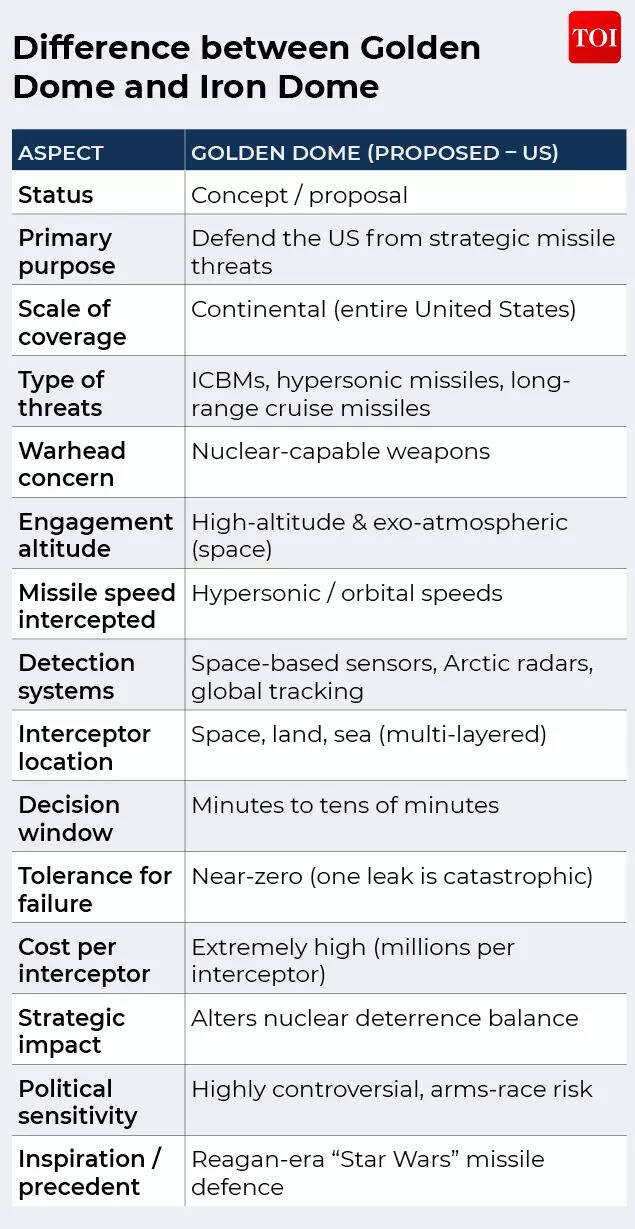
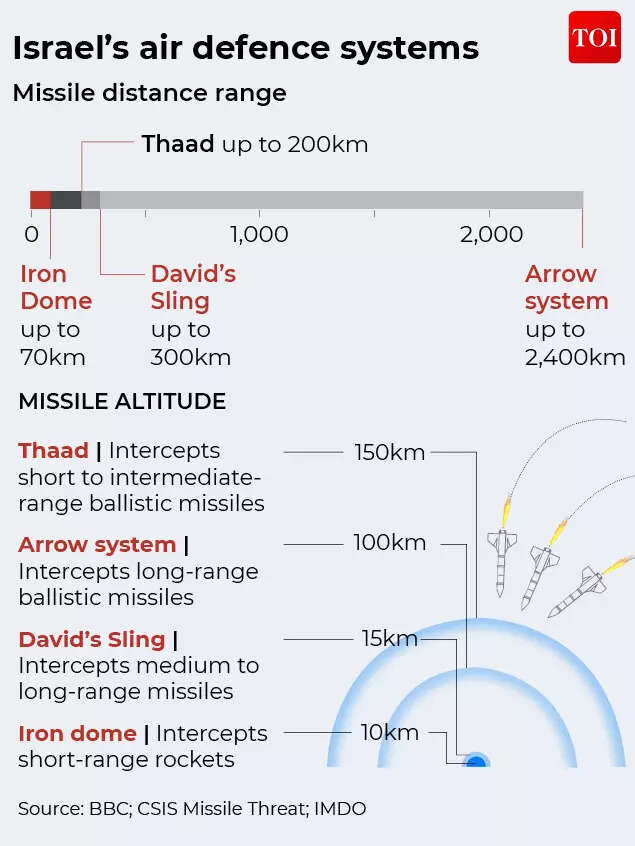
Trump has described the Golden Dome as a transformational leap in homeland defence — a modern successor to Ronald Reagan’s Strategic Defense Initiative.The ambition of the project is reflected in its estimated cost, frequently cited at around $175 billion, though independent analysts believe the true figure could be far higher once development, deployment, and maintenance are factored in.Critically, the Golden Dome is not designed merely to reduce damage in a limited conflict. Its implicit promise is near-invulnerability, a goal that has long been viewed with scepticism by arms control experts.What is Iron Dome — and why it is not comparable to the Golden DomeConfusion around the Golden Dome is often fuelled by loose comparisons with Israel’s Iron Dome, a system that is not only operational but has been tested repeatedly under wartime conditions. Despite the similarity in naming, the two are designed for entirely different kinds of wars.Iron Dome is a tactical air defence system developed by Israel to counter short-range rockets, artillery shells, and mortars fired primarily by non-state actors such as Hamas and Hezbollah. It is optimised to protect cities, population centres, and military bases over limited geographic areas, typically within a range of a few dozen kilometres. The system operates fully within the Earth’s atmosphere, engaging threats that are relatively slow, unguided, and conventional in nature.
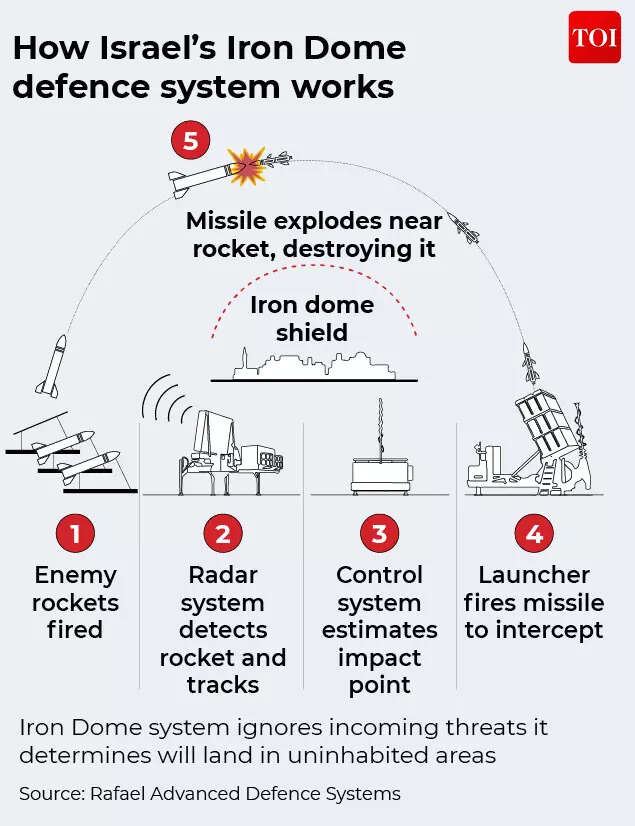
One of Iron Dome’s defining features is its selective interception logic. Using radar and fire-control algorithms, the system rapidly calculates whether an incoming projectile is likely to strike a populated area or critical infrastructure. If the assessment shows the rocket will fall in an open field or the sea, Iron Dome does not intercept it, conserving interceptors and reducing costs. This discrimination is central to its effectiveness.Iron Dome has proven its value in multiple conflicts — including the 2012, 2014, 2021 and 2023 Israel–Hamas wars — where Israeli authorities reported interception rates of around 90 per cent for rockets assessed as threatening populated areas. During periods of intense fighting, the system has intercepted thousands of rockets, enabling Israel to limit civilian casualties and avoid wider escalation despite sustained barrages.
The Golden Dome, by contrast, operates in a completely different strategic universe. It is not designed to stop crude rockets fired from nearby territory, but to intercept nuclear-capable ballistic missiles, hypersonic glide vehicles, and long-range cruise missiles launched by major powers. These weapons travel at hypersonic or near-orbital speeds, often outside the atmosphere, and are designed to evade or overwhelm defences.Unlike Iron Dome, where limited leakage is tolerable, a strategic missile defence system like the Golden Dome operates under a near-zero-failure margin — a single missile getting through could be catastrophic. This makes the technological, financial, and geopolitical challenges vastly more complex.In short, Iron Dome is a battlefield shield that mitigates damage during ongoing conflicts. The Golden Dome is an attempt — still theoretical — at strategic invulnerability. The former manages risk; the latter seeks to rewrite deterrence itself.
Why the US has never fully built something like thisThe United States has deliberately avoided building a comprehensive missile shield for decades, not because of a lack of technological ambition, but because of the strategic consequences.A system that promises to neutralise an adversary’s nuclear deterrent risks destabilising the balance that has prevented nuclear war since 1945. If rivals believe their retaliatory capability is compromised, they may respond by:
- Expanding their nuclear arsenals
- Developing more sophisticated delivery systems
- Investing in hypersonic weapons and decoys
- Militarising space
Russian officials have been explicit in their concerns. After the Golden Dome concept was formally announced last year, Russian Foreign Ministry spokeswoman Maria Zakharova said the project undermines strategic stability by creating a global missile defence system.Russia’s Deputy Foreign Minister Sergei Ryabkov went further, calling space-based interceptors “extremely destabilising” and warning that they pave the way for the militarisation of space.“I would like to emphasize that there are no grounds for alarm, there are grounds for serious concern,” Ryabkov said, adding that Russia’s strategic systems are designed to penetrate any layered defence.Russia & China ‘breathe fire’ over the Golden DomeRussian military analysts see Greenland as a critical enabler of the Golden Dome’s Arctic layer.Alexander Stepanov, a military expert at the Russian Presidential Academy of National Economy and Public Administration, told TASS that the Golden Dome deployment in Greenland would focus on tracking and intercepting Russian weapons.“The Golden Dome project is aimed at monitoring airspace and near-Earth space for the timely detection of launches and interception of various types of offensive weapons,” he said. “This is primarily about developing a countermeasure capability against Russian hypersonic weapons.”Russia currently fields four hypersonic systems — Kinzhal, Tsirkon, Avangard, and Oreshnik — which travel at speeds exceeding Mach 5 and follow unpredictable trajectories.Stepanov added that the Pentagon may seek to deploy additional radars in Greenland, including upgraded AN/TPY-2 systems with gallium nitride antenna arrays, as well as expanded naval infrastructure to support nuclear submarines operating in the Arctic.Former Russian space agency chief Dmitry Rogozin was even more blunt.
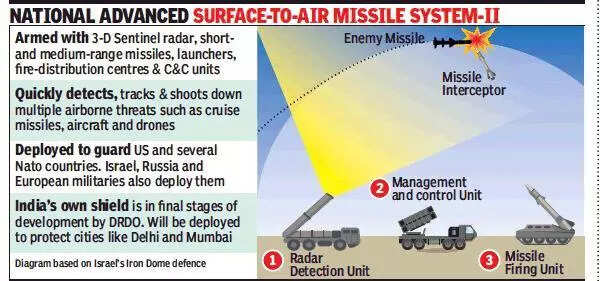
“Orbital sensors, ground interceptors, decision-making algorithms — all this requires advantageous geography,” he said. “Greenland, with its Arctic position, proximity to Russia, and convenience for northern ICBM trajectories, fits perfectly into this architecture.”He warned that such developments could mark “the dismantling of the entire system of strategic stability in the world.”China’s response has been more measured but no less concerned. A spokesperson for China’s Ministry of Foreign Affairs said the Golden Dome represents an “unconstrained” missile defence programme that risks violating the Outer Space Treaty and accelerating the militarisation of space.Chinese scholars writing in Contemporary International Relations argued that the Golden Dome marks a shift away from limited deterrence towards a system aimed at countering major nuclear powers for the first time.An analysis by the Centre for Strategic and International Studies (CSIS) noted that Chinese and Russian analysts fear a successful Golden Dome could weaken their nuclear deterrents by reducing their ability to threaten the US homeland.Does India have something like this?India does not possess — nor is it seeking — a system comparable to the Golden Dome.New Delhi has developed a Ballistic Missile Defence (BMD) programme aimed at protecting select targets against limited missile threats. This includes the Prithvi Air Defence (PAD) and Advanced Air Defence (AAD) interceptors, along with newer systems such as the PDV interceptor tested against long-range threats.India’s approach remains regionally focused and deterrence-based, designed to counter limited threats rather than establish national invulnerability. Unlike the Golden Dome, India’s missile defence posture does not seek to neutralise the strategic deterrents of major powers.Also read – Missile shield over Delhi: India may buy NASAMS-II air defence system from US
Trump’s Greenland gambit and the Golden Dome proposal are two sides of the same coin: a belief that geography, technology, and dominance can replace the delicate balance of deterrence that has governed nuclear relations for nearly eight decades.Whether the Golden Dome ever moves beyond rhetoric remains uncertain. What is clear, however, is that Greenland has once again become a focal point of great-power rivalry — not for what it produces, but for what it allows nations to see, track, and potentially destroy.In the Arctic, geography is destiny. And in Trump’s strategic imagination, Greenland may be the keystone that holds the Golden Dome in place.

Leave a Reply