
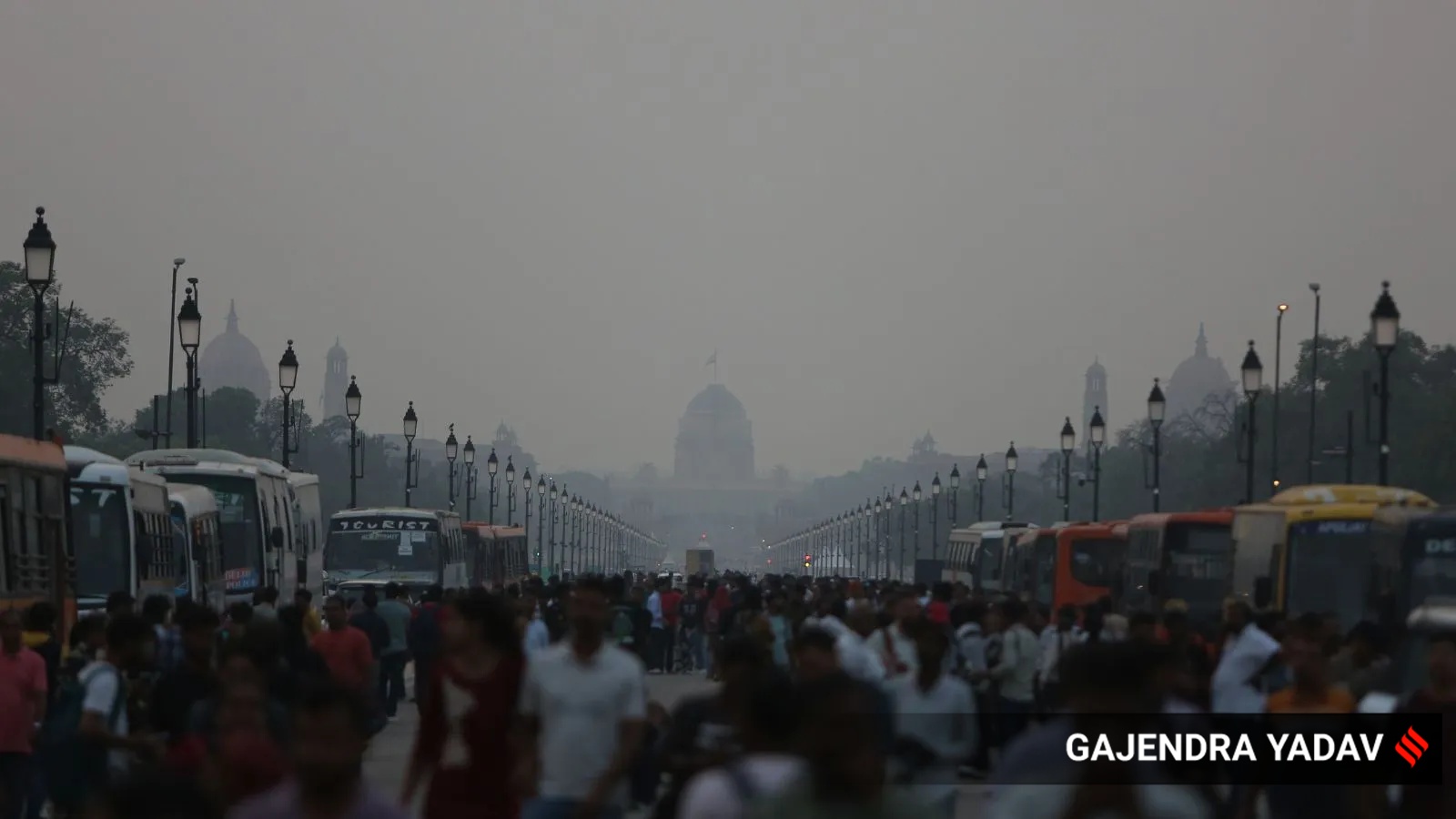
New Delhi’s air quality deteriorated on Monday, with the Air Quality Index (AQI) in both Delhi and Noida slipping into the ‘very poor’ category as a thick blanket of smog engulfed the region. According to the Central Pollution Control Board’s (CPCB) Sameer app, Delhi recorded an AQI of 310 on Monday morning, up from 277 a day earlier.
The worsening air quality comes as British artist Michael Pinsky’s Pollution Pods installation in Perth, Australia, recently drew attention to the health impact of air pollution through a sensory experience. The installation recreated the air quality and distinct smells of five locations — London, New Delhi, São Paulo, Beijing and Tautra, a remote peninsula in Norway — allowing visitors to experience the contrast between polluted and relatively clean environments.
Describing the experience, Rhys Heron, a representative of the Royal Automobile Club of Western Australia (RAC) that presented the installation, told ABC Perth that it takes visitors “from dense smog of New Delhi to crisp air of Norway”.
Pinsky, who worked with perfumers familiar with the selected cities and fragrance company IFF to recreate the smells, said the installation also used changes in visibility and temperature to make the experience more realistic. “It is uncomfortable. It is unpleasant. It’s safe, but it really isn’t comfortable,” he told ABC Perth.
He also urged people to recognise the pollutants vehicles emit, including nitric oxide and carbon monoxide, and to consider alternative modes of transport.
DISCLAIMER: This article is based on information from the public domain and/or the experts we spoke to. Always consult your health practitioner before starting any routine.
But beyond the immediate discomfort of breathing polluted air, what does prolonged exposure to toxic air do to our bodies? To understand its health implications, we spoke to experts.
Story continues below this ad
Prolonged exposure to polluted air can affect almost every organ in the body, with the lungs and cardiovascular system bearing the greatest impact, said Dr Harish Chafle, senior consultant, chest physician, bronchoscopist, Intensivist, and Sleep Disorders specialist at Gleneagles Hospitals, Parel, Mumbai.
“Fine particulate matter such as PM2.5 can travel deep into the lungs and even enter the bloodstream, triggering inflammation and oxidative stress. Over time, this can worsen asthma, bronchitis, COPD and other respiratory conditions, while increasing the risk of respiratory infections and reduced lung function. People may experience persistent coughing, wheezing, breathlessness, throat irritation and chest discomfort. Long-term exposure can also increase the risk of heart disease, hypertension, heart attacks and strokes,” said Dr Chafle.
 British artist Michael Pinsky’s Pollution Pods installation in Perth, Australia (Photo: Michael Pinsky)
Dr Sulaiman Ladhani, consultant pulmonology, Wockhardt Hospitals, Mumbai Central, explained further that while the nose and upper airways filter some pollutants, finer particles such as PM2.5 can penetrate deep into the lungs, with some even entering the bloodstream. “Repeated exposure irritates the airways, triggers inflammation and can impair normal respiratory function. This may manifest as throat irritation, persistent coughing, wheezing or breathlessness. Prolonged exposure can worsen existing respiratory conditions and increase the risk of more serious health problems,” said Dr Ladhani.
Can prolonged exposure to polluted air cause respiratory problems even in people who have no existing lung condition?
Absolutely. “Even individuals with otherwise healthy lungs are vulnerable to air pollution. Exposure can cause coughing, throat irritation, chest tightness, wheezing and breathlessness, particularly during prolonged pollution episodes. While these symptoms may be temporary, repeated exposure over months or years can affect lung function and increase the risk of developing chronic respiratory diseases, including COPD. Having healthy lungs today does not make someone immune to the long-term effects of pollution,” said Dr Ladhani.
Story continues below this ad
Why are people with asthma, COPD and other lung conditions more vulnerable during pollution episodes?
People with asthma and COPD already have sensitive or compromised airways, making them particularly vulnerable to pollutants. “Exposure can aggravate airway inflammation and narrowing, resulting in worsening cough, wheezing, chest tightness and breathlessness. In some cases, this can trigger acute exacerbations requiring additional medication, treatment adjustments or even hospitalisation. During severe pollution episodes, even simple activities such as walking or climbing stairs may become difficult for these patients,” Dr Ladhani told indianexpress.com.
Can air pollution affect children and older adults differently?
Yes, noted Dr Ladhani. “Children’s lungs are still developing, and they breathe more air relative to their body weight than adults. Repeated exposure to polluted air can interfere with normal lung development and increase the risk of respiratory infections and asthma-related problems. Older adults, particularly those with underlying respiratory or cardiovascular conditions, may have reduced physiological reserve and are more susceptible to complications. Both age groups therefore require additional protection during periods of poor air quality.”
What precautions should people take when AQI levels are very poor?
People should avoid outdoor exercise, particularly morning and late-evening walks, and limit unnecessary exposure when pollution levels are high. “Keep windows closed during periods of heavy outdoor pollution and consider using a well-maintained HEPA air purifier indoors. A properly fitted N95 mask can reduce exposure to fine particulate matter when going outdoors, although it does not protect against harmful gases. Avoid additional indoor pollutants such as cigarette smoke, incense sticks and mosquito coils.”
 Here’s what you should consider (Photo: Pixabay)
Dr Ladhani noted that patients with asthma or COPD should continue their prescribed treatment and keep reliever medication readily available. Worsening respiratory symptoms warrant medical evaluation, while severe breathlessness or chest pain requires urgent attention. “Air pollution is not merely a temporary inconvenience. Its effects can accumulate over time, making consistent precautions essential for protecting long-term respiratory health,” said Dr Ladhani.
Story continues below this ad
DISCLAIMER: This article is based on information from the public domain and/or the experts we spoke to. Always consult your health practitioner before starting any routine.

Leave a Reply