
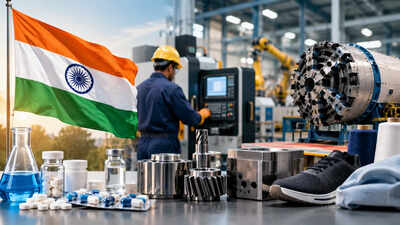
NEW DELHI: Government has identified around 120 products, including intermediates and capital goods, for domestic manufacturing push and to reduce dependence on imports, with a separate plan for tunnel boring machines in the works after China imposed restrictions on their shipments.As part of the exercise, which is being driven by the department for promotion of industry and internal trade (DPIIT), the range of products includes chemicals such as acetic acid, pharmaceutical products and inputs, medical technology related items, machine tools, including some textile looms, construction equipment, cranes, products used in the aerospace sector as MROs (maintenance, repair and operations) are coming up in the country. Besides, the list also includes some consumer goods, including products that are part of the footwear value chain, persons familiar with the discussions told TOI.
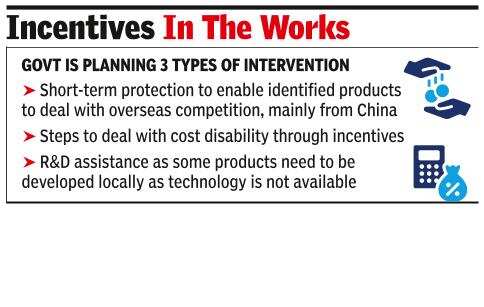
While discussions are currently underway with other govt agencies, three types of intervention are planned. One, short-term protection that will enable products, which are identified, to deal with competition from overseas, especially China, till supplies are diversified. A similar strategy had been adopted in the case of mobile phones in the initial years.The second set of measures will deal with cost disability through incentives that could be capital incentives or phased over a period and may be linked to turnover. Also, on the menu is the option to provide R&D assistance as some of the products need to be developed locally as technology is not available.Over the last six-to-eight years, govt has sought to provide support to companies, both domestic and international, across sectors ranging from pharma and electronics to semiconductors, solar power equipment and white goods to encourage local production. A large part of the money has flown through PLIs, along with two semiconductor missions as well as a scheme aimed at enhancing production of electronic components in the country as demand for inputs has soared after domestic manufacturing of phones took off. Support for R&D probably flows from the experience in battery production as companies that have begun “local production” are essentially importing cells from China and selling battery packs as the entire production chain and technology is controlled by companies across the border. A similar experience was seen in the case of solar panels.The plan flows from govt’s overall Atmanirbhar Bharat strategy, which has received renewed attention after the West Asia crisis, when several critical items were in short supply locally due to large import dependence. Even during Covid, supply of several products, including medical inputs, was hit as China controlled the production chains.

Leave a Reply