
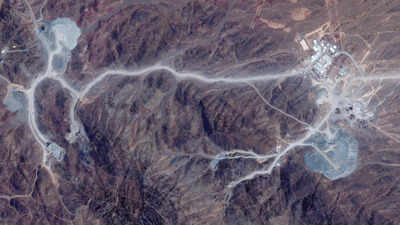
Iran is accelerating efforts to rebuild its nuclear and ballistic missile programmes despite US and Israeli strikes on its facilities, with satellite imagery showing construction and fortification work at sensitive sites as Tehran prepares for the possibility of renewed fighting.Retired US four-star General Jack Keane said Iran had not abandoned its nuclear ambitions, arguing that the regime remained committed to restoring its capabilities despite ongoing diplomatic efforts to prevent a fresh escalation.“They certainly haven’t given up on it. It defines their regime,” Keane told Fox News, describing Iran as a “diabolical regime”. He said Tehran had recommitted itself to recovering its nuclear programme and accelerating its ballistic missile development after recognising the threat its weapons posed to its adversaries, according to the New York Post.Satellite imagery has documented activity at several facilities, including the Pickaxe Mountain complex near the Natanz nuclear site. The underground facility is believed to be buried more than 300 feet below the surface, making it a particularly sensitive target amid concerns over Iran’s nuclear infrastructure.According to The Wall Street Journal, Iran has also been reinforcing protection around nuclear facilities and security-related bunkers. Satellite images analysed by the Institute for Science and International Security showed that Tehran had constructed makeshift earth mounds around the Pickaxe Mountain and Natanz sites to complicate potential ground raids.The rebuilding efforts extend beyond nuclear infrastructure. Iran has used the pause in direct fighting to restore missile and drone facilities and replenish its arsenal, while strengthening defences against possible renewed US attacks.The developments come amid continuing uncertainty over Iran’s nuclear activities and international monitoring. The International Atomic Energy Agency (IAEA) has called for urgent action to address its lack of access to Iranian nuclear facilities and insufficient information about nuclear material at the sites.In its latest quarterly report, the UN nuclear watchdog said the absence of access and information raised proliferation concerns, particularly regarding the Isfahan facility, which has been targeted in US and Israeli strikes.IAEA director general Rafael Grossi called for the longstanding disputes to be resolved through a durable, verifiable diplomatic agreement. Tehran, however, has insisted that inspections of sites damaged in military attacks must follow specially agreed procedures.Iran suspended cooperation with the agency following US and Israeli strikes on its nuclear facilities in June 2025, although it subsequently indicated that inspectors could return under agreed arrangements.

Leave a Reply