
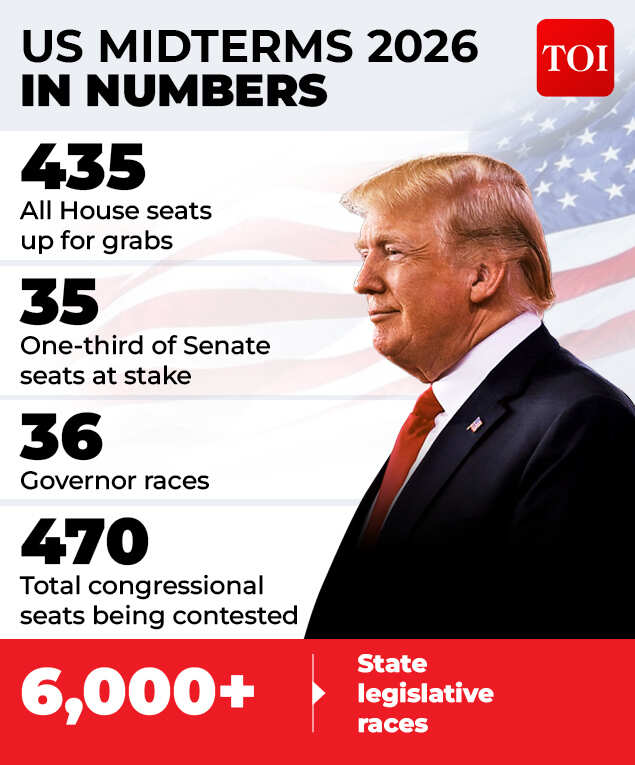
On November 3, Americans will decide whether President Donald Trump gets two more years of a US Congress largely on his side or faces an opposition with the power to challenge his agenda at every turn.All 435 members of the House of Representatives (the lower chamber of Congress) will be elected, while 35 of 100 seats in the Senate (the upper chamber) will also be up for grabs, making the 2026 US midterm elections a critical test of Trump’s presidency.
The stakes extend well beyond Capitol Hill
Republicans currently control both chambers, giving the White House a clear path to advance its legislative priorities. Democrats are fighting to break that hold, turn Congress into a check on presidential power and reshape the political landscape ahead of the 2028 presidential race.The stakes extend well beyond Capitol Hill as the outcome could determine how far Trump can push his domestic agenda, how aggressively his administration is scrutinised and who sets the terms of America’s political debate for the next two years.
The US midterm elections
Americans vote for president and vice president every four years. The four‑year period during which US presidents hold office is called a ‘term’.A ‘midterm’ election is an election that takes place halfway through the presidential term, that is, two years after the presidential elections. They happen across all states, and they are for offices other than that of the president or vice president.Unlike a presidential election, in which voters choose the president through the Electoral College system, the midterms determine the composition of Congress and several important state-level offices.
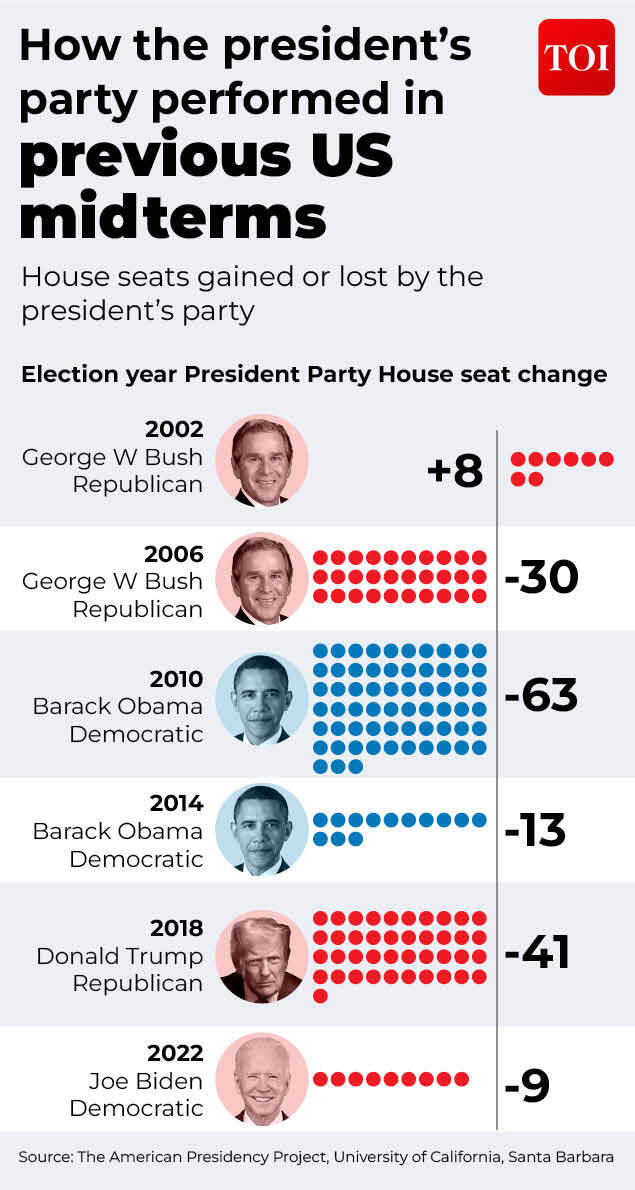
Historically, the president’s party often loses congressional seats in these elections
Historically, the president’s party often loses congressional seats in these elections, as voters use the ballot to express satisfaction or frustration with the administration.That pattern is not a guarantee of defeat. But it makes the midterms an important political test for every president, particularly one whose party controls both chambers.The new Congress, known as the 120th Congress, will convene in January 2027. Its composition will determine how much room Trump has to pursue his priorities during the remaining two years of his presidency.
The House of Representatives
The House is where the battle for congressional control is expected to be particularly intense.Republicans entered the election cycle with a narrow majority. A September 2026 analysis by the European Parliament’s research service put the House balance at 219 Republicans to 214 Democrats, with two vacancies. Reuters reported on October 12 that Democrats need a net gain of four seats to take control.
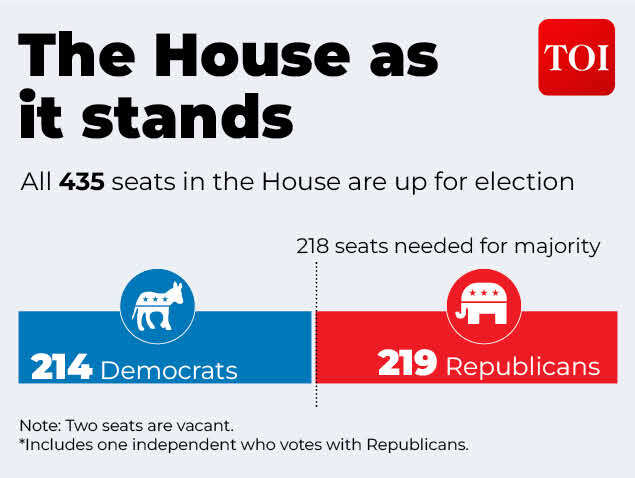
The House balance at 219 Republicans to 214 Democrats, with two vacancies
That is a relatively small number in a chamber of 435 members. But winning those seats requires Democrats to prevail in individual districts with distinct political identities, local concerns and candidates.The party seeking to take control must also contend with congressional district boundaries. Mid-decade redistricting, in which states redraw congressional maps between the usual ten-year census cycles, has changed the competitive landscape. Republican-led redistricting efforts have created additional challenges for Democrats in some states, while other districts remain vulnerable to shifts in voter sentiment.
The seats that matter
With control of the chamber at stake, a handful of competitive House races could determine whether Republicans retain the power to advance Trump’s agenda or Democrats win the gavel, opening the door to investigations, subpoenas and a fresh confrontation with the White House.
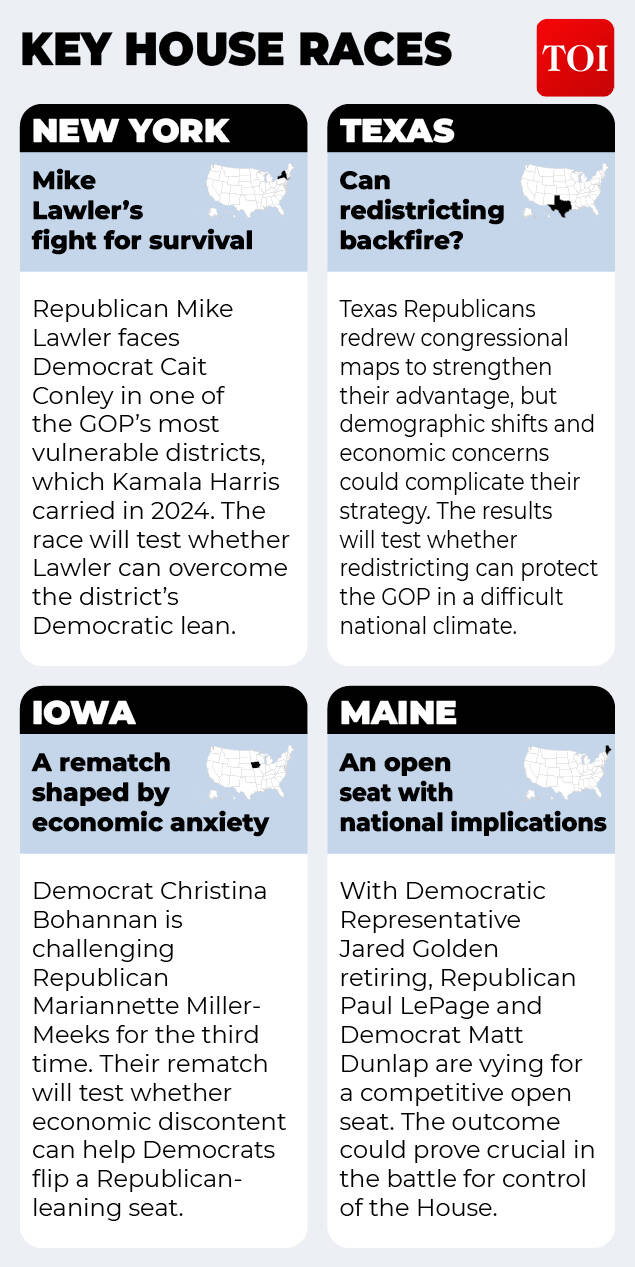
Reuters reported on October 12 that Democrats need a net gain of four seats to take control.
The stakes are especially high in a narrow band of battleground districts, where vulnerable Republican incumbents and open seats could decide the outcome.Other races worth watching include contests in Pennsylvania, Arizona, Michigan, North Carolina, Florida and Washington. These states contain districts where narrow margins, candidate-specific factors and the national political climate could determine the outcome.
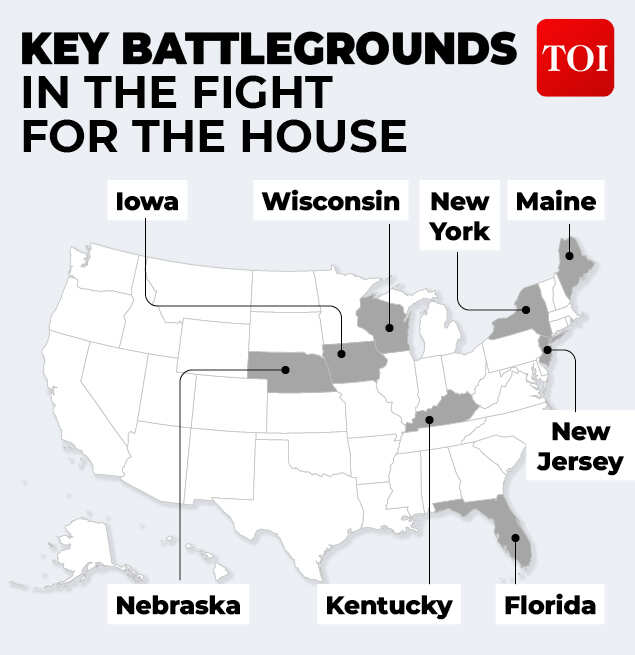
The House is where the battle for congressional control is expected to be particularly intense.
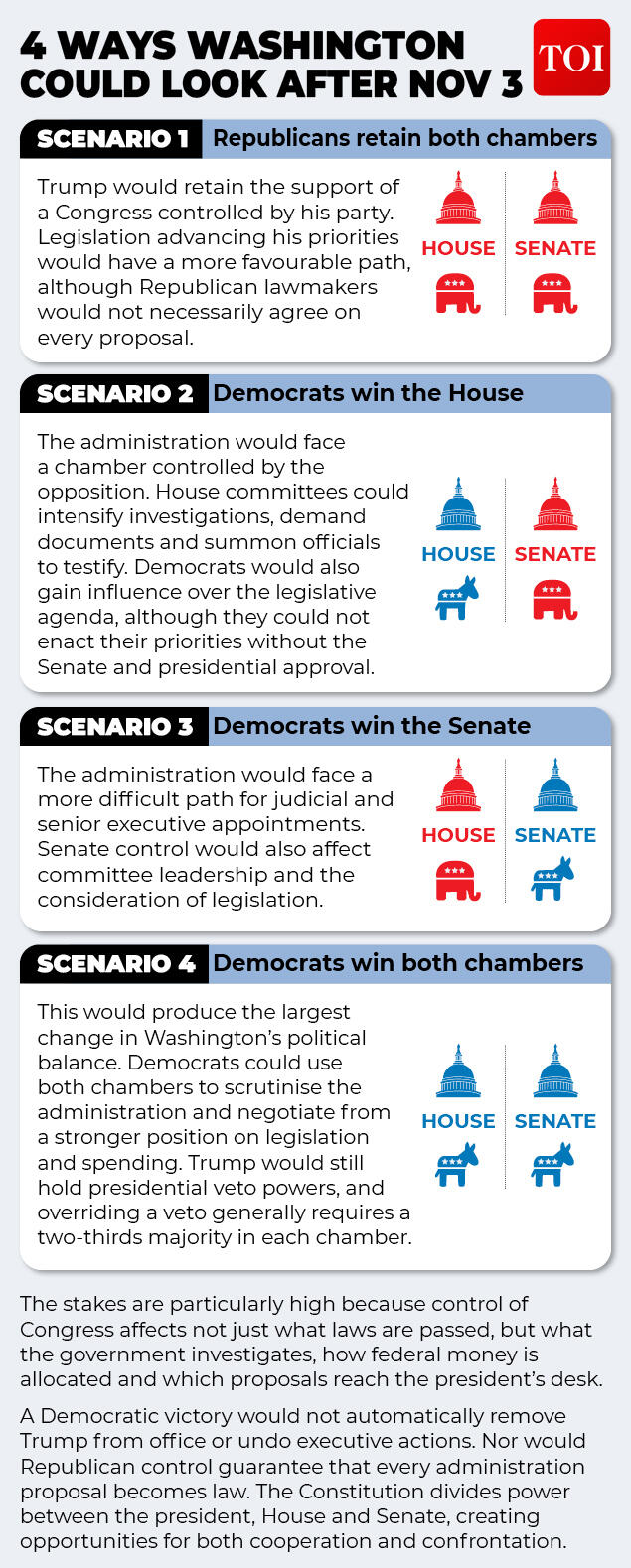
The broader significance is that Democrats do not need to win every competitive district. They need to assemble a majority by gaining enough seats while defending their own vulnerable incumbents.If Republicans retain the House, Trump would preserve a crucial source of legislative support.If Democrats win it, the president would face a chamber controlled by the opposition, changing the relationship between the White House and Congress.
The Senate
The Senate is arguably the more consequential prize in terms of appointments and the long-term balance of power in Washington.Republicans currently hold 53 seats, compared with 47 held by Democrats and independents who caucus with them. Democrats need a net gain of four seats to reach a majority of 51. Because the vice-president can break a 50-50 tie, the precise arithmetic can depend on the composition of the chamber and who holds the vice-presidency.
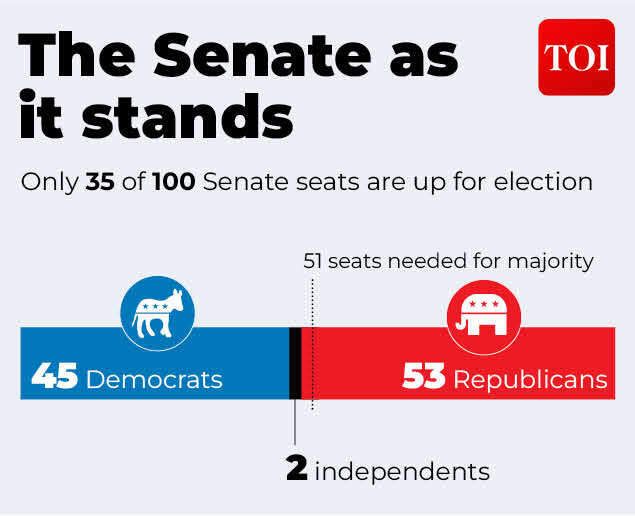
The Senate is arguably the more consequential prize in terms of appointments and the long-term balance of power in Washington.
The challenge for Democrats is geographical. Several of the most important Republican-held seats are in states that Trump won comfortably in 2024. Democrats must therefore defend their own vulnerable seats while making gains in places where the president remains politically influential.
The seats that matter
According to Reuters’ October 12 assessment, the decisive contests include Georgia, Michigan, New Hampshire, Maine, North Carolina, Ohio, Alaska, Iowa, Texas and Kansas.
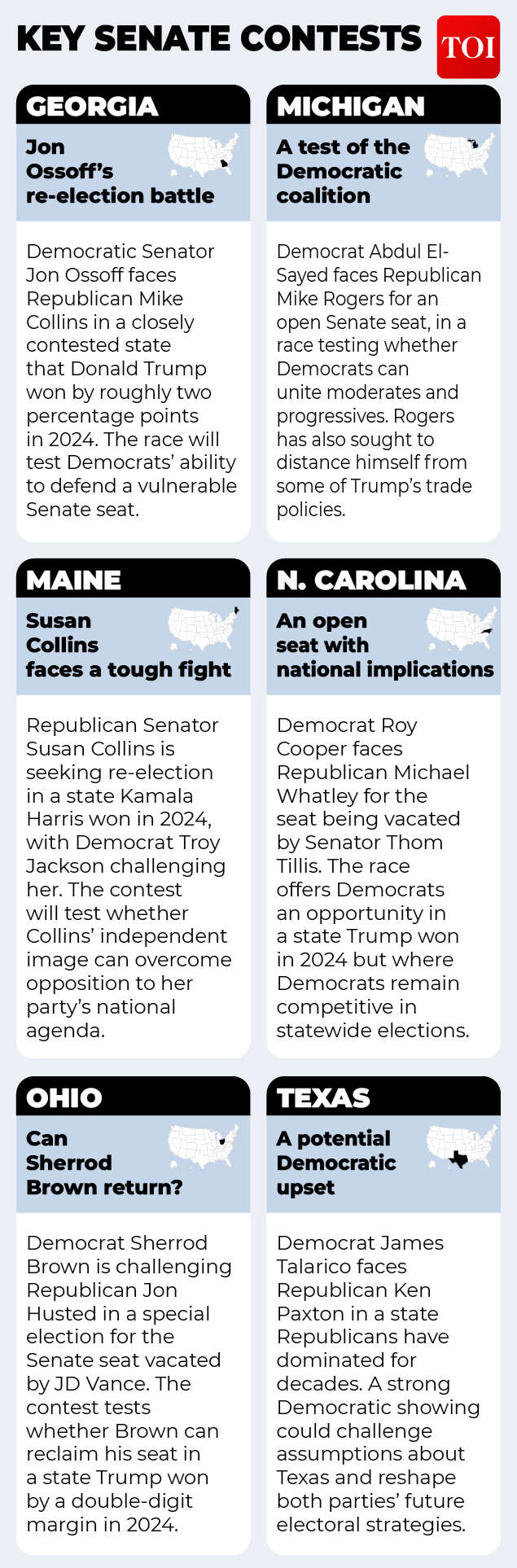
The Senate outcome will matter beyond ordinary legislation.
Two other contests deserve attention.In Alaska, Republican Senator Dan Sullivan faces former Democratic Representative Mary Peltola in a state that Trump won by 13 percentage points in 2024. Alaska’s ranked-choice voting system adds another layer of complexity.In Iowa, Republican Ashley Hinson and Democrat Josh Turek are competing for an open seat after Senator Joni Ernst decided not to seek re-election. Economic concerns and the Iran war have become part of the debate there.Kansas has also emerged as a race to watch. Republican Senator Roger Marshall faces Democrat Adam Hamilton, with immigration enforcement becoming a point of disagreement within the Republican camp. The contest demonstrates how a national issue can complicate a race even in a state Trump won comfortably.The Senate outcome will matter beyond ordinary legislation. The chamber confirms federal judges, Supreme Court nominees and senior executive appointments.A Republican majority would preserve Trump’s ability to seek confirmation of his nominees with support from his own party, subject to Senate rules and individual senators’ votes. A Democratic majority would give the opposition much greater leverage over those decisions.It would not automatically allow Democrats to reverse every Trump policy. But it could fundamentally change which appointments proceed, which bills receive consideration and how the administration negotiates with Congress.
The governors’ races
The congressional contests will dominate headlines, but voters will also choose governors in 36 states.Going into the election, there are 26 Republican governors and 24 Democratic governors in the United States. This class of governors is made up of 18 Republicans and 18 Democrats. Republicans are defending two governorships in states that Kamala Harris won in 2024 (New Hampshire and Vermont). Democrats are defending five governorships in states that Donald Trump won in 2024 (Arizona, Kansas, Michigan, Pennsylvania, and Wisconsin).
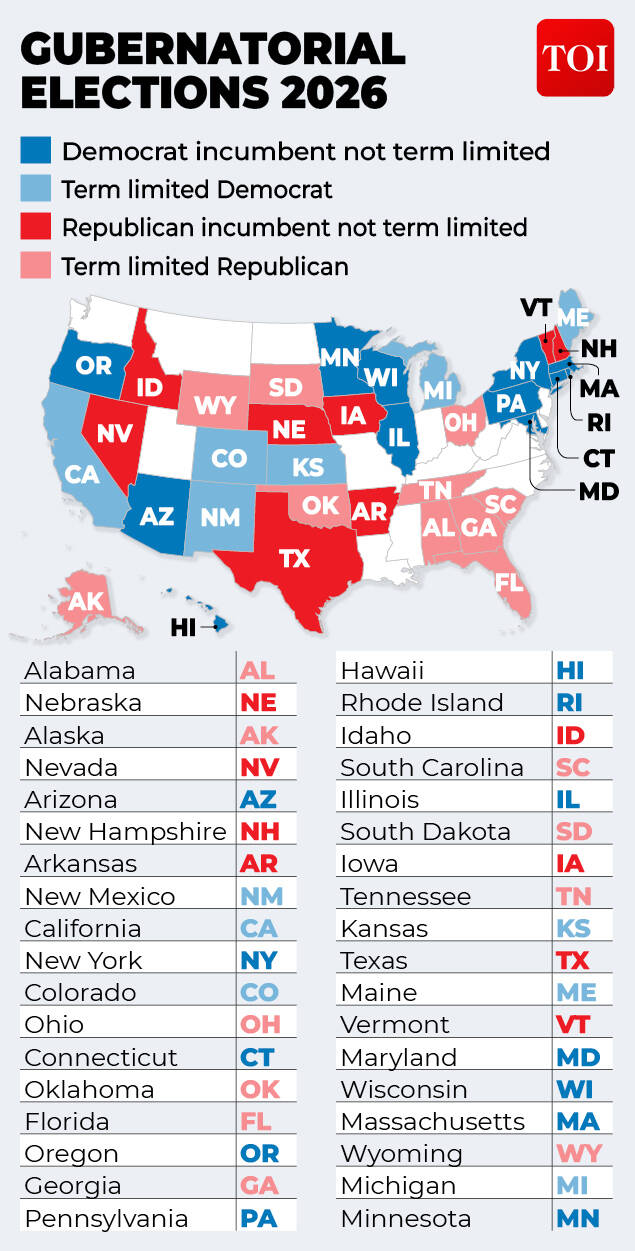
These elections determine who leads state governments, sets budget priorities and signs or vetoes legislation on issues that directly affect people’s lives.
These elections determine who leads state governments, sets budget priorities and signs or vetoes legislation on issues that directly affect people’s lives.Governors can influence healthcare, education, public safety, energy development and the implementation of federal policies. Their administrations also play important roles in emergency management and the conduct of elections under state law.Several contests carry particular national significance.
- Georgia: The race between Democrat Keisha Lance Bottoms and Republican Rick Jackson has implications for policy in a major swing state, including healthcare and the regulation of data centres. Georgia also remains politically significant because of the disputes over the 2020 election.
- Ohio: Democrat Amy Acton and Republican Vivek Ramaswamy are competing in a state where the governor can influence state policy and election administration.
- Wisconsin: Democrat David Crowley faces Republican Tom Tiffany. The contest is important in a state that has repeatedly been closely divided in presidential elections.
- Nevada: The governor’s contest is among the races attracting national attention in a state where economic pressures and the cost of living are important political issues.
These races are not simply referendums on Trump. State candidates have their own records, constituencies and policy priorities. Nevertheless, their outcomes can shape how national political disputes play out locally and how the parties prepare for 2028.The state legislative contests are equally important.Control of a state legislature can determine whether a governor’s proposals become law, whether abortion restrictions are tightened or relaxed, and how election rules are administered. State governments may also have opportunities to redraw congressional maps, depending on their laws and the timing of redistricting.
What issues will decide the election?
The contests may be local, but the arguments being made in campaign advertisements and at rallies increasingly revolve around the national political climate.A Pew Research Center survey of registered voters conducted between September 28 and October 4 offers a useful snapshot of the issues shaping the election.
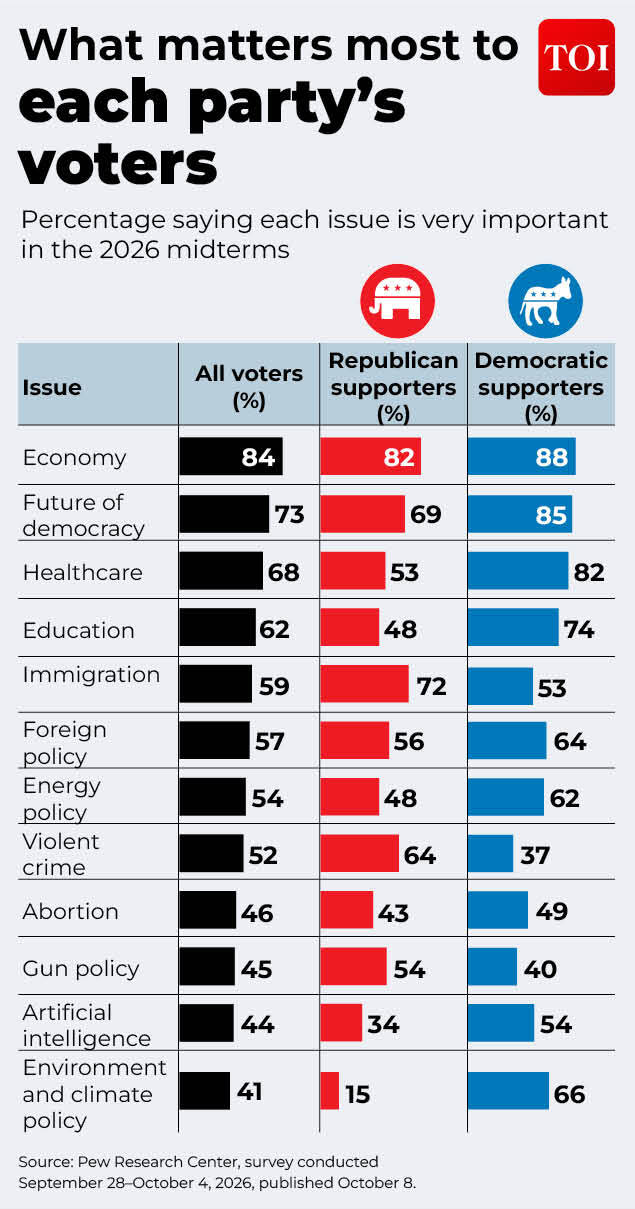
The economy was rated very important by 84% of registered voters.
The economy was rated very important by 84% of registered voters, followed by the future of democracy, healthcare and education. Immigration and foreign policy were also significant concerns.
The economy and cost of living
The economy is the common ground between otherwise sharply divided electorates. Inflation, housing costs, energy prices and the cost of everyday necessities can influence how voters assess the party in power.For Republicans, the election provides an opportunity to argue that the administration’s policies are delivering results and that continued congressional control is needed to sustain them. Democrats, by contrast, can use economic dissatisfaction to question whether the administration has adequately addressed household pressures.The Iran conflict adds another dimension. Rising fuel costs and concerns about the economic consequences of the war have become part of the political debate, including in traditionally Republican states. The extent to which voters connect these pressures to the president’s policies could influence competitive congressional races.
Immigration and border enforcement
Immigration remains a central part of Trump’s political programme, particularly his efforts to expand deportations and intensify enforcement.Republicans can argue that stronger enforcement is necessary to control illegal immigration and protect national security. Democrats have challenged aspects of the administration’s approach, including enforcement practices and their effects on communities, workers and families.The issue is not necessarily a simple Republican advantage. Pew found that 72% of voters supporting Republican congressional candidates considered immigration very important to their vote, compared with 53% of Democratic-candidate supporters. But immigration enforcement has also generated disagreements among Republicans about how far the administration should go.
Healthcare, education and abortion
Healthcare is another major dividing line, with 82% of Democratic-candidate supporters in the Pew survey describing it as very important to their vote, compared with 53% of Republican-candidate supporters.The election could affect debates over healthcare funding, insurance coverage and the implementation of federal policy. Education, meanwhile, remains important to both parties, although their priorities differ over school governance, curriculum and the role of government.Abortion continues to be politically relevant after the Supreme Court’s 2022 decision overturning the constitutional protection previously recognised under Roe v. Wade. State governments have gained greater power to determine abortion policy, making gubernatorial and state legislative contests consequential even where congressional races receive more attention.
Democracy, investigations and foreign policy
The future of democracy was rated very important by 73% of registered voters in Pew’s survey. The issue encompasses election administration, political accountability and confidence in democratic institutions.For Democratic voters, investigations into the Trump administration are also a significant concern: 63% of Democratic-candidate supporters rated that issue very important, compared with 7% of Republican-candidate supporters.Foreign policy presents another test. The Iran war, tariffs and America’s role abroad can influence views about presidential leadership, national security and economic priorities. The election will not itself determine the outcome of any conflict, but it could change the political constraints under which the administration conducts foreign policy.
Why the results will matter for 2028
Although the next presidential election is still two years away, the midterms will influence how both parties prepare for it.For Republicans, retaining Congress would provide evidence that the party has maintained support during Trump’s second term. Losing either chamber would raise questions about the administration’s political strategy, its economic record and its ability to mobilise voters beyond its core supporters.
Although the next presidential election is still two years away, the midterms will influence how both parties prepare for it.
For Democrats, winning the House or Senate would provide a platform from which to challenge Trump while helping the party’s emerging leaders build national profiles. The results could also intensify internal debates over the party’s direction, including the balance between progressive candidates and more centrist figures.The results may therefore shape the environment in which the next presidential contest takes place.

Leave a Reply