
If you want children in the future but aren’t ready to get pregnant now, egg freezing may be an option to consider. The procedure involves retrieving eggs from the ovaries and freezing mature eggs for later use. But how many eggs should you freeze to have a reasonable chance of having a baby? Does age matter, and will one cycle be enough?
“There is no single ideal number of eggs that guarantees a future pregnancy,” says Dr Amrita Singh, fertility specialist at Nova IVF Fertility, Preet Vihar, Delhi. The number depends on a woman’s age and egg quality.
For women freezing their eggs before 35, around 12 to 16 mature eggs may offer a reasonable chance of having one child in the future. Women hoping to have more than one child may need more. However, there is no fixed target that guarantees pregnancy, and a fertility specialist can help determine a suitable number based on individual circumstances.
DISCLAIMER: This article is based on information from the public domain and/or the experts we spoke to. Always consult your health practitioner before starting any routine.
What is the best age to freeze your eggs?
Age is one of the most important factors affecting the chances of a future pregnancy. Both egg quality and quantity tend to decline as women grow older, while the chances of chromosomal abnormalities increase.
Dr Singh explains that “Eggs frozen at a younger age generally have a better chance of resulting in a successful pregnancy.” She suggests that women consider egg freezing between 29 and 32, when egg quality is generally better, rather than waiting until after 35.
Women who freeze their eggs at 35 or older may need more eggs to achieve similar chances of having a baby. However, freezing more eggs cannot completely overcome the effects of age.
Story continues below this ad
Does freezing more eggs improve your chances of pregnancy?
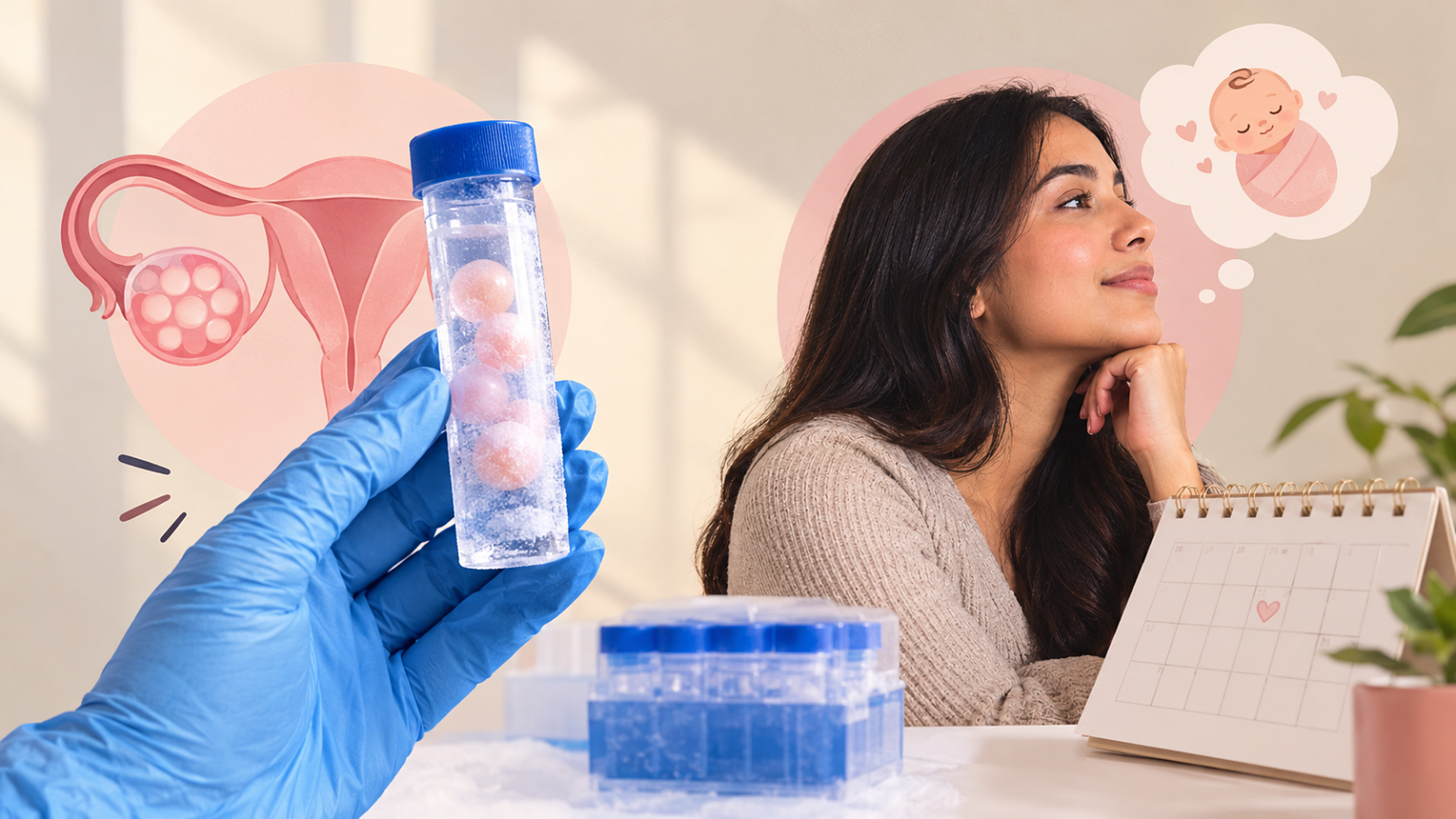 For women freezing eggs before 35, around 12-16 mature eggs may offer a reasonable chance of having one child in the future.
Freezing more mature eggs can improve the chances of a future pregnancy, but the total number is not the only factor that matters.
Dr Beena Muktesh, medical director of reproductive medicine at Motherhood Fertility & IVF, explains that “not every egg survives thawing, fertilises, or develops into a healthy embryo.” Consequently, the number of eggs frozen does not match the number that will eventually be available to help achieve a pregnancy.
Egg quality and age at freezing matter, too. Sperm quality, embryo development and the woman’s health when she attempts pregnancy can also influence the outcome. As Dr Muktesh explains, “the goal is to freeze an adequate number of good-quality eggs rather than simply maximise the total count.”
Even freezing a large number of eggs cannot guarantee a successful pregnancy or live birth.
Story continues below this ad
How can a fertility specialist estimate how many eggs you need?
The recommended number depends partly on ovarian reserve, which helps indicate how many eggs might be available for retrieval. Fertility specialists consider a woman’s age, medical history and plans for future children before suggesting an egg-freezing target.
Tests such as anti-Müllerian hormone (AMH) and antral follicle count (AFC) help assess ovarian reserve and estimate how the ovaries may respond to fertility medications. Dr Muktesh explains that these tests “help predict the likely number of eggs that may be retrieved in a cycle.”
However, these tests cannot guarantee the number of eggs retrieved or the likelihood of a future live birth.
It is also important to understand that not every egg retrieved will be mature enough to freeze. Some women may have 10 to 15 eggs retrieved in one cycle, but only a proportion may be suitable for standard egg-freezing procedures. The number varies by age, ovarian reserve, and response to fertility medications.
Story continues below this ad
If a cycle does not yield enough mature eggs to meet the agreed target, a woman may need additional cycles. This may be particularly relevant if she hopes to have more than one child.
What if you have a limited budget?
 Freezing more mature eggs can improve the chances of a future pregnancy because not every egg survives thawing, fertilises, or develops into a healthy embryo.
The overall cost of egg freezing varies depending on factors such as age, ovarian reserve, response to fertility medications and the number of cycles required. Since some women may need more than one cycle to reach their target, it is worth discussing the likely total cost before starting treatment.
Dr Singh suggests checking whether fertility centres offer equated monthly instalments (EMIs) to spread out the cost. Women can also ask their employers whether workplace well-being benefits cover egg freezing.
Before deciding, discuss your test results, future family plans, likely costs, and the possibility of needing multiple cycles with a fertility specialist.
Story continues below this ad
Egg freezing can preserve an option for pregnancy in the future, but it cannot guarantee that you will have a baby. The most appropriate number of eggs to freeze depends on your individual circumstances and should be decided with a fertility specialist.
DISCLAIMER: This article is based on information from the public domain and/or the experts we spoke to. Always consult your health practitioner before starting any routine.

Leave a Reply