
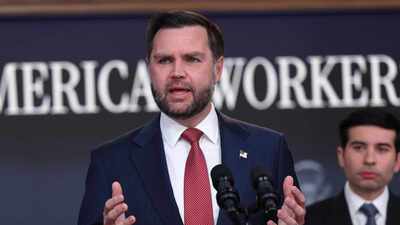
Following a long period of strained India-US ties, the gloves came off finally as India hit out at US Vice President JD Vance for labelling H-1B visa holders and foreign tech professionals as foreign indentured servants – a characterisation New Delhi slammed as deeply offensive and unwarranted.The scathing response followed the US announcement about the suspension of many tech companies, including several from India, from the PERM Green Card programme. Vance had reinforced the announcement by declaring that American workers cannot be laid off and then replaced with foreign indentured servants. He also insisted that only top-tier, elite foreign talent that’s not available domestically should be brought in.The Ministry of External Affairs (MEA) countered Vance’s comments as it said in a formal statement that such descriptions were unwarranted and ignored the fact that Indian professionals in the US are highly educated and skilled contributors to its economy and innovation ecosystem.“Indeed, the history of the United States itself has been shaped by generations of immigrants whose labour, enterprise and innovation have contributed to its growth and prosperity. Resorting to terminology that carries painful historical and colonial legacy connotations is deeply offensive,” said the ministry, adding it will continue to follow developments related to the issue.The unusually blunt pushback suggests India’s patience is wearing thin after a series of bilateral setbacks, ranging from trade and tariffs, immigration and talent mobility to India’s ties with Russia and Washington’s Pakistan outreach. External affairs minister S Jaishankar had recently warned that the US’ growing ties with Pakistan would hurt the India-US relationship.The ministry also cautioned in its response that the steps announced by the US do not advance the shared ambitions of both countries. It said talent mobility adds value to both economies, creating opportunities for Indians and helping US companies equally with cutting-edge talent, innovation, research, productivity, competitiveness and job creation, besides creating shareholder wealth in the US.“This is therefore an area of tremendous mutual benefit for the two countries and our expectation is that all stakeholders in this process can appreciate this fact,” said the Indian government.However, the statement also took note of the fact that PERM is distinct from the H-1B visa programme. “The suspension of PERM applications does not, by itself, affect the validity of existing H-1B visas or the status of H-1B visa holders and their dependents, though there could be some impact on the permanent-residency/Green Card process of eligible employees of the affected companies,” said the ministry.While the America First signalling through the announcement seems designed for an electoral boost in the upcoming mid-term polls, it’s unlikely to help the already rocky state of India-US ties. The timing is also problematic as it creates poor optics for PM Narendra Modi’s visit to the US in December for the G20 summit. It also comes just ahead of Secretary of State Marco Rubio’s visit to India this month, during which India will look to raise its concerns related to the issue.
Join conversation
Share your thoughts in the comments
Be respectful · TOI community guidelines
The US announcement is the latest flashpoint in ties after the US Sanctioning Russia and Iran Act of 2026 (SRIA), a new law that empowers the president to impose up to 100 percent tariffs on countries importing Russian oil. Modi had raised India’s anxieties about that issue in a phone call with President Donald Trump late last month.

Leave a Reply