

You’ve got your seat, your snacks and probably a phone full of downloaded shows. But on a long train journey, there’s one thing you can’t always plan around: the washroom.
Train toilets are shared by many passengers, so it’s natural to be a little more cautious about what you touch, where you place your belongings, and how you clean your hands afterwards. The good news? You don’t need an elaborate routine or a suitcase full of cleaning products.
A few simple habits — along with a small hygiene kit — can make that unavoidable trip to the washroom much easier. From handling taps and door latches to knowing what to carry and what menstruating women should keep in mind, here’s what experts recommend.
DISCLAIMER: This article is based on information from the public domain and/or the experts we spoke to. Always consult your health practitioner before starting any routine.
1. Wash your hands properly — and be mindful of what you touch
The most basic rule is also the most important one: clean your hands properly after using the toilet and before eating.
“Yes, proper handwashing with soap and running water is one of the best ways to remove germs,” Dr Aarti Ullal, physician and diabetologist, Gleneagles Hospital, Parel, tells indianexpress.com.
Ideally, wash your hands for about 20 seconds, making sure to clean the palms, backs of the hands, between the fingers and around the fingertips and nails.
Story continues below this ad
If possible, use a tissue or clean paper to open the washroom door after washing your hands. But don’t panic if you have to touch the door directly — touching a potentially contaminated surface does not automatically mean you will get an infection. The bigger concern is what happens if those germs are transferred from your hands to your face.
“The bigger concern is touching your mouth, nose, or eyes with contaminated hands.”
So, while inside the washroom, avoid touching your face unnecessarily and clean your hands before you eat.
2. Carry your own little hygiene kit
One of the easiest ways to avoid being caught off guard is to carry a few essentials yourself.
Story continues below this ad
Dr Ullal suggests keeping an alcohol-based hand sanitiser, liquid soap or soap strips, tissues or toilet paper, wet wipes, a small packet of disinfectant wipes and a disposable bag for used tissues or waste.
If you’re travelling with children or elderly family members, carry some extra supplies as well.
And if the train washroom happens to be out of soap or water, an alcohol-based hand sanitiser containing at least 60 per cent alcohol can come in handy.
“Sanitiser is useful when hands are not visibly dirty, but it does not replace soap and water when hands are visibly soiled.”
Story continues below this ad
If toilet paper is unavailable, tissues or toilet paper carried from home can serve as a temporary alternative.
3. Don’t panic about every surface — just avoid touching your face afterwards
Taps, door latches and other frequently touched surfaces may understandably make you a little wary.
“These surfaces can have germs because many people touch them.”
However, that doesn’t mean touching a tap or latch automatically makes you sick or that “you will become infected.”
Story continues below this ad
The more useful approach is to minimise unnecessary contact and make sure those germs don’t travel from your hands to your face.
“The important step is preventing those germs from reaching your eyes, nose or mouth and cleaning your hands afterwards.”
If it makes you more comfortable, use a tissue to operate taps or latches as an additional precaution. Also, avoid placing your phone, water bottle or food on potentially dirty washroom surfaces.
4. Keep your footwear on and remember the little things
This may sound like common sense, but tired passengers can sometimes let their guard down during a long journey.
Story continues below this ad
Avoid walking barefoot in the washroom. Train toilet floors can be wet and are shared by many passengers, so keeping your footwear on is a simple precaution.
Dr Ullal also recommends closing the toilet lid, if one is available, before flushing.
Some other easy mistakes to avoid? Eating without cleaning your hands, touching your face after handling washroom surfaces, and leaving food uncovered after returning to your seat.
5. If you’re travelling during your period, plan ahead
A train journey doesn’t have to become more difficult simply because you’re menstruating. The key is carrying enough supplies and knowing how to dispose of them hygienically.
Story continues below this ad
“Menstruation should not stop women from travelling, but planning can make the journey much more comfortable and hygienic,” says Dr Pavana H N, Consultant – Obstetrician & Gynaecologist, Motherhood Hospitals, Sector 48, Noida.
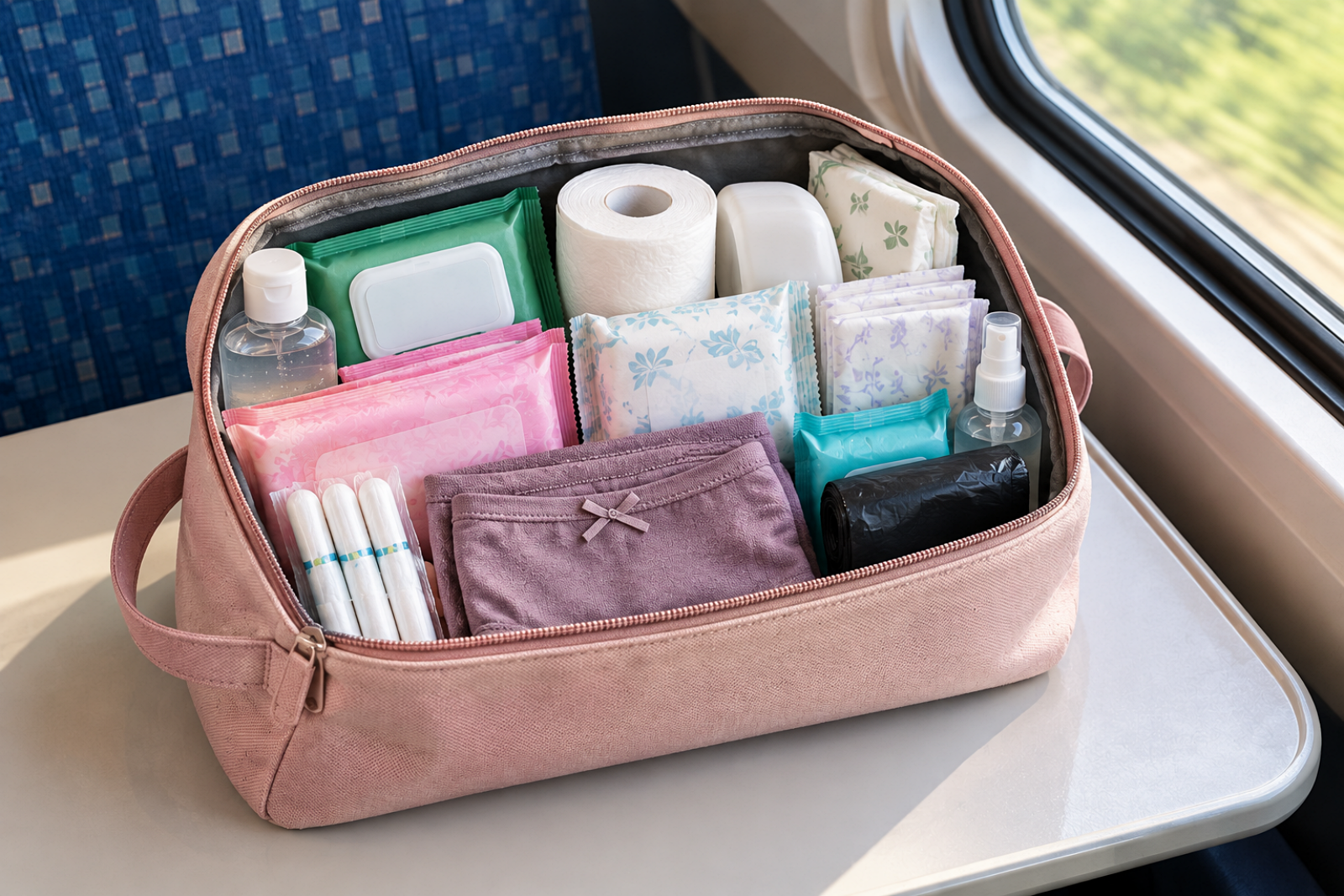 Essentials: Hand sanitiser, soap/soap strips, tissues or toilet paper, wet wipes, disinfectant wipes, disposable waste bags, menstrual products, intimate wipes if needed, and an extra pair of underwear.
Carry enough pads, tampons or other menstrual products for the journey, along with a few extras. Sanitary pads should ideally be changed every 4–6 hours, or sooner if soaked, while tampons and menstrual cups should be changed or emptied according to their recommended schedule.
Clean your hands before and after changing a menstrual product, and avoid placing menstrual products on potentially dirty washroom surfaces.
Used disposable menstrual products should be wrapped properly and put in a bin. Do not flush sanitary pads down a train toilet, as they can block the toilet system.
Story continues below this ad
A useful period-travel kit can include extra menstrual products, toilet paper or tissues, hand sanitiser, wet wipes, disposable bags, an extra pair of underwear and, if necessary, a small water bottle in case water availability is uncertain.
“The most important thing is clean hands.”
Dr Pavana also advises avoiding heavily perfumed products and harsh soaps on the genital area, as these can cause irritation and disturb the natural balance of the area.
6. Clean your hands before reaching for your food
After using the washroom, the temptation is understandable: get back to your seat, open your lunchbox and start eating.
But before you reach for that sandwich or snack, make sure your hands are clean.
Dr Ullal recommends washing with soap and running water for about 20 seconds, making sure to cover the palms, backs of the hands, between the fingers and around the fingertips and nails.
If you cannot wash properly, use an alcohol-based hand sanitiser and allow it to dry completely. Avoid touching food immediately after handling washroom doors, taps or other frequently touched surfaces.
The goal is simple: keep germs picked up from frequently touched surfaces away from reaching your face or food.
A train washroom may not offer the same comfort as your bathroom at home, but a few sensible habits can make a big difference. Keep your footwear on, minimise unnecessary contact with potentially dirty surfaces, carry a few basic supplies and make hand hygiene a non-negotiable part of the journey. For menstruating passengers, planning and carrying the right supplies can make the experience considerably easier too.
DISCLAIMER: This article is based on information from the public domain and/or the experts we spoke to. Always consult your health practitioner before starting any routine.

Leave a Reply