
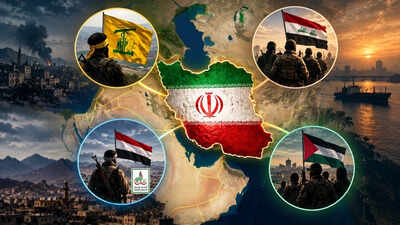
Mothers and the Islamic Republic of Iran have something unexpected in common: they both understand that it takes a village to raise a child, though what a child and a village mean to each of them differs.For Iran, the child is its influence in the Middle East and its village, the network it has built over the years in this same region –– Hezbollah in Lebanon, militias in Iraq, the Houthis in Yemen and armed groups elsewhere, each with its own capabilities, interests and relationship with Tehran.The groups operate in very different political and military environments, but together they give Iran a way to contest its adversaries without committing its own forces to every battlefield.But the village is not as strong as it once was, and the recent conflict has shown where its foundations have cracked or given way.How Tehran keeps it standing comes down to four moves: pacing its partners, replacing the ones it has lost, paying for all of it through channels that sanctions have made costlier without closing, and tolerating allies it cannot command.
Iran’s village
The Axis of Resistance exists because of fear. On January 29, 2002, George W Bush put Iran, Iraq and North Korea in his “Axis of Evil”, at a moment when the United States had already invaded Afghanistan and was preparing for war in Iraq. American power was closing in on Iran from two sides, and Tehran had reason to believe it could be next.
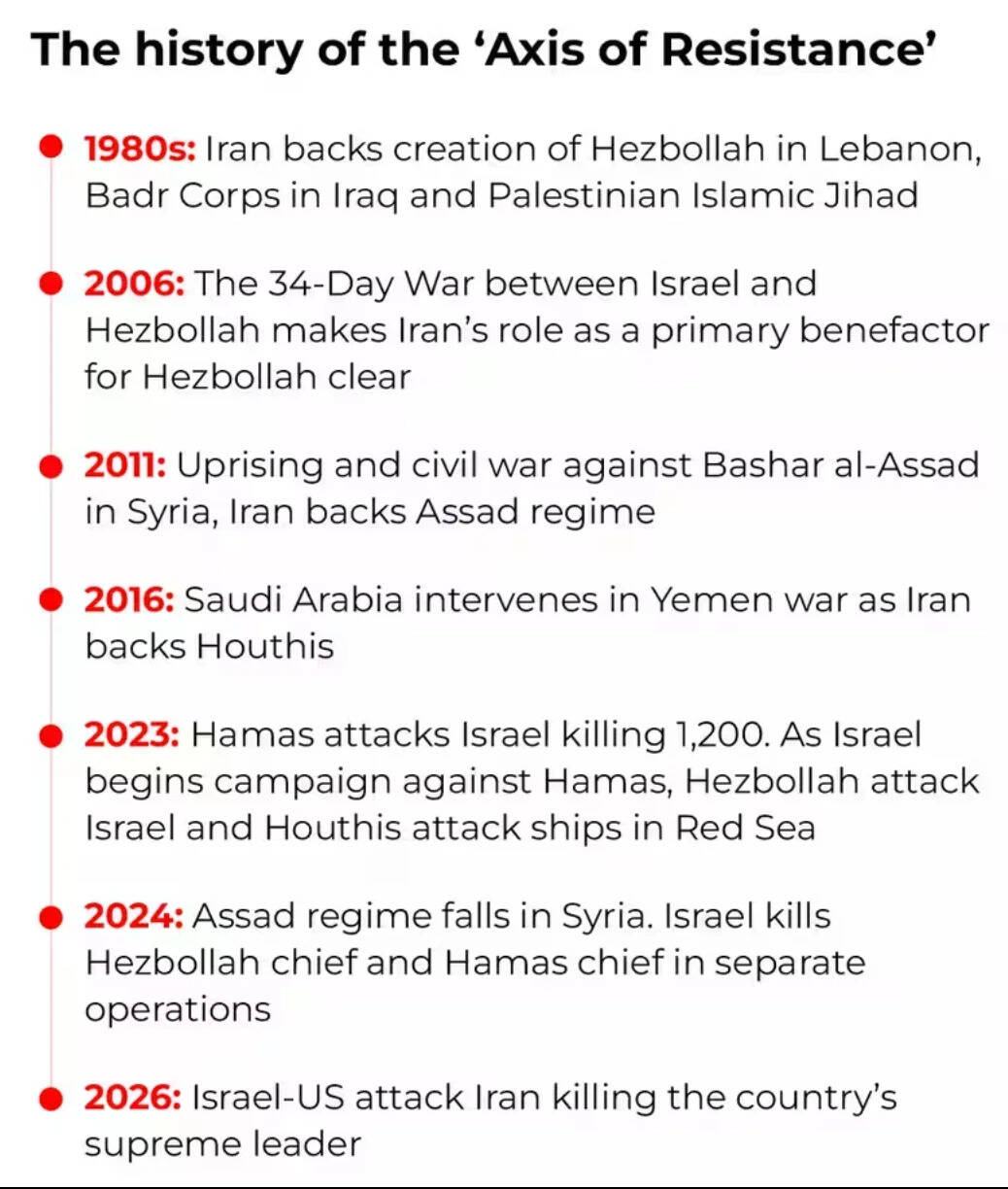
The habit of reaching beyond its borders was by then two decades old. Iran had sent Revolutionary Guards to Lebanon in 1982 to train the Shia fighters who would form Hezbollah, and during the Iran-Iraq war it had organised Iraqi Shia exiles into the force that became the Badr Organization. The speech and the wars that followed turned that habit into a doctrine of strategic depth, in which armed partners in different theatres would force Iran’s opponents to account for several fronts at once and keep a confrontation from reaching Iranian territory first.The network was never uniform. Hezbollah became deeply integrated with Tehran, Iraqi militias developed their own political bases, and the Houthis kept far greater autonomy. That unevenness decides what Tehran can ask of each member.
The strain
Since the war began on 28 February, the arrangement has been tested harder than at any point in its history. Hezbollah has been badly weakened, Syria’s role as the land bridge to Lebanon ended with the fall of Assad, and Supreme Leader Ali Khamenei has been killed. A ceasefire and a memorandum of understanding followed in June, then came apart over the Strait of Hormuz.Manish Rai, a geopolitical analyst specialising in the Middle East and Af-Pak region, traces the breakdown to one clause. “The strikes were resumed because of the different interpretations of article 5 in MoU which concerns the Strait of Hormuz,” he says. Washington wants the strait kept as it was before 28 February, while Iran, which had begun fining vessels for transiting it, wants control. American forces began nightly strikes on 11 July, and diplomacy has since stalled: by the war’s seventh month Trump had rejected an Iranian offer of a seven-day ceasefire, and the Wall Street Journal reported that he expects the bombing to resume after the November midterms.
Pace the partners
Rai also points out that Tehran has not been to throw everything into the fight at once. To maintain their control the leadership, he says, advised its partners to pursue low-intensity conflict, since an all-out war could destroy groups such as Hamas and Palestinian Islamic Jihad while a slower campaign still drains an adversary. Some groups were held back, among them Bahrain’s Al-Ashtar Brigade and the Shia units of Pakistan and Afghanistan, which have gone into what he calls “a bit of hibernation” because Tehran has no wish to open fronts against Islamabad or Kabul.The logic behind their strategy is endurance. Tehran does not need every partner to fight at full strength, or even to enter the war at the same time. It needs enough of them to remain intact, armed and capable of being activated when circumstances demand it. A slower, uneven campaign allows Iran to keep pressure on its adversaries while limiting the risk of exhausting the very groups it may need in a later phase. In that sense, the network is not built for one decisive battle; it is built to absorb losses, preserve its remaining capabilities and keep multiple fronts available for as long as the conflict lasts.
Replace what has been lost
Hezbollah is the most capable member of the Axis, and Rai argues that if Israel reduces it to a shadow of its former self, the resulting void “cannot be filled by any other Iranian-supported organisations”.Diplomacy is working against it as well as force. A US-brokered framework signed on 26 June ties a phased Israeli withdrawal from southern Lebanon to the disarmament of non-state armed groups, a reference to Hezbollah, which rejected the terms and insists that withdrawal come first. That dispute over sequencing has outlasted several rounds of talks, while Israeli strikes in the south continue.
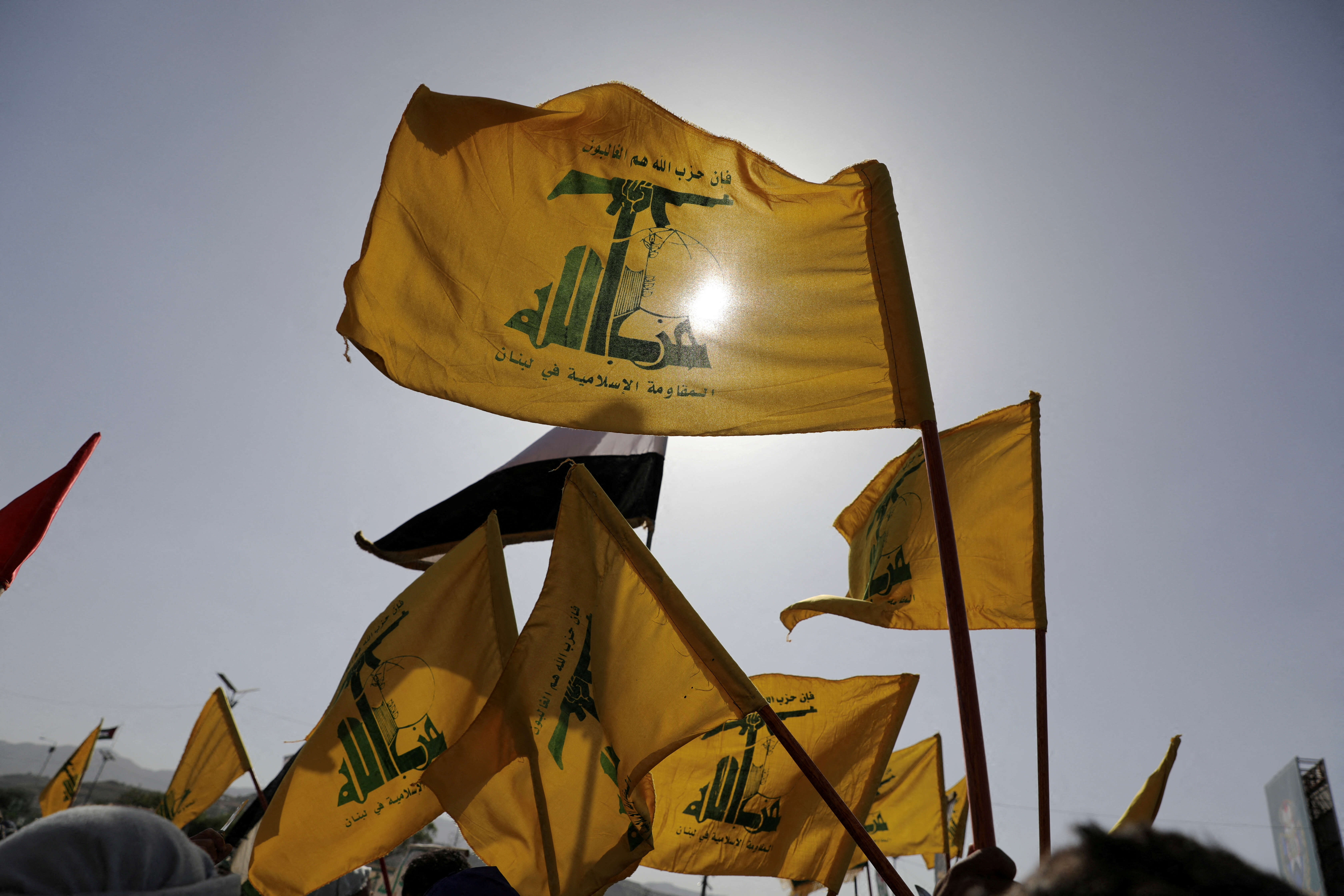
File photo: Hezbollah flags flutter as protesters rally to show support to Palestinians in the Gaza Strip and Lebanon’s Hezbollah
What Tehran can do is shift weight to the partners it still reaches. Iraq’s Popular Mobilisation Forces are the obvious candidate, because they are next door and large, an estimated 100,000 to 125,000 fighters by Rai’s count, with Kataib Hezbollah and the Badr Organization among them.He describes them as Tehran’s “personal favourites”, available as ground forces for the Revolutionary Guards and as an internal-security backstop that would free elite Iranian units for operations against the United States and Israel.Substitution also has a limit, Hezbollah has built loyalty over decades through its social services, and as Rai suggests, “if the US, Israel, and international organisations such as the United Nations provide sufficient funding for these services, public support could gradually shift from Hezbollah to the Lebanese state.”An army can be replaced faster than a constituency, and that is as true in Beirut as in Tehran’s calculations.
Keep the money moving
All of this has to be paid for, but Iran’s financial support for its partners does not move through one pipeline. It runs through a mix of sanctioned oil sales, front companies, informal banking networks, cash, trade intermediaries and, increasingly, digital assets. The system is designed less to make money invisible than to make it difficult for any single disruption to stop the flow altogether.American sanctions this year have targeted several parts of that machinery. In April, Washington moved against an oil-for-gold network that it said generated revenue for Hezbollah and the Quds Force. In July, the US Treasury targeted a maritime-services network linked to Iran that it said used digital assets to facilitate payments, while continuing to sanction vessels involved in the country’s shadow-fleet trade. Earlier sanctions have also identified front companies and intermediaries operating outside Iran, including in Hong Kong and the Gulf.Rai describes a parallel informal system in which sanctioned crude is sold through shadow tankers, proceeds are moved through front companies and intermediaries, and hawala networks settle payments across borders without relying on conventional banks. Some money can move as cash, while other transfers can be disguised through commercial transactions, charities or businesses that have legitimate operations alongside their financial role. Cryptocurrency provides another route where conventional banking channels are difficult or unavailable.But the financial relationship between Tehran and its partners is not simply one-way. Hezbollah, the Houthis and other groups have developed their own revenue streams, from businesses and investments to taxation, smuggling and other illicit activity, reducing their dependence on Iranian transfers. That distinction matters because sanctions can make Iranian support more expensive and complicated without necessarily making the organisations themselves financially helpless.The result is a system that is under pressure but difficult to shut down. Every new sanctions round can force Tehran and its partners to change intermediaries, routes or payment methods, but the network has accumulated enough alternative channels to keep at least some money moving. For Iran, financial resilience is therefore less about maintaining an uninterrupted flow than about ensuring that when one channel closes, another remains available.
Tolerate allies it cannot command
The Houthis show where this strategy runs out. Ansar Allah began in the early 1990s as a nationalist and cultural movement against Salafi influence and the marginalisation of Yemen’s Zaydis, and drew close to Tehran only after turning sectarian. It does not accept velayat-e faqih, the doctrine of clerical guardianship that Hezbollah and many Iraqi militias follow, and its first aim is power at home. Rai calls it “an independent ally, rather than a strict proxy”.
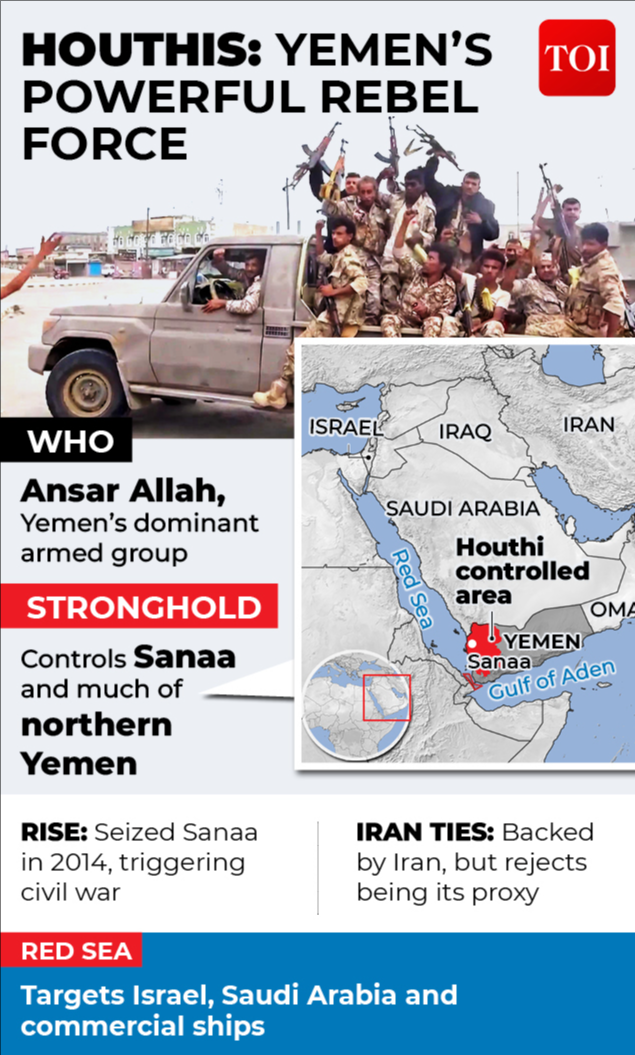
A decade of war has transformed the Houthis from a local insurgency into a force capable of threatening Saudi Arabia, Israel and international shipping
The summer tested that, the Houthis stayed out of the Saudi front until 13 July, when Saudi Arabia struck Sanaa airport to stop an Iranian plane returning their delegation from Khamenei’s funeral. They responded with missiles at a southern Saudi airport, then declared a naval blockade of Saudi Arabia and hit two major Saudi oil facilities on the Red Sea, and on 8 September a barrage wounded seventy-three people in the kingdom.The Houthis escalated only after an affront to their own delegation, which suits a cautious, self-interested actor, yet their targets are the ones that most relieve pressure on Iran, and Rai says Tehran has encouraged threats against Bab el-Mandeb and the East-West “Petroline” pipeline built to bypass Hormuz.Yemen’s war has its own logic too, since government forces say their offensive aims at retaking Sanaa. Tehran can decide when to activate an ally and cannot necessarily dictate how it fights, which is the cost of an Axis that keeps going partly because its members do not wait for orders.Iran gains from Saudi Arabia’s predicament, since Riyadh has avoided direct retaliation against Iran, calling the war “not our war”, and has refused the US Navy the use of its bases for the Hormuz navigation effort. Rai says it fears offending religious sentiment at home and forfeiting its standing as leader of the Sunni world, while the United Arab Emirates has taken a harder line by cooperating with Israel and striking inside Iran. A divided Gulf suits a strategy of attrition, though Houthi and Iraqi pressure may be pushing Riyadh towards limited retaliation.
The test in Iraq
Iraq is where the four moves now face their clearest test. On September 30, the United States completed its military withdrawal from Iraq, formally ending the Operation Inherent Resolve mission after more than a decade. Washington will continue to support Baghdad with training and intelligence, but the security responsibility now rests with the Iraqi state.
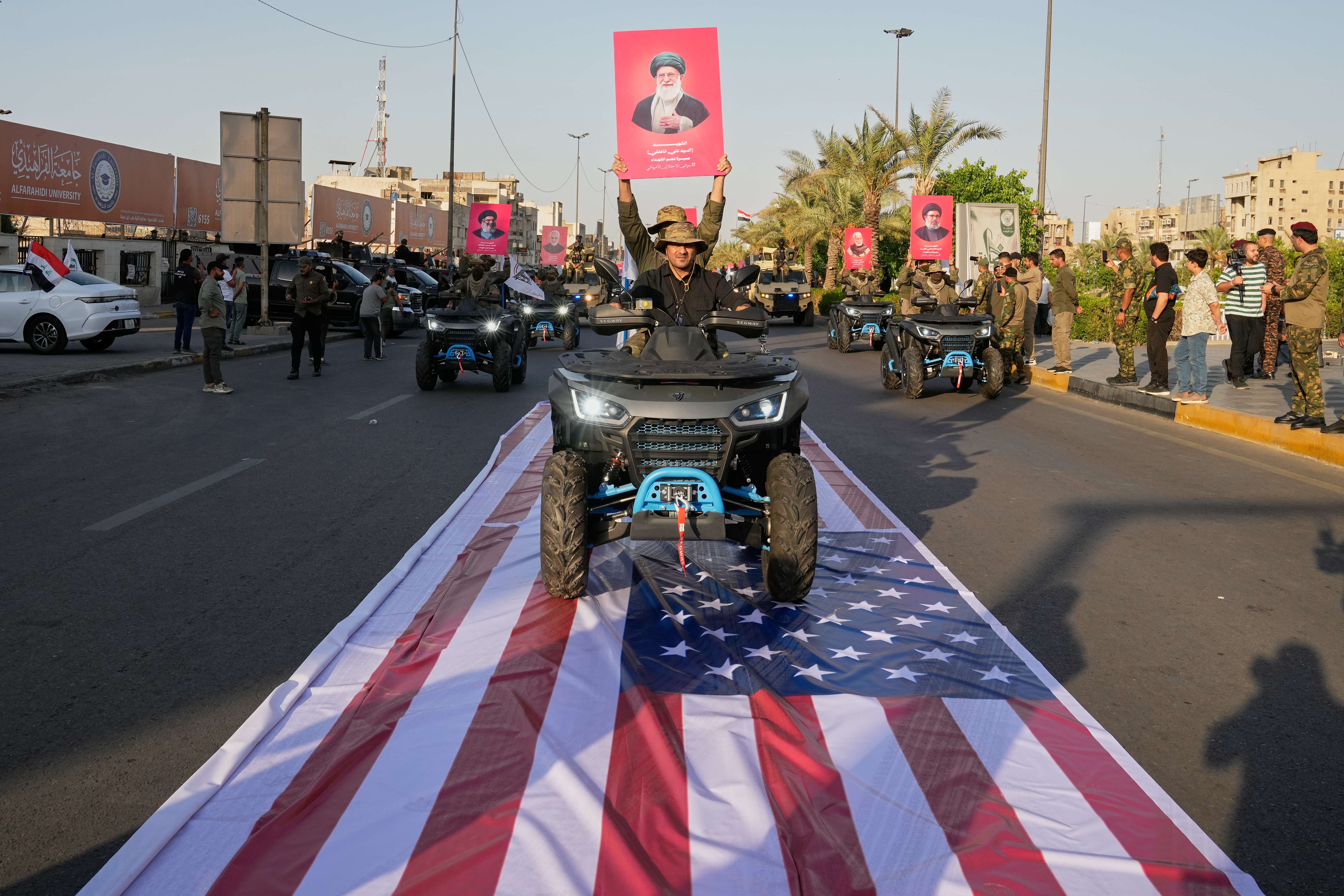
File photo: Members of Iraq’s Iran-allied Popular Mobilization Forces carry a portrait of Iran’s late Supreme Leader Ayatollah Ali Khamenei as they ride over a US flag during a procession
The other deadline did not end with the American departure. Prime Minister Ali al-Zaidi had originally tied the disarmament of armed factions to September 30, but Baghdad has since pushed the deadline to June 30, 2027. Under the revised plan, Iran-aligned armed groups are expected to observe a 90-day halt to attacks before beginning a gradual handover of weapons to the state. The timetable is already facing resistance: some of the most powerful factions have rejected the idea of surrendering their weapons voluntarily.That makes the American withdrawal less a conclusion than the beginning of a new test. For years, the presence of US forces gave Iran-backed groups both a target and a justification for maintaining an armed role. With those forces gone, Baghdad has less room to argue that the militias are needed to resist a foreign military presence, but it also has to prove that the state can enforce its authority without triggering a confrontation with the factions themselves.If Baghdad succeeds, Iran’s village loses one of its most important advantages: an armed network embedded inside a partner state. If it fails, the American withdrawal may leave the militias with greater room to operate, even as Baghdad formally insists that all weapons must come under state authority.The village has survived by bending: it has paced its partners, shifted weight to those closest to home, found money through channels that pressure has narrowed without closing, and put up with allies who answer to their own politics. The same flexibility that has kept it standing is also what Tehran can no longer fully control.

Leave a Reply