
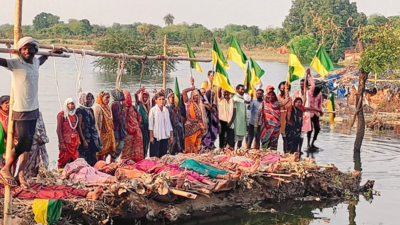
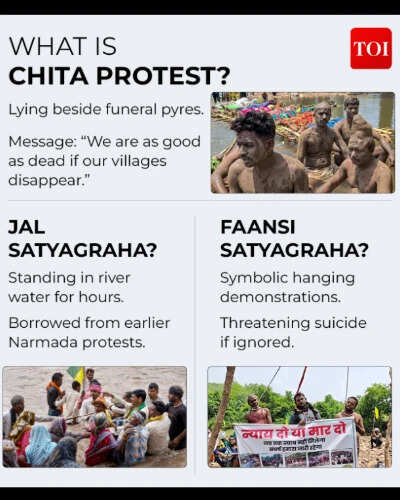
Remember the unnerving visuals from Chita Andolan in Madhya Pradesh? Displaced Tribals sleeping on pyres, standing in water for their compensation. The unique protest is back and in its 20th day with agitators battling rain, waterlogging, lathicharge and general apathy by the authorities.Activist Amit Bhatnagar, Jai Kisan Sangathan leader, who has been on a hunger strike for the past four days, was arrested on Wednesday as protesters demonstrated chita, jal, sooli, mitti, bhook (pyre, water, gallows, soil, hunger) other forms of satyagraha.What is happening in Madhya Pradesh’s Panna?Bhatnagar accused the Panna administration of suppressing the agitation by lathicharging protesters, including women.Speaking to TOI before his arrest, Bhatnagar said, “For the past three days, the police have been bringing along people dressed in plain clothes, who misbehaved with women, entered their homes and even took away people’s phones which have still not been returned. When we approach the police, they ask who took the phones. How are people supposed to identify every face and find out who took them?”“There is an atmosphere of fear in the villages. If we say anything, they start resorting to lathi-charge and filing false cases against the protesters,” he added. “I am courting arrest because democracy is being murdered. Are we not even allowed to protest peacefully? We are putting ourselves through hardship to raise our concerns, but instead of listening to us, they have cut off the electricity and water. Even the British never did this.”
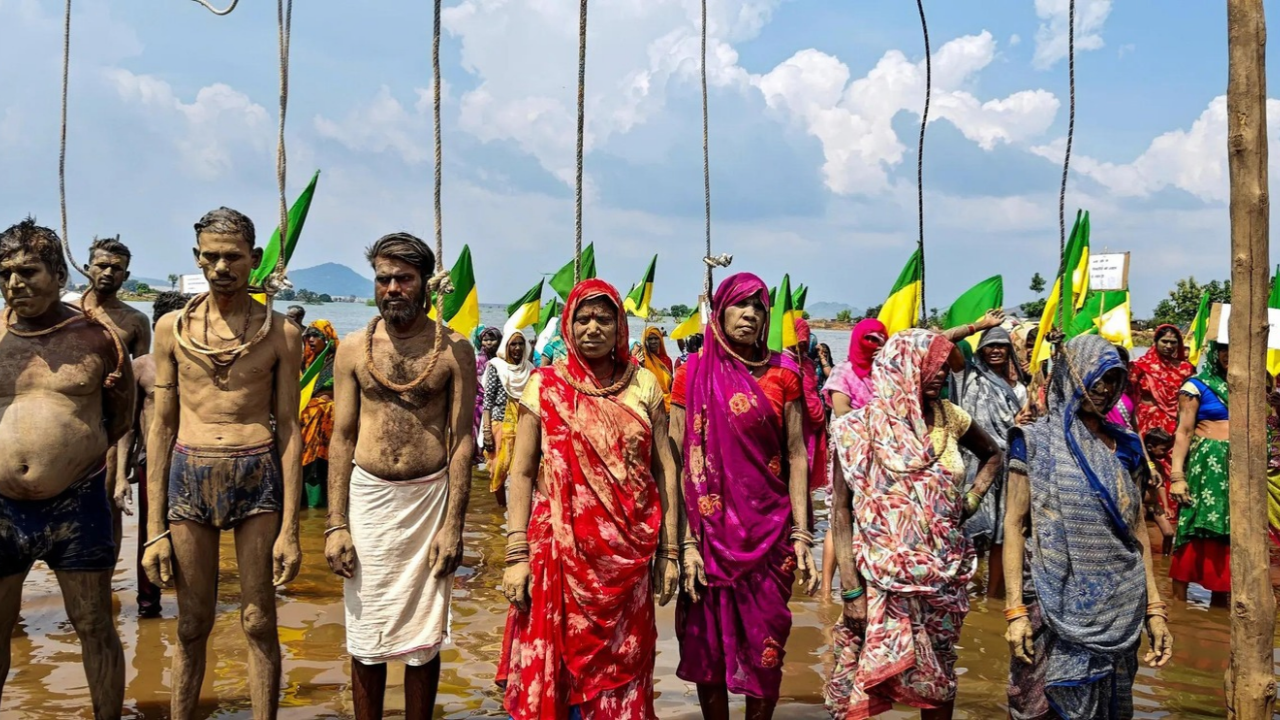
Several women and other protesters had fallen ill after staying in water and rain for several days, with some suffering from wounds on their feet and other skin-related problems. (ANI photo)
So why are the protesters back?The latest protest follows a 15-day agitation in July, led largely by tribal women, after which the administration had assured protesters that eligible and genuinely displaced families would be transparently included in compensation and rehabilitation lists.However, the protesters claimed that they did not get the promised compensation. Also, their houses were now inundated, with two to three feet of water entering homes in several villages which now stand waterlogged including Mandalia, Tapariya and Kuwarpur.“The families whose houses have been submerged are so poor that they have been forced to continue living there, or put up one makeshift shelter next to another, and then another. Earlier, the water would rise by half a foot at a time. But this time there was heavy rain on the 26th and 27th of September, followed by a 24-hour red alert, leaving them with no time to move. The villages turned into islands,” said Bhatnagar.
For thousands of tribal families living in the path of the project, it has become a battle over land, forests, livelihoods and identity.
The protesters claim that the compensation process remains incomplete, with several families receiving only Rs 5 lakh despite the government announcing a Rs 12.5-lakh package.They are also opposing the compensation conditions, which makes several tribals ineligible for relief.“The cut-off date under Section 11 has been set as 2018, which means people who are now 25-26 years old have received nothing. Those who are older are getting only Rs 5 lakh. What are families with eight or 10 children supposed to do?” asked Bhatnagar, adding that they were not against development projects, but that this development should not come at the cost of the rights of tribals.
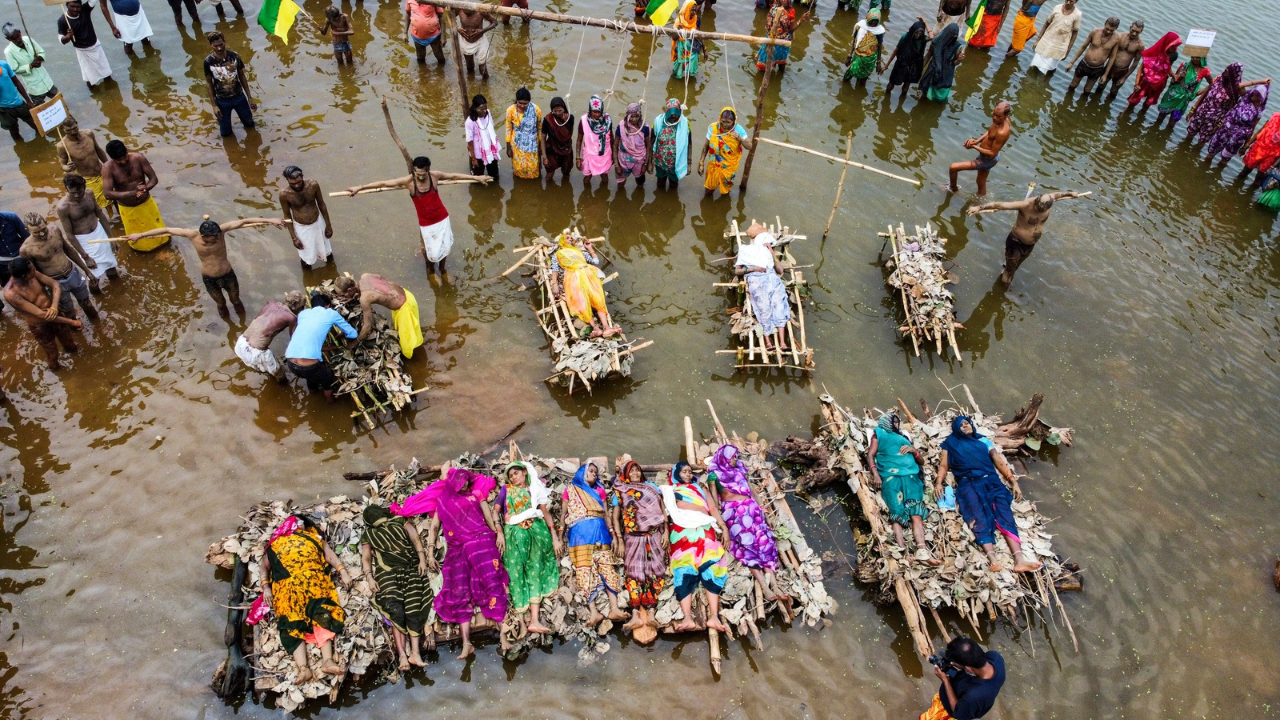
Affected families have staged some of the country’s most striking demonstrations, standing waist-deep in river water, laying beside symbolic funeral pyres and even climbed symbolic gallows.
Bhatnagar pointed to Section 38 of the Right to Fair Compensation and Transparency in Land Acquisition, Rehabilitation and Resettlement Act, 2013, which he said raised concerns about any displacement or submergence taking place before compensation and rehabilitation obligations had been fulfilled.“Villages and homes are now submerged. Houses have started collapsing and water has entered them. Yet, Section 38 of the 2013 law says that compensation for an irrigation project should be paid six months before submergence. If the houses were submerged two months ago, compensation should have been paid eight months earlier,” he said.The authorities, on the other hand, claim that they have been conducting fresh surveys and distributing compensation to affected families. TOI reached out to Chhatarpur district magistrate and is still awaiting a response from the administration.
Join conversation
Share your thoughts in the comments
Be respectful · TOI community guidelines
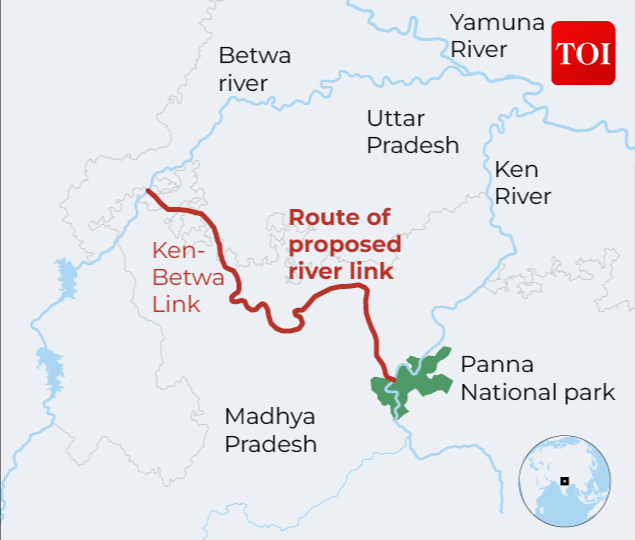
‘Ken-Betwa River Linking Project’ is India’s first river-linking initiative aimed to transform the drought-prone Bundelkhand region through irrigation, drinking water supply and power generation.
What is the project aiming to accomplish?The Majhgawan dam project aims to transfer surplus water from Ken river to Betwa through the Daudhan Dam, a network of tunnels and a 221-km canal. It is supposed to address water shortages in drought-prone Bundelkhand region that spans across Madhya Pradesh and Uttar Pradesh.The project traces back to a plan introduced in 1980 and cleared in 2021 to connect the rivers. Prime Minister Narendra Modi laid its foundation stone in December 2024.The project is expected to improve agricultural output, curb migration and strengthen groundwater recharge through the revival of traditional Chandela-era ponds.

Leave a Reply