

A small cut, blister or sore on the foot may not seem serious, but for people with diabetes, even a minor wound can sometimes become difficult to heal. Reduced sensation, poor blood circulation and high blood sugar can make it easier for an infection to develop and become more serious.
But can an infected diabetic foot ulcer actually spread to the bone? And what happens if it does?
A similar question was posted on Quora: Can a diabetic foot ulcer cause a bone infection? In response, Dr Rajiv Kovil, Diabetes & Obesity Specialist at Zandra Healthcare, explains how a diabetic foot infection can progress, the warning signs to watch for, and when surgery may be necessary.
DISCLAIMER: This article is based on information from the public domain and/or the experts we spoke to. Always consult your health practitioner before starting any routine.
Can a diabetic foot ulcer spread to the bone?
“Yes. An infected diabetic foot ulcer can gradually spread from the skin into the deeper tissues and eventually reach the bone,” Dr Rajiv Kovil confirms.
In fact, infection of the bone is medically called osteomyelitis and is one of the most serious complications of a diabetic foot ulcer.
As Dr Kovil explains, bacteria may spread from the ulcer into the fatty tissue, fascia, tendons, muscles, joints and finally bone. Deep or longstanding ulcers are particularly concerning, especially those lying over a “bony prominence”.
Story continues below this ad
“Once infection becomes deep, pus, tissue destruction and swelling can increase pressure within the foot and further compromise blood supply,” he says.
Without prompt treatment, the infection can progress rapidly and threaten the toe, foot or limb and, in some cases, the patient’s life.
 Screenshot of the query posted on Quora
Why are people with diabetes more vulnerable to serious infections?
Several problems can occur together in diabetes. Diabetic neuropathy can reduce sensation in the feet, meaning a person may develop a blister, cut or pressure injury without noticing it. Continuing to walk on the affected area can then make the wound larger.
Poor circulation can add to the problem. People with diabetes may develop peripheral arterial disease (PAD), which reduces blood flow to the foot and can impair wound healing.
Story continues below this ad
“Hyperglycaemia and associated medical problems can further interfere with the body’s response to infection and healing,” explains Dr Kovil.
Another concern is that a serious infection does not always produce dramatic symptoms.
“Fever and chills may be absent even with significant infection,” he further adds.
This combination of an unnoticed injury, delayed healing, infection and inadequate circulation is why even a seemingly small foot ulcer in someone with diabetes should not be ignored.
Story continues below this ad
What signs suggest that an ulcer may have reached the bone?
Increasing redness, warmth or swelling around the wound can be warning signs. Pus or discharge, a foul odour, an ulcer becoming larger or deeper, or tissue turning dark or necrotic should also prompt medical attention.
Redness spreading beyond the wound can indicate that the infection is extending. A swollen, red toe may also be an important clue.
“A deep ulcer, visible bone, or bone that can be felt with a sterile probe raises suspicion of osteomyelitis,” says Dr Kovil.
Pain may increase as an infection progresses, but its absence does not necessarily mean the infection is mild. Diabetic neuropathy can reduce sensation significantly.
Story continues below this ad
“Fever, chills, marked weakness or worsening blood glucose can indicate more severe infection, although fever may be absent,” he adds.
Gangrene, rapidly spreading redness, a deep abscess or signs of poor circulation require urgent assessment because these can represent a limb- or life-threatening infection.
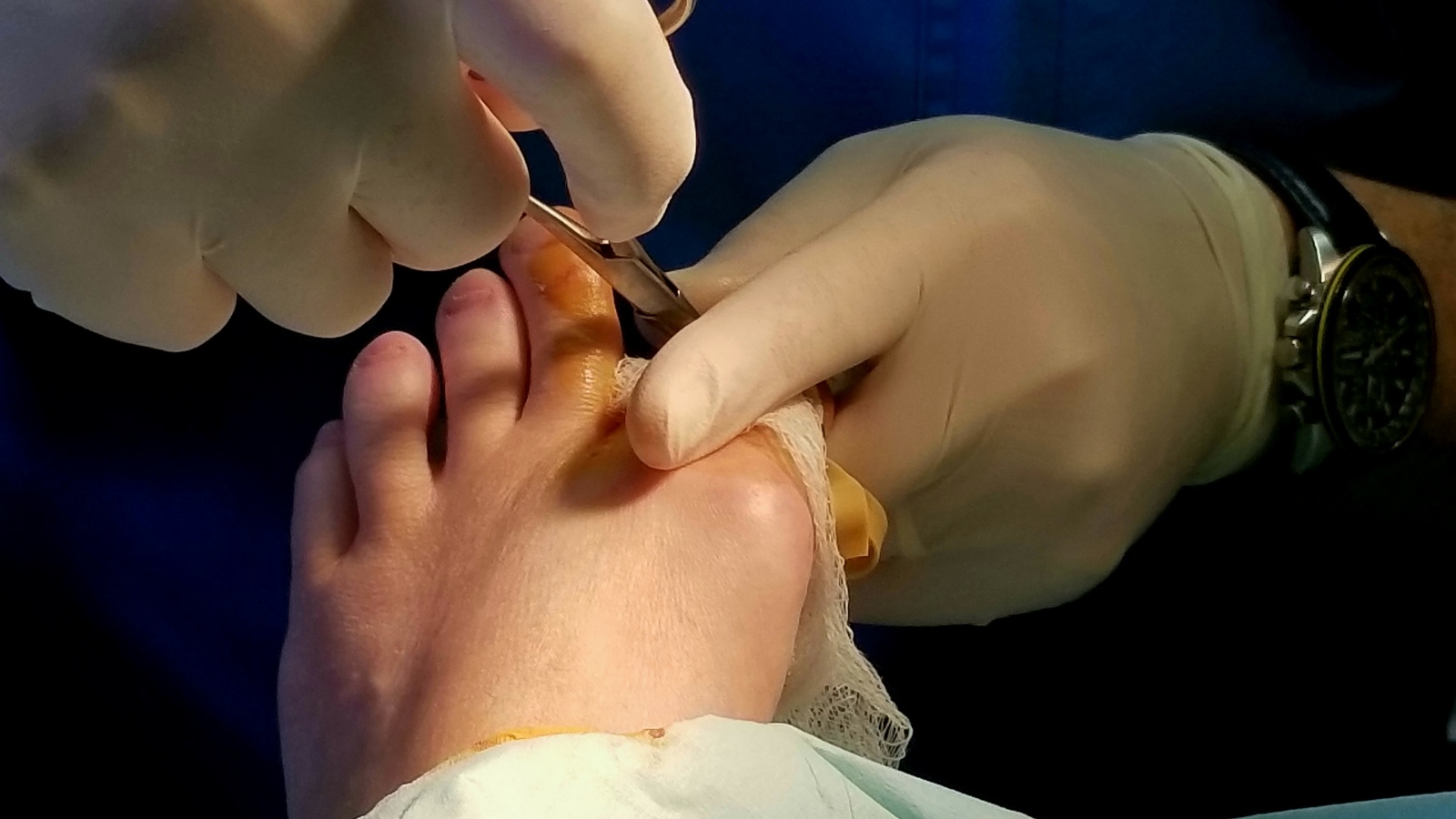 Major amputation is reserved for situations where limb or life is seriously threatened (Envanto)
How do doctors determine whether the infection has reached the bone?
Doctors first assess the ulcer’s size, depth and severity, look for signs of infection and check the blood supply to the foot.
One useful bedside test is the probe-to-bone test. A sterile blunt probe is gently introduced into the ulcer, and feeling hard, gritty bone increases the likelihood of osteomyelitis.
Story continues below this ad
“The recommended initial investigation combines this clinical assessment with a plain X-ray and inflammatory markers such as ESR or CRP when appropriate,” says Dr Kovil.
However, an early bone infection may not show up on an X-ray. “Importantly, an early X-ray can sometimes be normal, so a normal film does not completely exclude osteomyelitis,” he explains.
If uncertainty remains, MRI is the preferred advanced imaging test, while PET or a bone scan may be alternatives in selected cases.
When doctors need to identify the organism causing a suspected bone infection, a bone specimen obtained under sterile conditions for culture is preferred to a superficial wound swab.
Story continues below this ad
Can diabetic foot osteomyelitis be treated without surgery?
Not every case requires surgery. Selected cases of diabetic foot osteomyelitis can be treated with antibiotics without removing the infected bone.
“Current IWGDF/IDSA guidance particularly supports considering this approach for forefoot osteomyelitis when there is no peripheral arterial disease, no exposed bone and no immediate need to drain an abscess or control deep infection,” Dr Kovil notes.
When osteomyelitis is treated without bone resection, treatment generally involves about six weeks of appropriate systemic antibiotics.
However, surgery becomes important when there is dead or extensively infected tissue or bone, an abscess, gangrene, necrotising infection, compartment syndrome, severe infection or significant ischaemia.
Story continues below this ad
“Blood supply must always be assessed; where circulation is inadequate, vascular assessment and sometimes revascularisation are crucial,” he says.
When surgery is required, the aim is to remove the infection while preserving as much functional foot and limb as safely possible. Major amputation is reserved for situations where the limb or life is seriously threatened.
DISCLAIMER: This article is based on information from the public domain and/or the experts we spoke to. Always consult your health practitioner before starting any routine.

Leave a Reply