
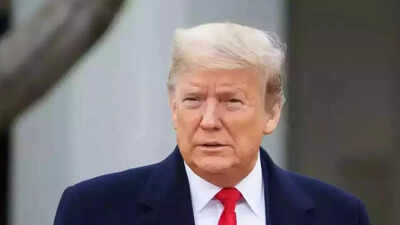
US President Donald Trump has rejected Iran’s seven-day ceasefire proposal and told aides that he expects US bombing of Iran to resume after the November midterm elections, according to US officials cited by The Washington Post.Tehran had offered to reopen the Strait of Hormuz and restart nuclear talks with the US as part of the proposed arrangement.Under Iran’s proposal, the United States would lift its naval blockade of Iranian ports, ease sanctions on Iranian oil exports and observe a ceasefire that includes Lebanon. In return, Iran would reopen the Strait of Hormuz and resume negotiations with Washington on its nuclear programme.Meanwhile, Trump has said that Tehran is seeking a deal after the midterms that would dismantle its nuclear programme. However, according to The Washington Post, Trump privately remains skeptical that Iran would meet his demands and has told aides that renewed bombing is likely.The scale of any possible renewed US strikes remains unclear. Trump is reluctant to resume major combat operations, partly because the United States wants to preserve dwindling munitions for other contingencies, the officials said.
What was Iran’s 7-day proposal?
Iranian foreign minister Abbas Araghchi said Tehran had offered Washington a seven-day framework under which the Strait of Hormuz could be reopened and nuclear negotiations resumed.“If the necessary conditions are met, the strait can be reopened, a normal maritime passage restored within seven days. The choice now rests with the United States,” he said.“The seven-day timeline will start as soon as the United States accepts this plan,” Araghchi said.Under the proposal, Washington would lift its naval blockade of Iranian ports, waive sanctions on Iranian oil sales and observe a ceasefire including Lebanon.Araghchi said the initial measures would take four to five days, with the Strait of Hormuz reopening on the sixth day.“And on day seven, the talks with the U.S. will be started for the final deal on mutually agreed subjects,” he said.Araghchi said the measures Washington would need to take were already covered by the memorandum of understanding reached between Iran and the United States in June.“The actions that the United States should should take are not new. They are all already in the MOU,” he said.The proposal was conveyed through Qatar, which has played a key role in mediation between Tehran and Washington.
US rejects lifting maritime blockade
The Trump administration has told Iran and regional mediators that the president has no intention of lifting the maritime blockade, officials familiar with the matter said.Washington believes continued economic pressure could eventually force Tehran to accept an agreement with terms favourable to the United States and Arab states along the Persian Gulf.A US official said Washington and Tehran were still negotiating through mediators, including on the nuclear issue.An American-led effort to ensure oil tankers can continue sailing through the Strait of Hormuz despite Iranian threats has also reduced the urgency for an agreement, the official said.The White House said US officials were engaged in positive and constructive conversations with mediators over the conflict and that the United States was facilitating oil exports through the Strait of Hormuz.
Trump says Iran must give up nuclear ambitions
Trump told world leaders at the United Nations General Assembly this week that domestic politics would not influence his approach to Iran.“The Republican Party is running, and I’ll be helping them, but I am not running. I gave absolutely no credence and will not give credence through the election when it comes to Iran,” he said.“The only thing that does is that Iran will never have a nuclear weapon.”Trump has nevertheless told Republicans to act as though he himself is on the ballot during the midterm elections.His current position indicates the conflict could shift back toward renewed hostilities, although US officials cautioned that Trump’s views could change as the war continues and the midterm elections approach.Trump has alternated between diplomacy, military action and economic pressure during the conflict. He has declared victory while also ordering strikes and tightening sanctions on Tehran.He has at times threatened much broader military action to force movement in negotiations, while subsequently stepping back from his most expansive threats.
Why Hormuz matters
The Strait of Hormuz has emerged as one of Iran’s main sources of leverage in its confrontation with Washington.Before the war, about a fifth of the world’s traded oil and gas passed through the strategic waterway, according to the supplied report. Disruptions to shipping have affected energy markets and added pressure on the Trump administration ahead of the US midterms.Iran’s proposal linked the reopening of the waterway directly to the lifting of the US blockade, sanctions relief and a renewed diplomatic process over its nuclear programme.The latest proposal resembles an interim arrangement discussed in June, although the new framework has a much shorter timeline.The earlier arrangement envisaged a 60-day interim period and included sanctions relief on oil sales, access to frozen Iranian assets and recognition of a role for Tehran in administering the Strait of Hormuz in exchange for opening the waterway.That arrangement subsequently collapsed after Iran resumed attacks on shipping in the Strait of Hormuz.
Qatar pushes for renewed diplomacy
Qatar and other regional mediators have been working to revive indirect talks between Iran and the United States around the UN General Assembly.Iranian officials had proposed a seven-day pause in fighting that could pave the way for an end to attacks on shipping in exchange for the United States lifting its blockade, according to people familiar with the discussions.Iranian President Masoud Pezeshkian also hosted Qatar’s prime minister as diplomatic contacts intensified.US Secretary of State Marco Rubio said Wednesday that “if there’s an opportunity to exchange ideas and messages, we will.”Repeated failures to reach a lasting agreement have nevertheless left both sides deeply distrustful.Hamidreza Azizi, senior Iran analyst at the International Crisis Group, said Tehran likely expected the latest proposal to be rejected.“The Iranians already know that the chances of this not being accepted by Trump are much higher than the opposite,” he wrote on X.“They want to show that they were ready for diplomacy and that it was the United States that, for the third time, decided to attack in the middle of a diplomatic track — something that people within (Iran’s) strategic community have been anticipating over the past few days,” he said.
Iran faces internal divisions over diplomacy
Iranian officials have sought to project unity, but the latest diplomatic initiative has exposed differences over how Tehran should respond to Washington.Some hard-liners have called for continued military action and criticised President Masoud Pezeshkian and Araghchi for pursuing negotiations.Firebrand lawmaker Ebrahim Rezaei wrote on X that meeting with “the aggressor enemy” demonstrated weakness.Iran’s Assembly of Experts, the body that appoints the supreme leader, said “there is no path other than resistance.”Parliament Speaker Mohammad Bagher Qalibaf, who previously served as a chief negotiator with the United States, acknowledged differences within Iran’s leadership.“There is a view that speaks of war but offers no prospect or mechanism for bringing it to a powerful conclusion,” he wrote on social media. “At the opposite end is a current that makes the error of underestimating national capabilities.”He added: “The first error keeps the country in a state of permanent crisis, while the second hands national resources and dignity over to the enemy.”Araghchi said more than 5,000 people had been killed in Iran during the nearly seven-month US-Israeli war.
Yemen conflict complicates Iran’s proposal
Iran’s proposal specifically refers to a ceasefire involving Lebanon, where Israel and Iran-backed Hezbollah have largely observed a ceasefire.It remains unclear whether the proposal would also cover the renewed conflict involving Yemen’s Iran-backed Houthi rebels and Saudi Arabia.The Houthi attacks have added pressure on global energy markets and raised concerns about another strategic maritime chokepoint, the Bab el-Mandeb Strait at the southern end of the Red Sea.Iran appears to view the Houthis’ ability to threaten the Bab el-Mandeb as another potential source of leverage in negotiations with Washington.Saudi Arabia has previously supported a return to negotiations and, according to a person familiar with the matter, had been open to an arrangement giving Iran a temporary role in managing the Strait of Hormuz.However, Saudi calculations changed after the Houthis seized Yemen’s strategic Red Sea coast from pro-government forces and a vital Saudi pipeline came under attack.An earlier planned meeting of Gulf leaders in Oman to discuss an emerging Oman-Iran agreement on Hormuz was also cancelled after Saudi Arabia sought amendments to the proposed arrangement.

Leave a Reply