
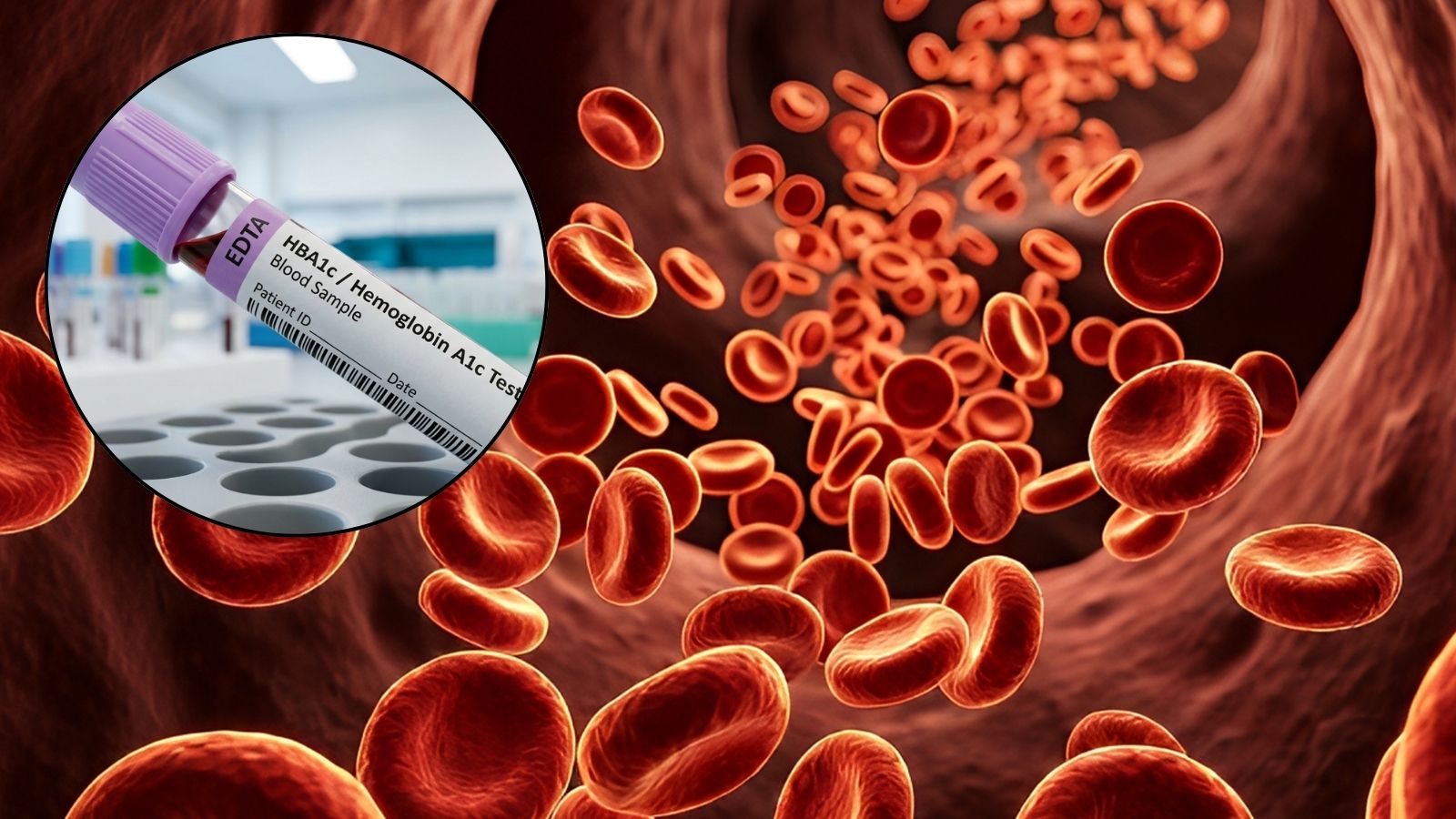
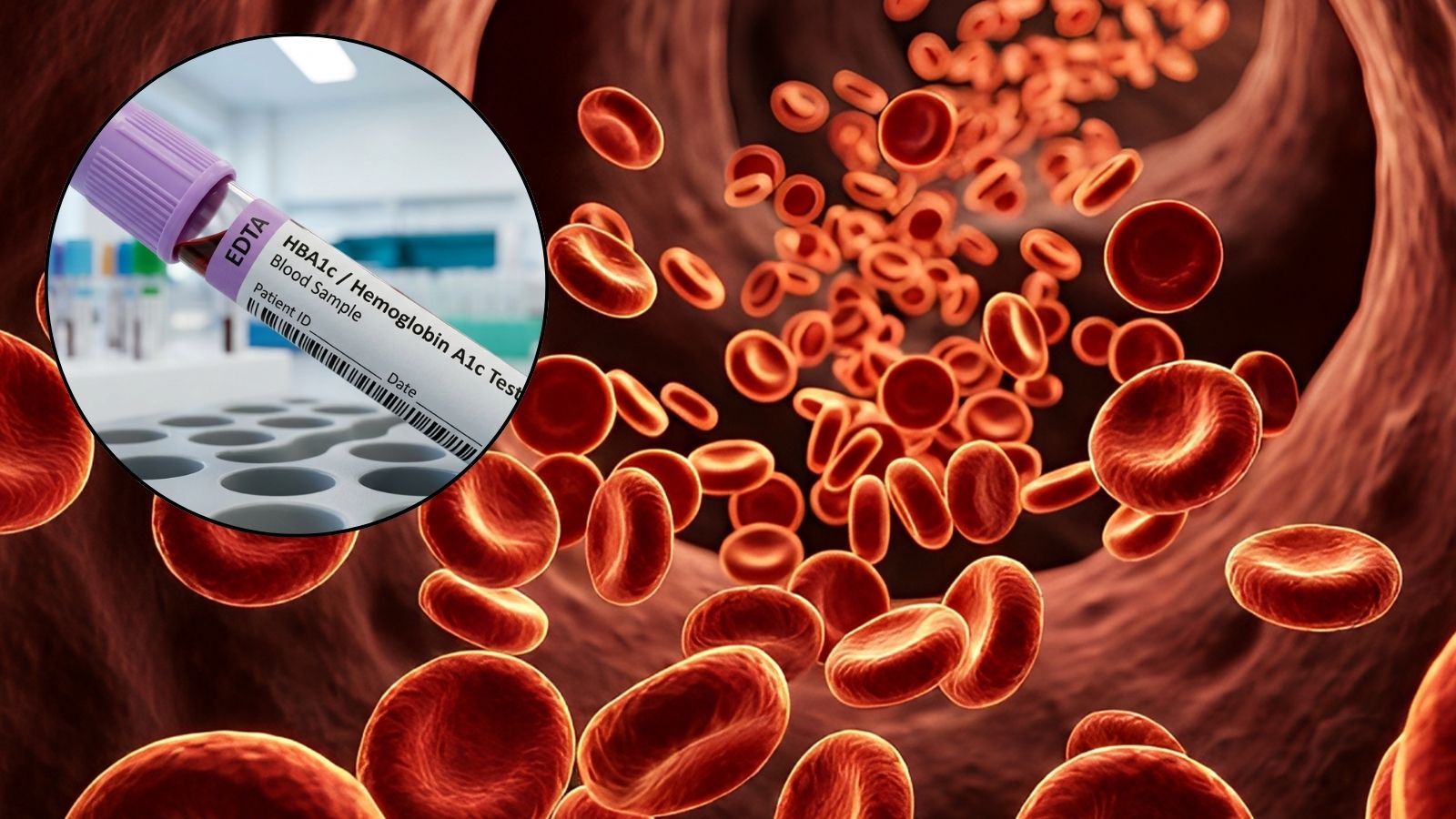
HbA1c is one of the most commonly used tests to assess a person’s average blood glucose levels over the previous few months. Because it does not require fasting and is widely used to screen for and monitor diabetes, it is often treated as a straightforward measure of blood sugar control. However, factors beyond glucose itself can influence the number.
One such factor is the lifespan of red blood cells. HbA1c reflects the amount of glucose attached to haemoglobin inside red blood cells, meaning that anything that changes how long these cells remain in circulation could potentially affect the result. This raises an important question: could two people with similar blood glucose levels have different HbA1c readings because their red blood cells have different lifespans?
DISCLAIMER: This article is based on information from the public domain and/or the experts we spoke to. Always consult your health practitioner before starting any routine.
Conditions that cause red blood cells to survive for a shorter or longer period, as well as changes in red blood cell turnover, may therefore complicate the interpretation of an HbA1c result. This can become particularly important when an HbA1c reading does not appear to match a person’s blood glucose measurements or symptoms.
But how significant is the effect of red blood cell lifespan on HbA1c, and when should doctors suspect that the test may not accurately reflect a person’s glucose levels? We spoke to an expert to understand how red blood cell turnover can influence diabetes testing and what other tests may help provide a clearer picture.
How does red blood cell lifespan affect HbA1c?
Kanikka Malhotra, Consultant Dietician & Diabetes Educator, tells indianexpress.com, “HbA1c is essentially a memory stored inside red blood cells. Glucose in the blood attaches to haemoglobin, and the longer a red blood cell circulates, the more glucose it accumulates on its surface. Since these cells normally live around 120 days, HbA1c reflects roughly three months of average glucose exposure. But this only works accurately if red blood cells live their full lifespan. If cells turn over faster, they don’t stay in circulation long enough to bind as much glucose, making HbA1c appear lower than actual average sugar levels. If cells survive longer than usual, they accumulate more glucose, pushing HbA1c higher.”
Think of it like a diary with fewer or extra pages. The same daily entries produce a different final word count depending on how long the diary stays open, which is exactly what happens with red blood cell turnover.
Story continues below this ad
Which conditions can distort HbA1c readings?
Several common conditions interfere here more often than people realise. Malhotra notes that iron deficiency anaemia and vitamin B12 deficiency can prolong red blood cell lifespan, artificially raising HbA1c even when glucose control is reasonable. Conditions that shorten lifespan, such as haemolytic anaemia, chronic kidney disease, recent blood loss or even pregnancy, cause cells to turn over faster, making HbA1c falsely lower than true average glucose.
“Recent blood transfusions can also distort readings significantly. This is where the numbers stop matching the story. A person eating consistently and monitoring sugar diligently at home may still show an HbA1c that seems unusually high or low. Clues suggesting this mismatch include a known blood disorder, unexplained fatigue pointing to anaemia, recent illness affecting red cell turnover, or simply a result that consistently disagrees with home glucose logs and clinical symptoms over several months,” reveals the expert.
How should doctors investigate a mismatch between HbA1c and glucose readings?
Quick Quiz
See if you can answer this:
What can help assess blood sugar when HbA1c may be affected by changes in red blood cell lifespan?
A. Relying on HbA1c alone.
Story continues below this ad
B. Ignoring home glucose readings if the HbA1c appears normal.
C. Using tests such as fasting plasma glucose, an oral glucose tolerance test or, in appropriate cases, fructosamine alongside the overall clinical picture.
D. Repeating the HbA1c every few days.
Reveal the answer
✅ Correct answer: C
HbA1c can sometimes be misleading when conditions affecting red blood cell lifespan are present. Malhotra notes that fasting plasma glucose and an oral glucose tolerance test measure blood glucose directly, while a complete blood count and iron or vitamin B12 studies may help identify underlying blood-related factors. Fructosamine can be useful in selected situations because it reflects glucose control over roughly the previous two to three weeks using blood proteins rather than haemoglobin.
The most useful assessment is often a combination of HbA1c, home glucose readings, fasting glucose and the person’s broader clinical picture rather than relying on one number in isolation.
Story continues below this ad
DISCLAIMER: This article is based on information from the public domain and/or the experts we spoke to. Always consult your health practitioner before starting any routine.

Leave a Reply