
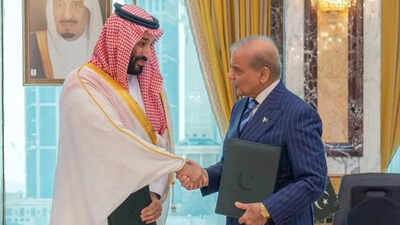
A month ago, Pakistan was celebrating. Its leaders, Shehbaz Sharif and Asim Munir, posed for cameras in Mecca, ink still wet on a defence pact that promised to bind the fate of Islamabad to that of Riyadh and Ankara.A month later, the pact is facing perhaps its most uncomfortable test yet.Saudi Arabia said on Wednesday that it had intercepted a Houthi drone heading towards Mecca, calling the security of Islam’s holiest city a ‘red line’. The Houthis flatly denied targeting Mecca and, in the same round of escalation, claimed to have shot down a Saudi F-15 fighter jet over Yemen’s Marib province, a claim Riyadh has not confirmed.
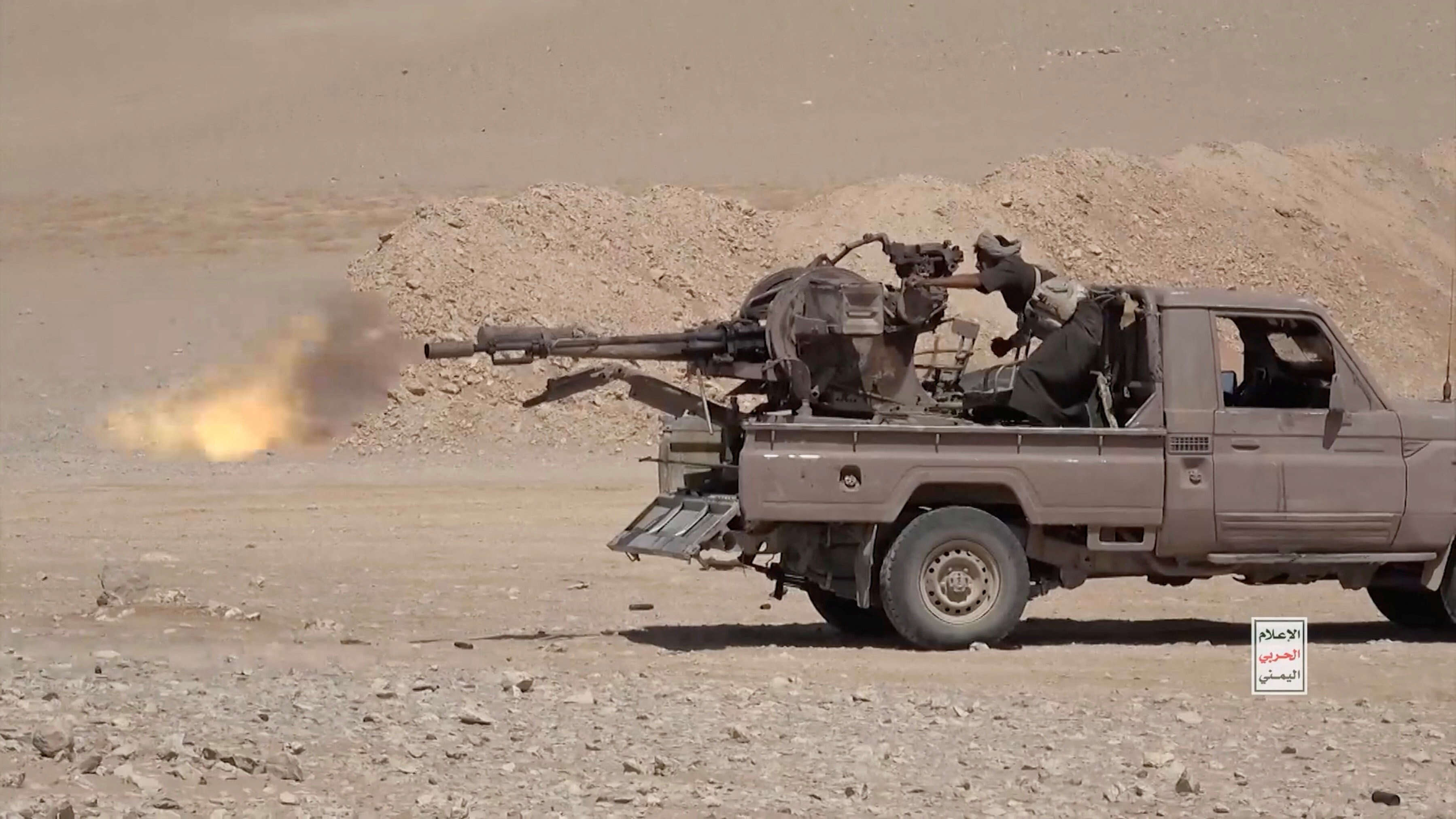
An Iran-aligned Houthi fighter fires from a vehicle in a screengrab from a video said to show Houthi fighters attacking Saudi-backed forces. (Reuters)
The message behind the pact was simple and stirring, an attack on one is an attack on all. Today, as Saudi Arabia and the Houthis trade accusations and the conflict moves deeper into Saudi territory and Yemen, Pakistan is discovering that grand declarations are far easier to sign than to honour.Pakistan is now walking a tightrope between backing Saudi Arabia and avoiding a confrontation with Iran.How it gets off that rope, and whether it can do so without falling, may say more about the limits of ‘solidarity’ than any communique ever could.
A pact born in euphoria?
When Saudi Arabia, Turkey and Pakistan signed their joint defence agreement in Mecca last month, it was billed as a landmark moment, a triangle of Sunni Muslim power standing shoulder to shoulder against outside threats.Pakistani officials spoke of it with unmistakable pride, and defence minister Khawaja Asif was quick to declare that the pact would kick in the moment Saudi Arabia faced an unprovoked attack or spillover from the war in Yemen. There should be no doubt about it, he insisted.
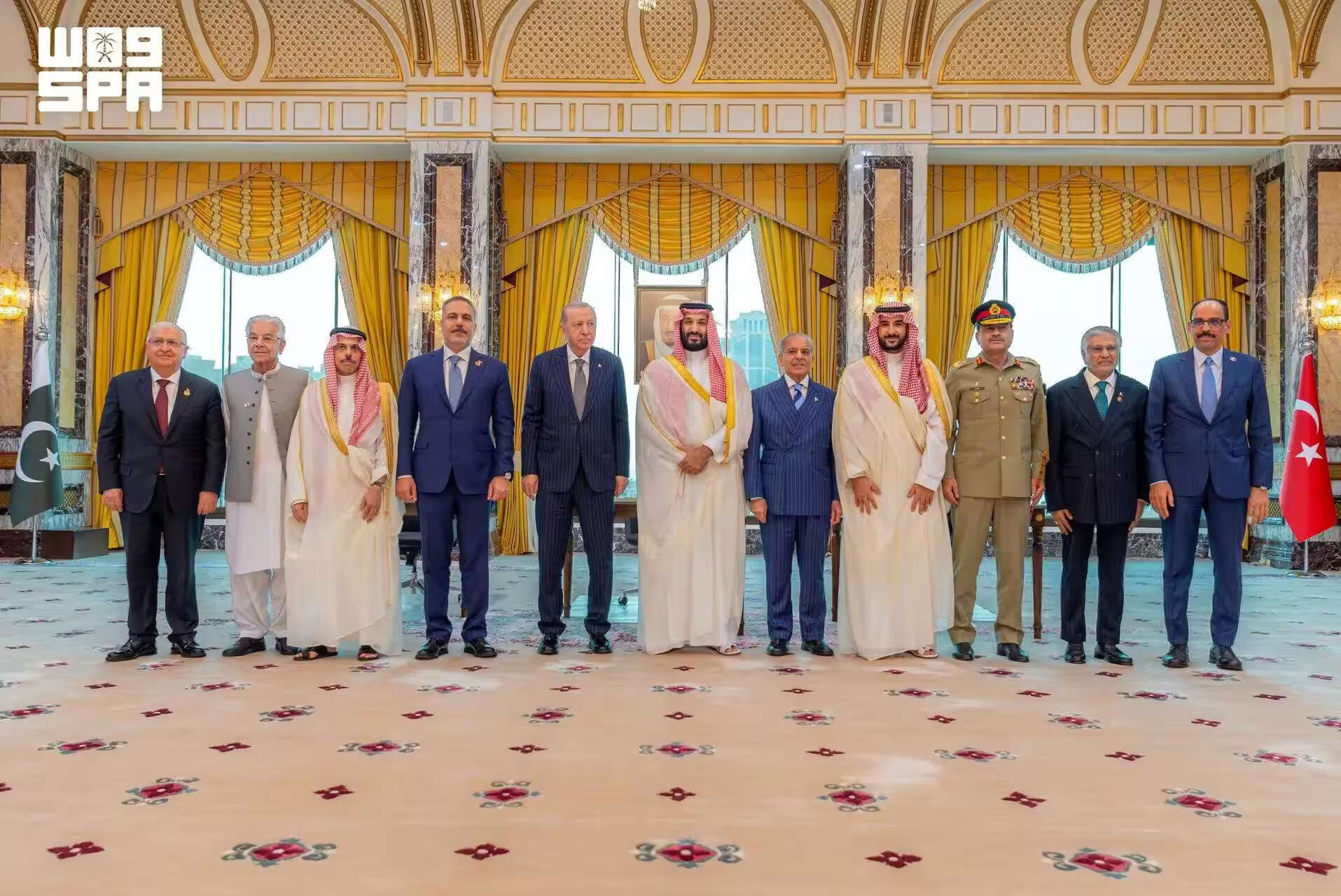
Turkish President Tayyip Erdogan, Saudi Crown Prince Mohammed bin Salman, and Pakistan’s Prime Minister Shehbaz Sharif, accompanied by their ministers of Foreign Affairs and Defence, pose after signing a joint defence agreement in Mecca.
That confidence looked reasonable enough at the time. The region was tense but the front lines in Yemen had been largely frozen since 2025 Gaza agreement, and the bigger drama was unfolding around the Strait of Hormuz, where Iran and the United States were locked in their own confrontation. Pakistan could afford to sound bold because the pact’s first real test seemed a distant hypothetical.
Enter the Houthis
A month later, that hypothetical arrived far earlier than expected as Iran-backed Houthi fighters broke out of their static positions and surged towards the Bab al-Mandeb Strait, seizing the port city of Mokha and a string of Red Sea islands from Saudi-backed Yemeni forces.Almost simultaneously, a drone strike hit Saudi Arabia’s East-West Pipeline, the artery that carries a significant share of the kingdom’s oil away from the reach of Hormuz. With that pipeline hit and the Houthis tightening their grip on the coast, Saudi Arabia suddenly found both of its alternative export routes under pressure.
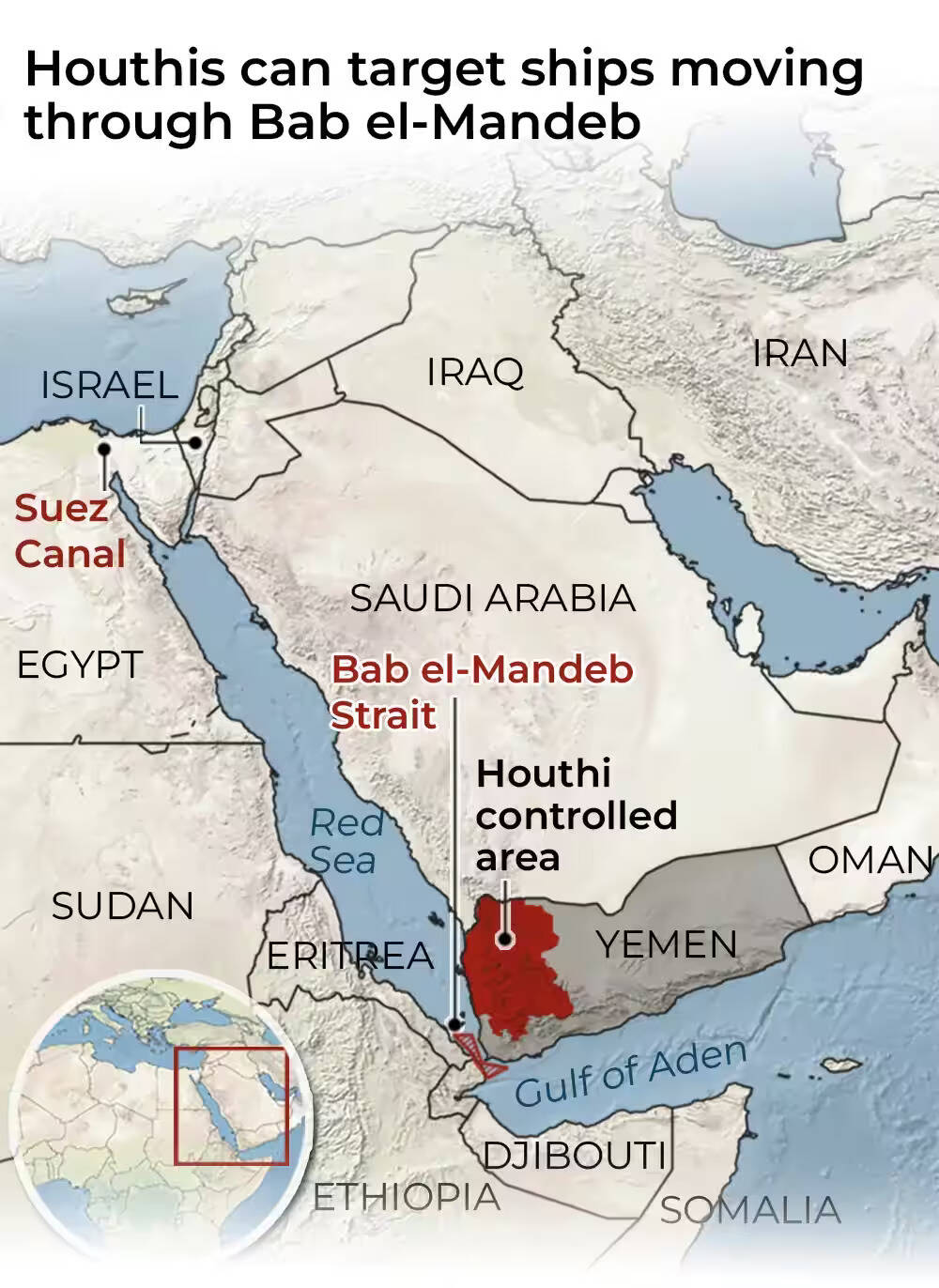
A drone strike hit Saudi Arabia’s East-West Pipeline, the artery that carries a significant share of the kingdom’s oil away from the reach of Hormuz.
For Riyadh, this was precisely the kind of scenario the Mecca pact was meant to guard against. Attacks were reaching Saudi territory, while the fighting in Yemen was again threatening to spill into a wider regional confrontation.
Mecca under threat
The pressure on the pact became even harder to ignore when Saudi Arabia said it had intercepted a Houthi drone heading towards Mecca and called the security of Islam’s holiest city a ‘red line’.The Houthis rejected the Saudi account, denying that they had targeted Mecca. In the same round of escalation, they also claimed to have shot down a Saudi F-15 fighter jet over Yemen’s Marib province, a claim Riyadh has not confirmed.That puts Pakistan in an awkward position. Saudi Arabia is not just a close partner but one of the three signatories of the Mecca pact. Iran, meanwhile, remains central to the Houthi question and is a neighbour Islamabad cannot afford to alienate.
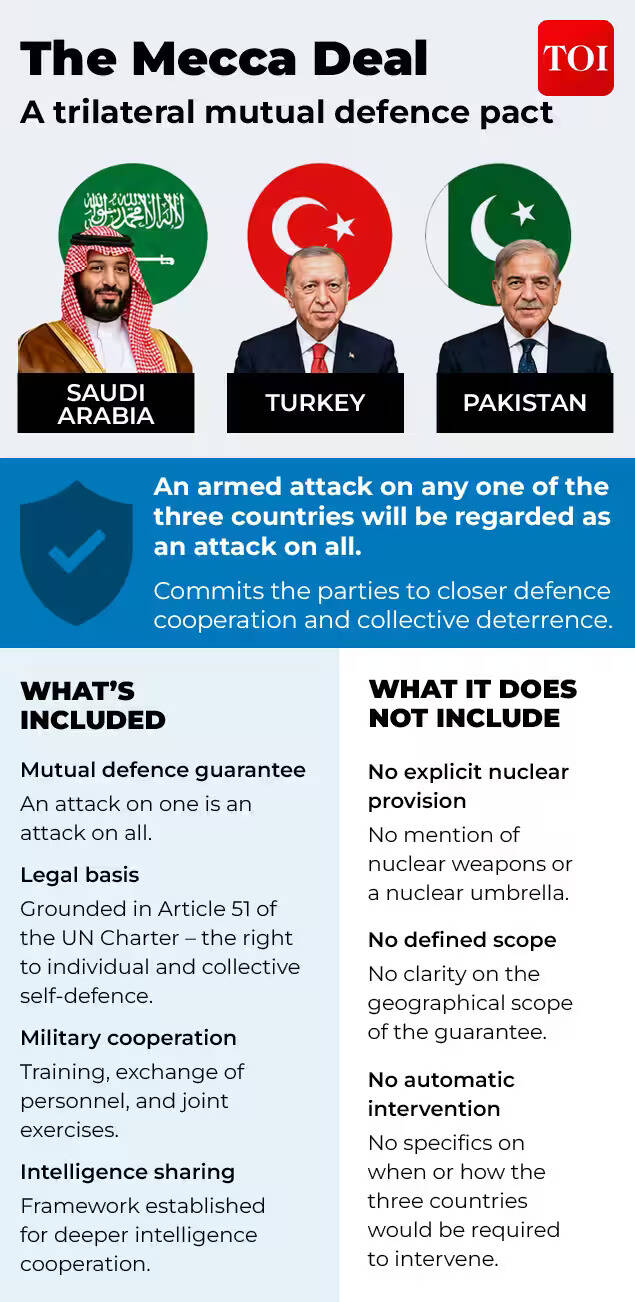
Mecca deal is a trilateral defence pact between Saudi Arabia, Turkey and Pakistan.
Pakistan has condemned the attacks, but its response has remained cautious. At the UN, its ambassador Asim Iftikhar Ahmad said the escalation had brought the conflict to an ‘extremely dangerous juncture’, while stressing the need for de-escalation and regional stability.That caution was also reflected in remarks by Pakistan’s military spokesperson, who described the pact as an arrangement for ‘collective deterrence’ with no ‘regional aspirations’.Turkey and Pakistan have also said the agreement has not yet been formally ratified, raising questions over when it would actually take effect and what would trigger it.For a pact announced with such fanfare, those questions have surfaced far sooner than expected.
Why Iran complicates everything
So why is Pakistan being so cautious? The heart of Pakistan’s dilemma is Iran.Unlike Turkey, which sits at some remove from the Gulf’s sectarian and strategic fault lines, Pakistan shares a long, porous border with Iran and has spent years carefully managing that relationship. Tehran is not merely a bystander in this crisis, it is the patron whose support has allowed the Houthis to become the sophisticated fighting force now humbling Saudi Arabia’s defences.Pakistan has also been quietly trying to mediate between Washington and Tehran over their wider confrontation, a role that would collapse overnight if Islamabad suddenly deployed forces against an Iranian-backed militia.That balancing act explains the studied vagueness coming out of Islamabad. Condemning drone strikes on Saudi soil costs Pakistan nothing, and it duly issued a statement calling the pipeline attack a violation of international law and Saudi sovereignty. But translating that condemnation into military commitment under the Mecca pact would mean picking a side in a conflict that has Iran’s fingerprints all over it, at the exact moment Pakistan is trying to keep lines open to Tehran.Turkey has taken a similarly cautious line, praising Saudi restraint rather than promising action of its own.
US absence makes the rope narrower
Pakistan’s caution is not happening in a vacuum. The United States, Saudi Arabia’s traditional security partner, has shown little appetite to intervene either.Reports suggest Crown Prince Mohammed bin Salman dialled US President Donald Trump twice asking for American military action against the Houthis, and was twice turned down. Trump has instead spoken of direct contacts between his administration and the Houthis themselves, a move one Yemen expert warned only hands the rebels the legitimacy and global attention they crave.
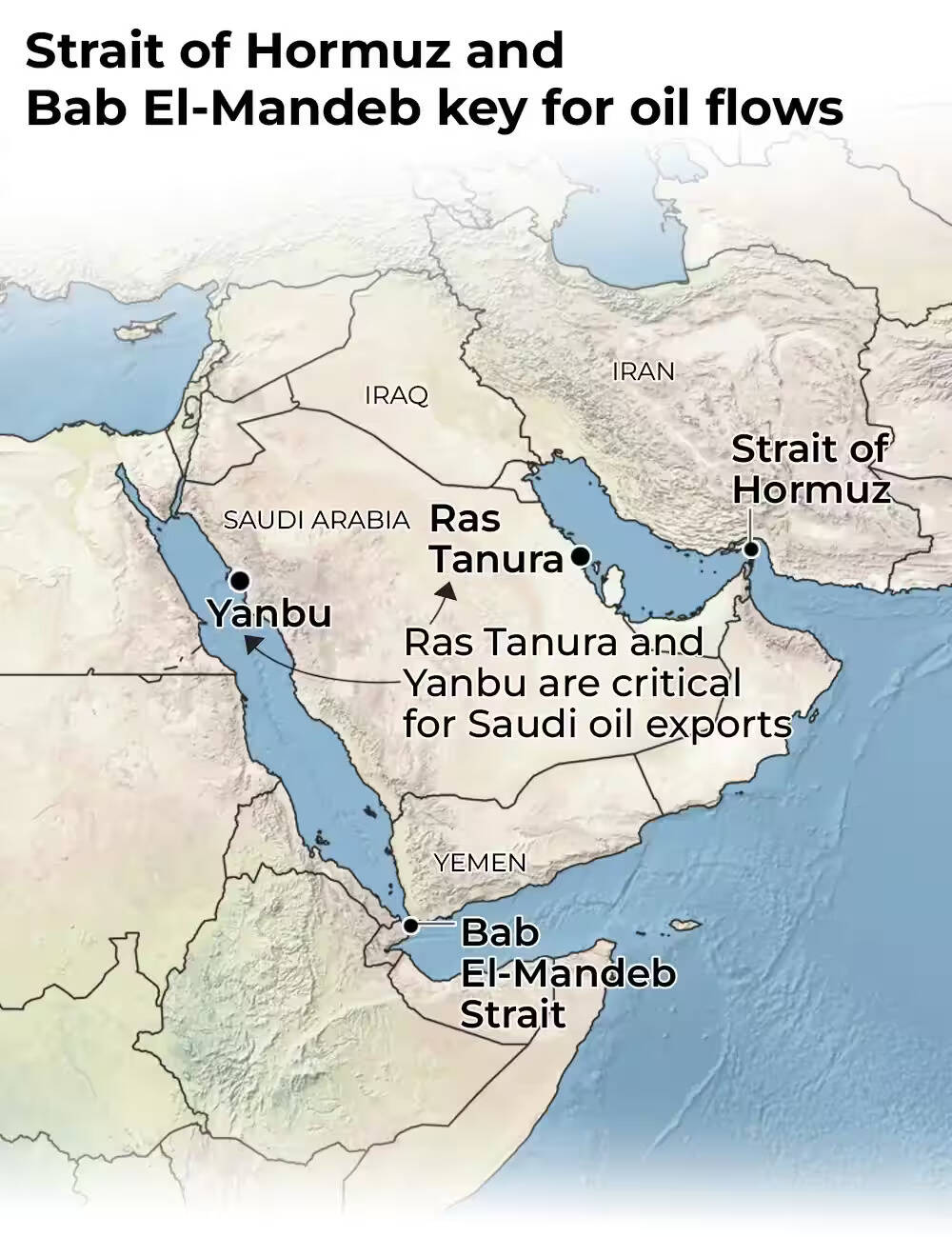
For Riyadh, this was precisely the kind of scenario the Mecca pact was meant to guard against.
If Washington, with all its firepower and decades-old ties with Riyadh, is reluctant to get drawn into this fight, it becomes far easier to understand why Islamabad, with a fraction of that capability and a shared border with Iran, is equally hesitant.Pakistan cannot be expected to charge in where the United States itself is reluctant to go. Yet that hesitation still sits awkwardly with the confident language used when the pact was signed.
A toothless tiger?
None of this means the Mecca pact is dead. Its defenders would argue that treaties of this kind are rarely triggered at the first sign of trouble, and that quiet diplomacy, such as Pakistan’s warning to Iran, counts as a form of support.Saudi Arabia itself has other tools available, from its well-funded air force to potential quiet assistance from Israel, and may not need Pakistani boots on the ground to deal with the Houthi threat.ALSO READ | From Mecca’s red line to the ‘Gate of Tears’: How US-Iran war is closing in on MBS
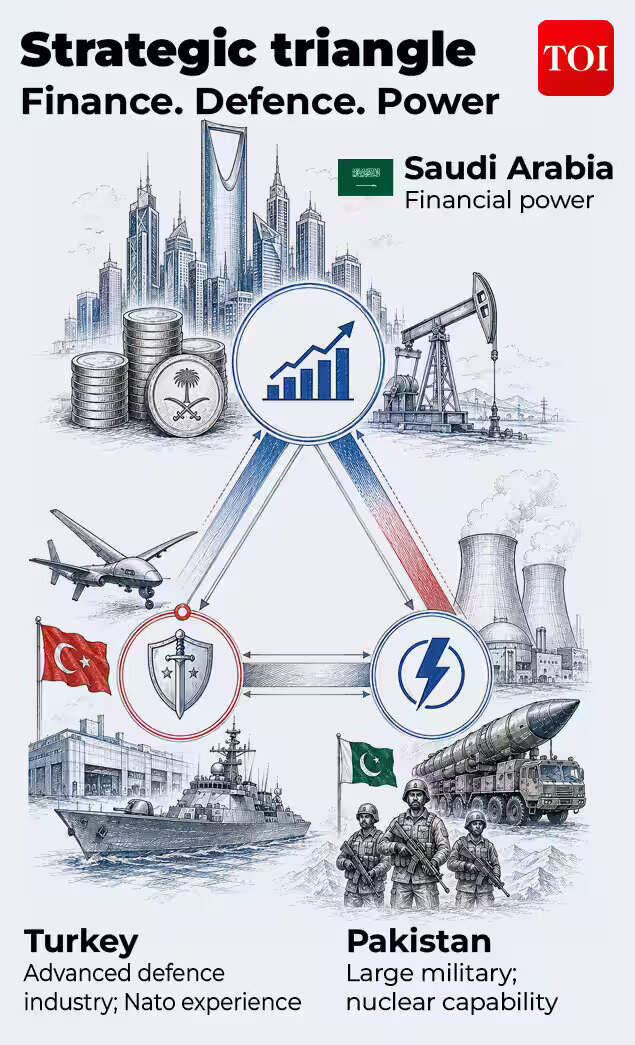
For Riyadh, this was precisely the kind of scenario the Mecca pact was meant to guard against.
But perception matters in geopolitics almost as much as capability, and right now the perception is damaging. A pact unveiled with talk of collective defence has, within a month of its signing, produced statements about rules not yet being discussed and an agreement not yet formally ratified, precisely when its central member is under direct attack.Whether or not Pakistan ever intended to send troops to the Red Sea, the hesitation has already raised questions over what the pact actually requires its members to do when one of them comes under attack.For Pakistan, that may now be the real test of the Mecca pact: not what it promised on paper, but how far Islamabad is prepared to go when those promises become difficult to keep.ALSO READ |‘Special significance to Muslims’: India condemns Houthi drone attack near Saudi Arabia’s Mecca

Leave a Reply