
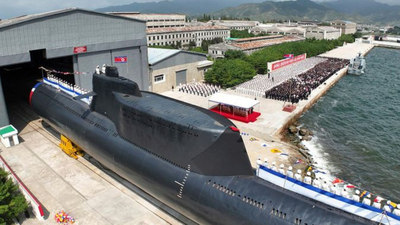
South Korea’s planned nuclear-powered submarine fleet could eventually operate beyond the Korean Peninsula, with military experts arguing that the vessels could protect vital sea lanes, strengthen undersea cooperation with the United States and play a broader role in the Indo-Pacific.The debate over the programme has increasingly shifted from whether Seoul needs nuclear-powered submarines to how and where they should be deployed. While countering North Korea’s growing submarine and nuclear capabilities is expected to remain their primary mission, experts say their long underwater endurance and ability to conduct extended operations could allow them to undertake missions across the wider Indo-Pacific.The assessments come after a senior US Navy official questioned whether South Korea had a clear security rationale and concept of operations for the costly vessels, particularly if they were intended to operate mainly in waters close to the Korean Peninsula.Moon Keun-sik, a submarine expert who formerly headed the nuclear-powered submarine project team at Navy Headquarters and is now a professor at the Graduate School of Public Policy at Hanyang University in Seoul, said such an assessment overlooks one of the key advantages of nuclear-powered submarines.“Diesel-powered submarines have to come close to the surface several times a day to recharge their batteries, exposing themselves in the process,” Moon told The Korea Times. “A nuclear-powered submarine can remain submerged for a long time and surface only when necessary.”North Korea remains primary targetMoon said the ability to remain submerged for extended periods would be critical for continuously tracking North Korean submarines capable of carrying nuclear weapons.North Korea is also pursuing a nuclear-powered submarine, which could make it increasingly difficult for conventional diesel-electric submarines to match its endurance and speed.South Korea’s proposed nuclear-powered submarines would therefore give the country’s navy a greater ability to monitor and respond to North Korean underwater threats without the operational limitations faced by conventionally powered submarines.Moon, however, argued that Seoul should not restrict the future fleet’s mission to the Korean Peninsula.He pointed to South Korea’s heavy dependence on maritime trade and sea lanes carrying energy supplies from the Middle East through the Indian Ocean and the Strait of Malacca.In a contingency involving the Strait of Hormuz or other strategically important waterways, nuclear-powered submarines could potentially be deployed for long-range missions, he said.Wider Indo-Pacific roleMoon has also argued that the submarines could protect South Korea’s sea lines of communication while allowing Seoul to undertake more reciprocal undersea cooperation with the US Navy across the Indo-Pacific.Such a role could reduce South Korea’s dependence on US nuclear-powered submarines for certain missions while giving Washington an additional capable undersea partner in the region.Cheng Seong-chang, vice president of the Sejong Institute, similarly said the primary mission of the vessels should be deterring North Korea’s nuclear-powered submarines, but their strategic impact could extend beyond the peninsula.“The primary objective is, of course, to counter North Korean nuclear-powered submarines,” Cheong said. “But secondarily, they could help maintain the balance of power in Northeast Asia and take the South Korea-U.S. alliance to another level.”Cheong said a South Korean nuclear-powered submarine fleet would inevitably factor into China’s strategic calculations and could ultimately support US strategy in the Indo-Pacific.The potential expansion of the submarines’ role comes as Washington continues to examine the strategic implications of Seoul’s plans.Adm. Daryl Caudle, the US chief of naval operations, said last week that South Korea needs a “valid reason” for acquiring nuclear-powered submarines and should have a clear operational concept for the vessels. He had previously suggested that Seoul might not need nuclear-powered submarines if it intended to operate them only in nearby waters.The comments have added to the debate over whether South Korea’s planned fleet should be designed primarily as a peninsula-focused deterrent or as a force capable of undertaking longer-range Indo-Pacific missions.Seoul moves ahead with programmeDespite the questions in Washington, South Korea is moving forward with its nuclear-powered submarine programme.President Lee Jae Myung has described the project as a potential symbol of a stronger and more constructive South Korea-US alliance and has called for faster progress.The Ministry of National Defense aims to launch the first submarine in the mid-2030s and commission it in the late 2030s.The ministry says the vessel’s prolonged underwater endurance and high mobility would make it a key asset against North Korea’s submarine-launched nuclear and missile threats.The government has allocated 100 billion won ($74.4 million) in next year’s defence budget for initial design and research work. Seoul has also formally notified the International Atomic Energy Agency of its intention to begin consultations related to the programme.Defence minister nominee Kang Shin-chul has described nuclear-powered submarines as providing a “persistent and stealthy deterrent” against North Korea. He has also highlighted their potential role in protecting sea lanes and their broader implications for South Korea’s defence, nuclear energy and shipbuilding industries.US Congress examines risksThe programme is also drawing greater scrutiny in Washington.The US Senate Armed Services Committee has called for an assessment of how South Korea’s nuclear-powered submarine programme could affect Indo-Pacific security, proliferation risks and costs, as well as the potential scope of future bilateral cooperation.For Seoul, the challenge will be to demonstrate that the submarines are not simply an expensive response to prestige or military competition, but a capability with a clearly defined strategic purpose.If the vessels are initially designed to counter North Korean submarine threats but retain the endurance and operational flexibility to protect maritime trade and support allied missions farther afield, their role could gradually expand from a peninsula-focused deterrent into a broader Indo-Pacific undersea capability.

Leave a Reply