
NEW DELHI: For students and young professionals who leave their hometowns for Delhi in pursuit of their dreams, a paying guest accommodation can gradually become much more than four walls and a bed.It becomes a second home — where they return after college or work, eat their meals, prepare for exams, attend late-night meetings and call their families before going to sleep.But the collapse of a five-storey building housing a boys’ PG in south Delhi’s Satya Niketan on September 6, which claimed seven lives, has shaken that sense of security.For many living in PGs across Delhi-NCR, a question that was once easy to ignore has now become difficult to escape: How safe is the building they call home?Also read: After Satya Niketan PG collapse, CM Rekha Gupta orders bulldozer action across Delhi
‘Profit over safety’
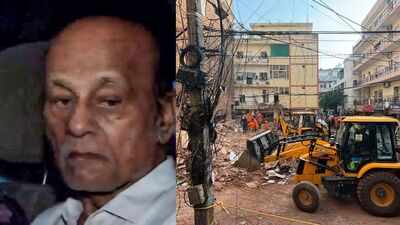
The FIR registered in the case states that building owner Hariram Gupta and his brother constructed four additional floors on top of the old structure to earn more rental income, despite allegedly being aware that the foundation could not bear the additional weight.The building was more than 40 years old. The Gupta family had recently repaired it and converted it into a paying-guest facility, taking advantage of the property’s proximity to Delhi University.
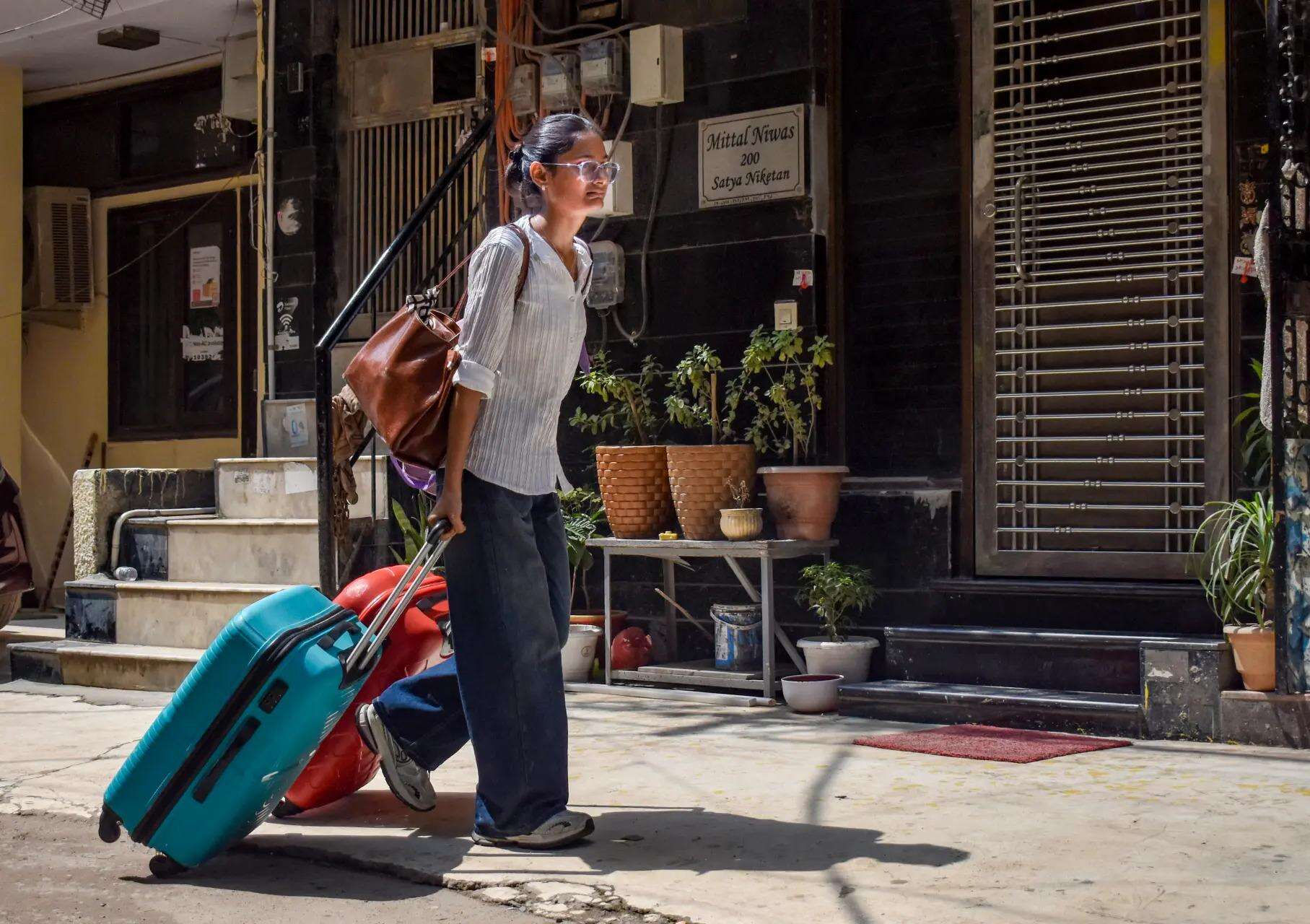
Students vacate PGs (Image Credit: PTI)
During interrogation, Mahesh Gupta, who was managing the accommodation on behalf of his parents Hariram and Urmila, said the building had been leased to PG operator ‘Hostel Daze’ in August 2025.Two shops on the ground floor were also being merged and expanded into one, police said.Sources said a load-bearing wall was allegedly removed during the construction, potentially compromising the stability of the building and contributing to its eventual collapse.“Mahesh was questioned about the construction and documents related to its possession and ownership,” a police source said.The property is believed to have been generating more than Rs 4 lakh in revenue each month, according to sources.Investigators are also expected to examine what sources described as the “PG mafia” in the area — private players allegedly facilitating illegal construction and the operation of PGs on commission.
Owner apprehended after police raids
Delhi Police said owner Hariram Gupta was apprehended after more than 10 teams were deployed to locate him.Police said Gupta was missing from his Gurgaon home when teams reached there. Technical surveillance was then used to trace his movements, while a look-out circular was issued to prevent him from leaving the country.The investigation is likely to examine not only the construction and ownership of the building but also how it was allowed to operate as a PG.
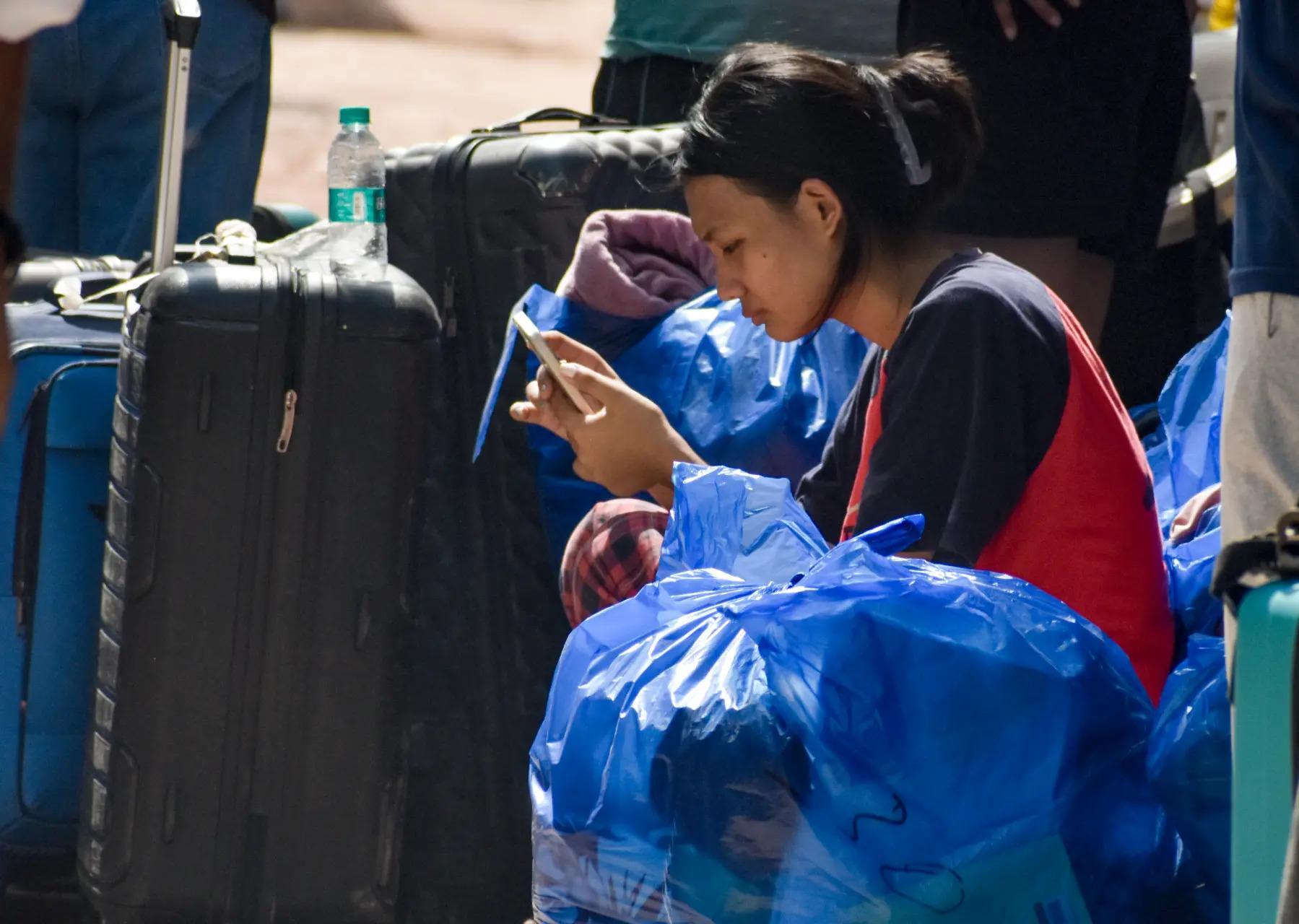
For students now living in PGs, the Satya Niketan collapse has changed that. (Image Credit: PTI)
‘What if the building is not safe?’
Until now, choosing a PG was largely about rent, food, Wi-Fi and proximity to college or the workplace.The condition of the building, its permissions and approvals, and what would happen in an emergency often remained outside that calculation.For students now living in PGs, the Satya Niketan collapse has changed that.Sneha Mishra, who lives at ‘New PG for Girls’ in Sant Nagar, said the incident has changed the way she looks at the place she has come to regard as home after moving to Delhi from Deoghar, Jharkhand.“When I came to Delhi from Deoghar, this PG became my second home. I eat, study and sleep here, but I never really thought about whether the place I call home is actually safe,” Mishra told ANI.That thought, she said, now follows her even when she is trying to sleep.“Earlier, I never thought about the condition of the building. Now, when I go to sleep, there is a question in my mind — what if the building we trust with our lives is not safe?” she told ANI.The concern also extends to the families who send their children to Delhi believing they have found a secure place for them to live.“Our parents send us here believing we are safe. After Satya Niketan, many of us have started looking at the roof over our heads differently,” Mishra told ANI.
Safety comes with a price
For many young people, however, finding a safer place is not simply a matter of making a choice. It is also about whether they can afford one.A better-maintained PG can mean higher monthly rent, which can be difficult for students and people earning entry-level salaries. In a city where every extra thousand rupees can matter, safety can end up competing with affordability.Shilpashree Mondal, who lives in a PG in Noida, said her budget leaves little room for choice.
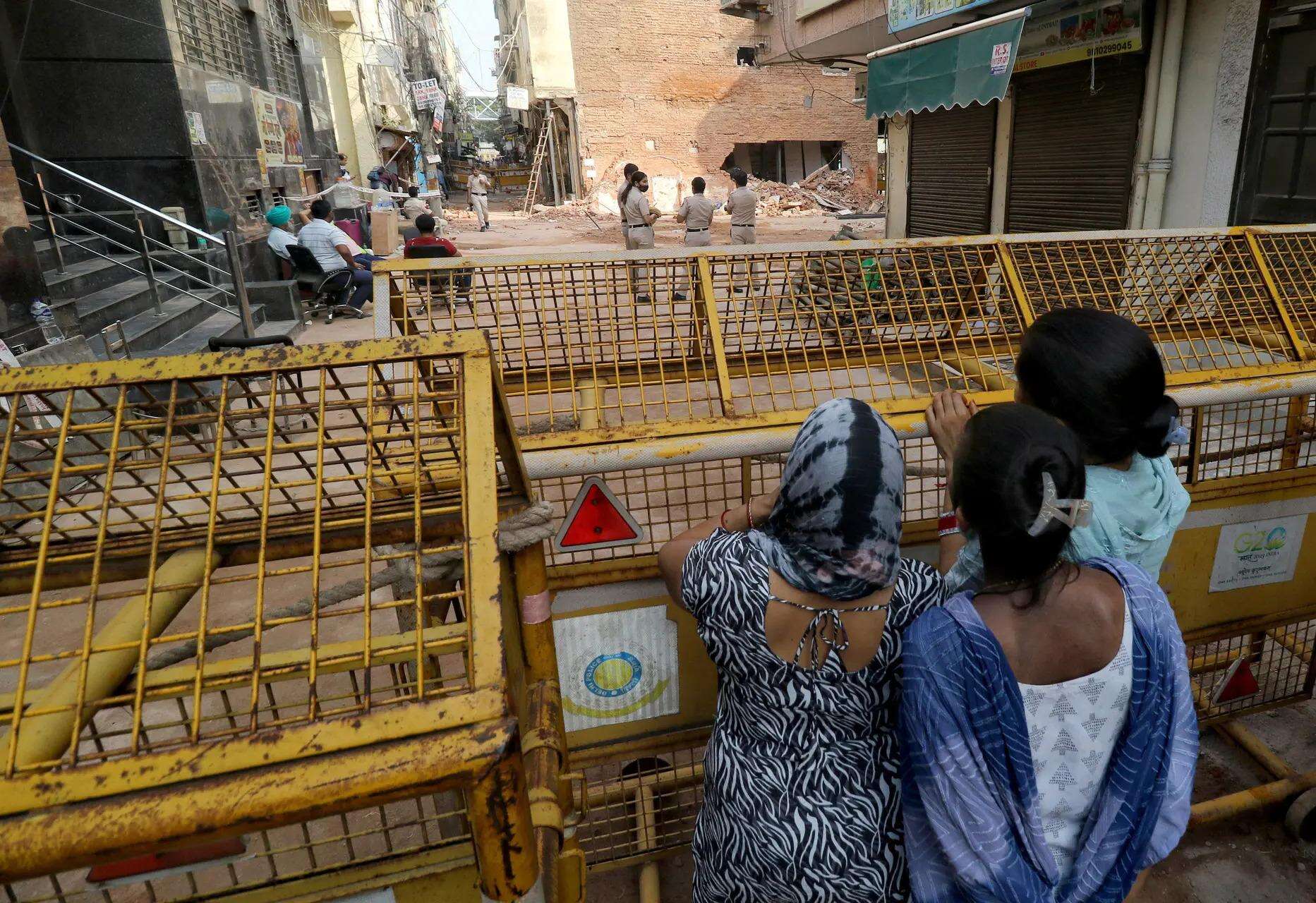
Site of the ‘Hostel Daze’ building collapse (Image credit: ANI)
“I don’t think even a working woman like me has much of a real choice when it comes to choosing where to live. Budget decides most of it, especially in a city like Delhi, where finding a safe and affordable place can be difficult,” Mondal told ANI.The Satya Niketan collapse initially frightened Mondal. But the fear soon prompted her to take a closer look at the place where she lives.“I started thinking, what if something like this happens to my PG too? I somehow convinced myself that it wouldn’t happen, but there are already things that worry me, like problems with the water supply, poor hygiene and dampness in the walls,” she said.Often, she said, residents discover the real condition of a PG only after moving in.“The owner and caretakers often make things look safer and better than they actually are, but you only realise the real problems once you start living there,” Mondal told ANI.
‘I started noticing how my building is designed’
For Pallavi Joshi, who hails from Uttarakhand’s Haldwani and has lived in a Delhi PG for nearly two years, the collapse has changed an otherwise ordinary nightly routine.“I had never thought about the structure of my PG before. After Satya Niketan, I started noticing how my building is designed and wondering whether there are enough safety measures. Even at night, I sometimes think about what would happen if something went wrong here,” Joshi told ANI.Joshi said neither her PG owner nor anyone from the management approached the residents after the incident to discuss their concerns or reassure them about the safety of the building.She said PG owners often focused on collecting rent on time, while issues such as safety, hygiene and emergency preparedness received less attention.
Students want to see the paperwork
For Vijaya Roy, a student at Delhi University’s Ramanujan College who is preparing for the CAT examination, the uncertainty begins with something as basic as knowing whether a PG has the necessary permissions.Around 20 to 25 people live in her PG, she told ANI, but residents are not always told whether the property has the required approvals.“We don’t even know whether they have permission from the Municipal Corporation of Delhi or not. When we first come to the PG, they demand documents from us, but they don’t show any papers to us,” Roy told ANI.Roy said students should not have to rely solely on an owner’s word when it comes to the building where they sleep every night.“It should be made mandatory that tenants are able to get the papers from PG owners, so that they know whether the building has the proper permissions and whether the regulations are being followed,” she said.For Delhi University students, the shortage of affordable hostel accommodation makes that dependence on PGs even greater, Roy said.“If adequate hostel facilities are available in colleges, students will have another option. PG owners will not have the same monopoly and may be forced to improve conditions,” she told ANI.
Delhi government plans PG regulation
The Satya Niketan collapse has also intensified scrutiny of PG accommodation in the capital.The Delhi government is working on a comprehensive policy to regulate paying guest accommodations, with Urban Development Minister Ashish Sood outlining proposed measures aimed at improving safety, security and rent regulation.Under the proposed policy, PG operators would have to obtain a PG Operating Licence and complete police and municipal verification before running their establishments.CCTV cameras would be mandatory at entrances and in common areas, with recordings required to be preserved for 30 days.For PGs housing 15 or more students, operators would have to employ a licensed night guard between 10pm and 6am. Visitor registers would also be mandatory, while non-resident visitors would be allowed entry between 8am and 9pm.Every PG would also be required to have a warden either living on the premises or maintaining an office within a 500-metre radius. The warden would have to be physically available within 15 minutes during an emergency.The proposed policy also seeks to address concerns about arbitrary and high rents through a Rent Regulation Committee, which would determine rent bands for different areas.These rent bands would take into account factors such as occupancy levels, amenities, prevailing market rates and proximity to colleges and public transport.The draft framework further proposes an Institutional Accommodation Committee comprising college officials, student representatives, a municipal representative and a police liaison officer.
A second home no longer feels quite as secure
For the students and young professionals living in PGs across Delhi-NCR, the Satya Niketan collapse is no longer simply an incident they watched on a news screen.It has changed how they look at their own rooms — the damp patch on a wall, the makeshift partition, the crowded staircase or the roof above their bed.A PG may still be a second home. But after Satya Niketan, many residents are asking whether the place they depend on for safety is actually capable of providing it.

Leave a Reply