
An HbA1c of 10.6% is a sign that your blood sugar has been running much higher than it should over the past few months. If you are already taking diabetes tablets, you may wonder whether changing your diet, exercising more or trying a “natural” remedy can bring the number down.
A similarly distressed Quora user recently turned to the internet with the query: “My sugar level – HbA1c is 10.6. How do I reduce it in addition to tablets? Is there any natural way?”
We decided to dig deeper and find out what you can actually do beyond medication, and if lifestyle changes make a meaningful difference when HbA1c is this high.
DISCLAIMER: This article is based on information from the public domain and/or the experts we spoke to. Always consult your health practitioner before starting any routine.
What does an HbA1c of 10.6% mean?
“An HbA1c of 10.6% is significantly high and indicates poorly controlled diabetes,” Dr Rajiv Kovil, Diabetes & Obesity Specialist at Zandra Healthcare, tells indianexpress.com. It corresponds roughly to an average glucose level of 258 mg/dL over the preceding two to three months.
However, HbA1c is only one part of the picture. It reflects glucose exposure, but not whether high blood sugar has already affected other organs. How long a person has had diabetes also matters because the risk of complications increases with disease duration.
At this level, Dr Kovil says treatment needs active reassessment, rather than simply waiting for the next HbA1c test. Doctors need to look at fasting and post-meal glucose levels, current medication and adherence, diet, weight and body composition, physical activity, sleep and other factors that could be contributing to high blood sugar.
Story continues below this ad
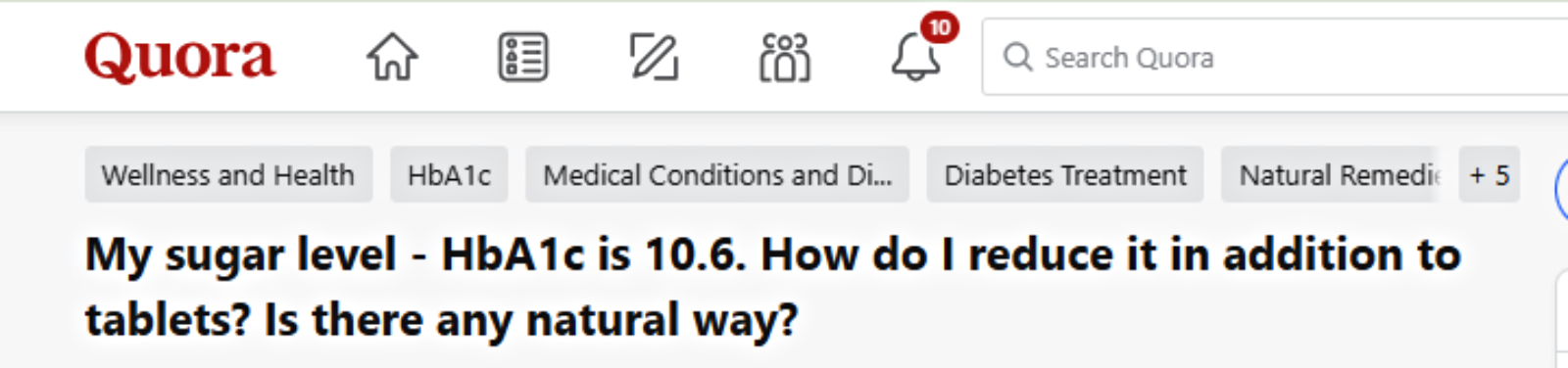 Screenshot of Quora query
What can you do alongside your tablets?
“Medication and lifestyle are partners, not alternatives,” Dr Kovil explains.
Start by looking at when and what you eat, particularly in the evening. An earlier, lighter dinner, avoiding late-night calories and getting adequate, regular sleep can support better metabolic control.
Build meals around protein, vegetables and fibre, while reducing refined carbohydrates, sugary drinks and highly processed foods. One strategy Dr Kovil recommends is eating vegetables and fibre and protein first, and having carbohydrates towards the end of the meal — what he calls a “carb-last” strategy.
Exercise should also become a regular part of diabetes management. Combining aerobic activity with resistance training can help improve fitness while preserving and building muscle. Even a 10–15-minute walk after meals can help blunt post-meal rises in blood sugar.
Story continues below this ad
If a person has excess weight, losing weight where appropriate, along with managing stress and maintaining consistent sleep, can further support metabolic health.
Is there a natural way to lower HbA1c?
 I often recommend a “carb-last” strategy: vegetables/fibre and protein first, carbohydrates toward the end of the meal: Dr Rajiv Koli
Yes — but “natural” should mean evidence-based lifestyle changes, not replacing diabetes treatment with herbs or supplements.
“The most powerful natural interventions are losing excess visceral fat, improving muscle mass and fitness, eating predominantly minimally processed foods, increasing fibre, choosing better-quality carbohydrates, ensuring adequate protein, exercising regularly and sleeping well,” Dr Kovil notes.
Some dietary strategies may also help modestly. Resistant starch, for example, may improve post-meal glucose responses. This can be found in appropriately cooled and reheated foods such as rice or potatoes when incorporated sensibly into an overall balanced diet.
Story continues below this ad
Meal sequencing, portion control and post-meal walking are other simple measures that can help manage glucose levels.
But with an HbA1c of 10.6%, lifestyle changes may not be enough on their own. “Medication should be reviewed and potentially intensified by the treating clinician,” says Dr Kovil.
And when it comes to products marketed as “natural diabetes cures”, his advice is clear: “There is no herb, juice or supplement that substitutes for appropriate diabetes therapy.”
Don’t stop at the sugar test
An HbA1c this high should also prompt a broader assessment of your health.
Story continues below this ad
“Diabetes is not merely a blood-sugar disease; it is a multisystem metabolic and vascular disorder,” Dr Kovil notes.
Depending on the individual, this means assessing kidney function and urine albumin-creatinine ratio, retinal health, blood pressure, cholesterol and other lipid levels, liver health and fatty liver, as well as weight, waist circumference and body composition.
The feet should also be checked for circulation, sensation and neuropathy. Cardiovascular risk should be assessed too, with cardiac evaluation when clinically indicated.
So while bringing down HbA1c matters, the bigger goal is reducing the long-term risk of diabetes-related problems affecting the heart, kidneys, eyes, nerves, liver and feet, while improving fitness, sleep and quality of life.
Story continues below this ad
As Dr Kovil puts it: “Treat the person with diabetes, not merely the HbA1c.”
DISCLAIMER: This article is based on information from the public domain and/or the experts we spoke to. Always consult your health practitioner before starting any routine.

Leave a Reply