
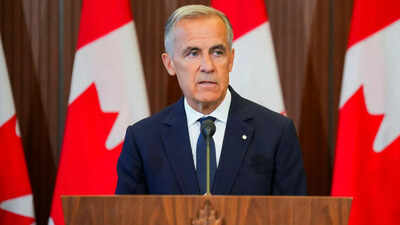
Canada has called off trade talks with the US after months of negotiations aimed at reaching a deal between the two countries. On Saturday, Canadian Prime Minister Mark Carney announced the suspension of the talks, spelling out three key US demands that ultimately pushed the negotiations to a deadlock.The demands covered Canada’s auto industry, its ability to strike new trade deals with other countries, and protections for its language and culture, issues that Ottawa said it could not accept in their proposed form.Carney said that the changes were introduced in the final hours of negotiations and, taken together, moved the talks away from what Canada had earlier viewed as a fair and economically viable agreement.“While we believed earlier this week that we were moving towards a mutually beneficial agreement, in recent days, the United States proposed new terms that were uneconomic, unfair, and undermined the net benefits for Canada and called into question the reliability of any deal. In short, they asked too much, and they offered too little,” the Canadian PM said.
What were the three US demands?
1. Changes to Canada’s auto industryThe first major sticking point was Washington’s proposed treatment of Canada’s auto sector.Carney said the US sought changes to tariff levels and the treatment of Canadian content, including Canadian parts and steel used in vehicles. Washington also wanted the tariff measures to apply only to autos and exclude medium and heavy-duty trucks.That would have affected Ford’s new plan in Oakville involving F-350s, F-450s and F-550s, while GM Silverado production would also have been excluded.“No rationale, just for exclusion,” Carney said, adding that the changes would have made production increasingly uneconomic over time.Canada had been prepared to remove its remaining retaliatory tariffs on steel, aluminium and autos if the US substantially reduced its own tariffs. Ottawa was also willing to encourage provinces to restore US alcohol sales.2. Limits on Canada’s other trade dealsThe second demand targeted Canada’s ability to negotiate trade agreements with other countries.“The US introduced in the last hours, efforts to restrict our ability to have other trade deals,” Carney said.He pointed to the 20 new economic and security partnerships Canada had secured over the past year and its plans to expand market access through free trade.“You heard me say a moment ago what we’ve accomplished in the last year, 20 new deals, economic and security partnership, the prospect of doubling our market access because we believe in free trade,” he said.Carney said the US language aimed at restricting Canada’s ability to strike other trade deals was unacceptable.3. Restrictions on language and cultureThe third issue involved Canada’s protections for its language, culture and sovereignty.Carney said Washington introduced changes that included threats to the French language, Quebec culture and Canadian culture.“This was not our choice. We were ready and close to having a comprehensive agreement that would be fair to both countries. But they made changes, including threats on the French language and Quebec culture and Canadian culture. That is not acceptable. That would never be acceptable.”He added, “They had language that they wanted to restrict, unacceptable,” and said Canada would continue to defend the French language and culture.
US demands showed limits of partnership
Carney said the three issues had to be viewed collectively, rather than as separate sticking points. “More fundamentally, the cumulative effect of US demands revealed the limits of their commitment to a true economic partnership,” he said.Summing up Ottawa’s position, Carney said, “We are masters in our own home.”He also accused Washington of using “economic integration as a weapon” and said “its signature was written in pencil”.Canada suspended trade talks with the US after negotiations broke down in Washington late Friday and recalled its negotiators to Ottawa.The US is now imposing 50% tariffs on $20 billion worth of Canadian goods, while Canada has set September 8 as the start of its retaliatory measures. Carney vowed that Ottawa would respond to Washington “dollar for dollar”.Canada plans targeted tariff protection for industries exposed to the new US duties, including some steel products as well as the dairy, appliance, agricultural equipment, pulp and paper and electronics sectors.Asked whether Howard Lutnick’s involvement in the final days had impeded a deal, Carney said the question was for the US administration.“It’s a question for the US administration. Ultimately, I’m responsible for the decisions of the Canadian government. We take it as a cabinet, but I certainly bear those responsibilities. And so the head of the US administration, the president bears the responsibility for the decisions they take.”Carney added that Canada’s negotiating team had remained unified throughout the talks, with his chief of staff, Canada’s ambassador in Washington, the clerk of the Privy Council and other officials kept in the loop.“But unity, you cannot say that about the United States administration,” he said, adding that Canadian officials had drilled down into specific issues during the final days, making several differences clearer.“In these last few days we were drilling down on specific issues where that might have been papered over the differences in the administration if there were indeed differences, ultimately there’s a decision maker at the top and in drilling down on those, a number of those issues that I just referenced became very clear and there was not a deal that we would sign.”No further talks were planned, with the breakdown deepening the trade war between the two historic allies and raising concerns over trust between the countries.

Leave a Reply