
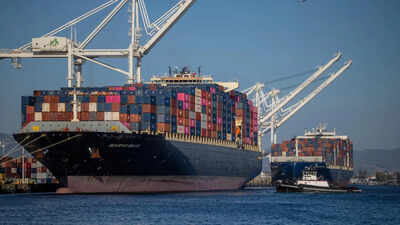
South Korea is set to test a new shipping route for Europe via the Arctic, testing whether a route opened by global warming can be commercially viable. The voyage has drawn concern from Western allies because it requires coordination with Russia.A South Korean container ship, the PanStar Acro, is scheduled to leave Busan on Saturday for a 40-45 day round trip to Europe via the Arctic. It will stop at Felixstowe in Britain, Rotterdam in the Netherlands and Gdansk in Poland before returning to South Korea. If successful, it would mark the country’s first commercial container voyage to Europe through the Arctic.
Global warming opens new route
The route has become increasingly accessible as Arctic sea ice melts, with September typically offering the lowest ice levels and safer navigation conditions. South Korea’s oceans ministry estimates that the Arctic route could cut voyages to Europe by up to 35% compared with the Suez Canal route while reducing fuel consumption.Seoul sees the route as more than a shipping experiment. President Lee Jae Myung’s government has made Arctic shipping a priority as part of efforts to turn Busan into a global maritime hub and establish regular commercial services through the Arctic by 2030.
Russian complication
But the route comes with a geopolitical complication: Russia.The Northern Sea Route runs along Russia’s Arctic coast and requires Moscow’s permits and cooperation. Western diplomats have raised concerns with Seoul, arguing that engaging with Russia undermines efforts to isolate Moscow over its war in Ukraine. One European diplomat told Reuters, “We want to isolate Russia, we don’t want engagement with Russia.”There are also concerns that South Korean vessels could face sanctions risks if they require Russian assistance during the voyage, including help if a ship becomes trapped in Arctic ice.Seoul and Moscow have not publicly responded to those concerns.The Northern Sea Route is already attracting more traffic. According to the Centre for High North Logistics, 88 vessels made 103 transits in 2025, up from 97 in 2024 and 43 in 2022, with Russian and Chinese operators dominating the route.
Chinese competition
Still, experts caution that the Arctic is far from becoming a year-round replacement for the Suez Canal. Container ships can currently use the route mainly during the roughly three summer months when ice conditions are most favourable, while vessel-size restrictions, insurance costs and other expenses could make the shorter route less commercially attractive than it appears.South Korea is also racing against China, which is seeking an early advantage on the route. Chinese container company Sea Legend Shipping is planning the first regular container service to Europe via the Northern Sea Route, making Seoul’s test voyage an attempt to build the operational experience and data it would need before launching scheduled Arctic services by 2030.

Leave a Reply