
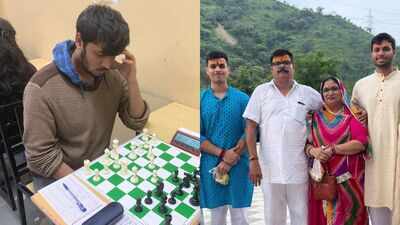
NEW DELHI: “Shahr mashhoor-e-zamana dekhne aaya hoon main / Rajdhani teri raana dekhne aaya hoon main / Khushnuma jheelon mein larzaan jin ka hai aks-e-jameel / Un haseen mahalon ka naqsha dekhne aaya hoon main.” (I have come to see this city, famed the world over / I have come to see your radiant capital / Whose beautiful reflection trembles in these joyous lakes / I have come to see the design of those beautiful palaces.)These lines, penned by Jaikrishn Chaudhri “Habeeb” in his nazm “Udaipur”, encapsulate the essence of a land popularly known as the City of Lakes, the Kashmir of Rajasthan, the Venice of the East, and the White City.Chandrajeet Singh Rajawat is one from those alleys. Today, he represents the city of Udaipur through the game of chess, mentoring students from India and across the globe and also nurturing tutors who can guide and inspire the next generation of aspiring minds.But the road that got him there ran through railway platforms, stolen phone, and a stretch of years when he genuinely did not know where he would sleep that night.
Before chess, there was cricket
Chess wasn’t Rajawat’s first competitive love. He would play cricket at the district level as a boy. However, drawn to the selection battles and the grind of team competition, he eventually stepped away from the sport.By his teens, he was in the science stream, preparing for the IIT entrance exams, a fairly conventional trajectory for an ambitious Indian teenager, until a Nintendo cartridge got in the way.“I had somehow got one of those Mario games,” 19960bRajawat told TimesofIndia.com during an exclusive interaction. There, he stumbled upon something similar to the game of 64 squares. However, his interest in it deepened only after his father took it up.“My father started playing it too. I asked him how it was played, and he said, ‘This isn’t a children’s game, you won’t understand it,'” he recalled. That single dismissive line lit something in him.
It was a game in which I couldn’t become good easily. You couldn’t easily beat people. That challenge attracted me.
Chandrajeet Singh Rajawat
He figured the game out on his own, using nothing but the in-game instructions, and beat his father the very next day. Soon, his brief video game obsession fizzled out. But something about that appetite for a genuine intellectual fight didn’t.It resurfaced properly around 2011-12, when he attended his first chess tournament and, in his own words, “really fell in love with chess”.“It was a game in which I couldn’t become good easily. You couldn’t easily beat people. That challenge attracted me,” he admitted.He was about 16, unusually late by competitive chess standards, but he improved fast. A rough first tournament, a better second, and by his third or fourth event, an outright win that made him Udaipur’s player to watch.He’d sit outside tournament halls between rounds, studying by observing stronger players. Despite the noticeable improvement, with his preparation for the IIT entrance exam impacted, his parents grew worried. At one event, one of them pulled him aside and told him plainly to abandon chess and focus on his studies.He started attending tournaments in secret instead. “Whenever I won, the local newspaper would publish the news with my photo,” he said, “I would get caught and scolded by my parents.”
Walking away from IIT
The turning point arrived with his entrance exam results, a rank high enough that, for his family, it represented the kind of opportunity that doesn’t come twice.As the eldest son, the expectation was obvious. Rajawat had other plans.“I had already decided I would come back to chess,” he said. When it came time to fill out his IIT counselling forms, he simply didn’t sit for it.His family’s financial footing was modest as his father ran a business that operated “somewhat on and off,” and the household got by on average means until his mother, previously a homemaker, sat for a government teaching exam and got selected, giving the family a more stable footing.His parents, Gunwanti Rajawat and Vivek Singh Rajawat, were not chess people themselves, and they were not on board with their son’s decision.
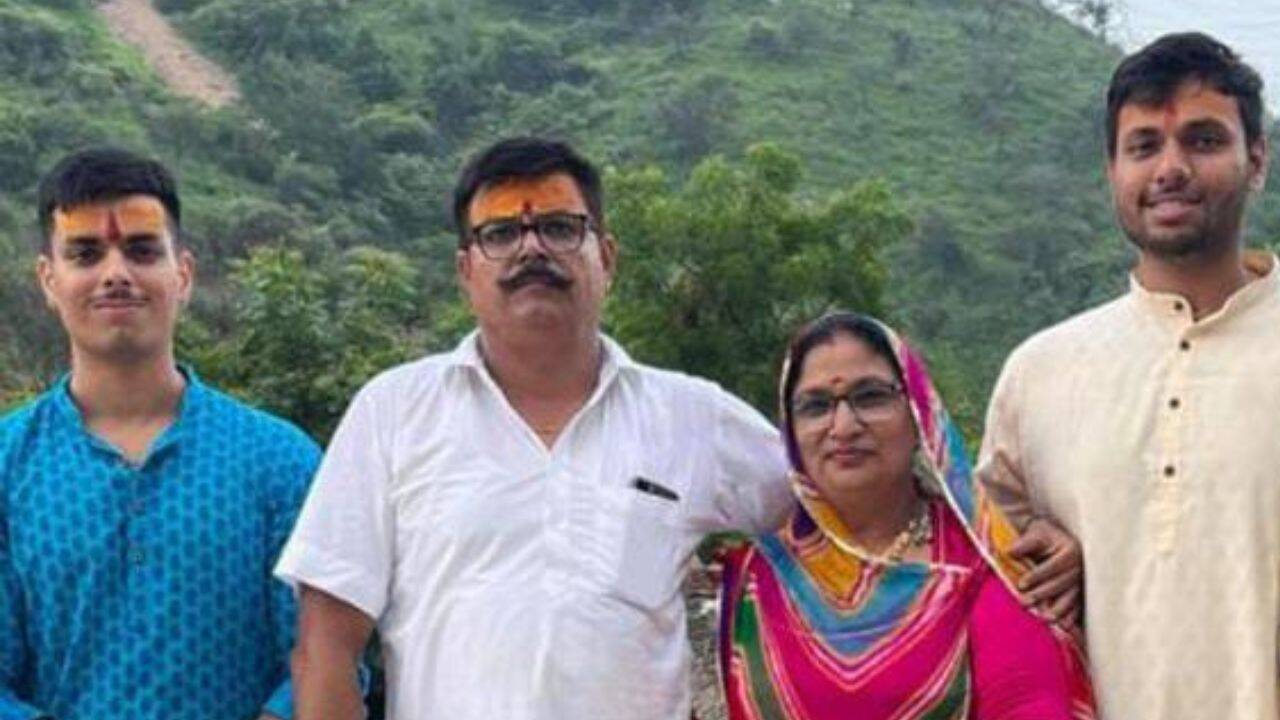
Chandrajeet Singh Rajawat with family (Special Arrangements)
“They were extremely upset,” Rajawat said. “But I was a little obsessive about it. I always told them, ‘It’s okay whatever problems you think there are, I’ll handle it.'”After a string of arguments, he, unable to find any solution, finally left home with a handful of belongings, still a teenager, with no real plan beyond the board.
No bed, no backup plan
After leaving home, he arrived in New Delhi alone. And the reason he had left home, chess, did not offer an easy beginning.Even getting into his first FIDE-rated tournament proved difficult, as a dispute over his eligibility with the AICF, India’s chess federation, meant officials initially told him he would not be allowed to play. It was a dispute he says he still does not fully understand. By then, however, he had already sacrificed his safety net to make the trip.He eventually found his way into a Rs 3,500-entry tournament in Delhi in 2014, one that at least came with shared accommodation, because otherwise, in his words, “I didn’t even have a place to stay.”He gradually started playing well enough to start representing Rajasthan regularly on the national circuit. The years that followed tested him in ways Udaipur never had. His phone was stolen. He slept at stadiums between tournaments, on trains, occasionally on the road, because there simply wasn’t money for anything more.“I had money for food, but not much beyond that,” he said.Asked whether he ever considered going home, his answer was: “No, never. Today, when I look back, all of this seems like a struggle, and people think it sounds like a struggle. But for me, I was actually enjoying it, because I was playing chess.”
Light at the end of the tunnel
The hinge point in Rajawat’s story is a tournament in Delhi that nearly broke him before it made him.Travelling back from the Under-25 Nationals in Chennai, riding the general compartment because there was no money for anything better, his phone was stolen on the train. He ran to the next station and begged officials to check.“A phone doesn’t just get found like that,” they told him.Despite losing the phone, he kept going, scraping by on prize money, until one event nearly broke him psychologically instead.In a tournament in New Delhi, he went on to win several early games. And consequently, he grew overconfident and then lost to a much lower-rated opponent.“I thought, what am I doing? If I win, I have no one here to celebrate with,” he said.For about two minutes, he seriously considered going home for good, then decided to just play out the three remaining rounds first.He won the next two. In the third, he arrived late, 28 minutes into a 30-minute default window, to face a far more experienced senior player, an Air Force competitor he remembers fondly. His lateness had already cost him most of his clock.“I had only about one minute left, while he had around an hour,” Rajawat said. It wasn’t first place at stake, but prize money significant enough to keep his whole journey alive.“Now I have nothing to lose. If I win, something could change.”What followed was pure survival chess, thirty-second increments trading down to the wire, until Rajawat held on to win. “After that I felt, now I can do anything,” he said. “That was where my journey really began.”Word spread quickly that he was a resourceful player who could win from losing positions. He earned the Arena Grandmaster (AGM) title, Rajasthan’s first, and began beating FIDE-rated Grandmasters outright, and crossed paths over the board with a young Gukesh, Praggnanandhaa, and Nihal Sarin, long before any of them were famous.
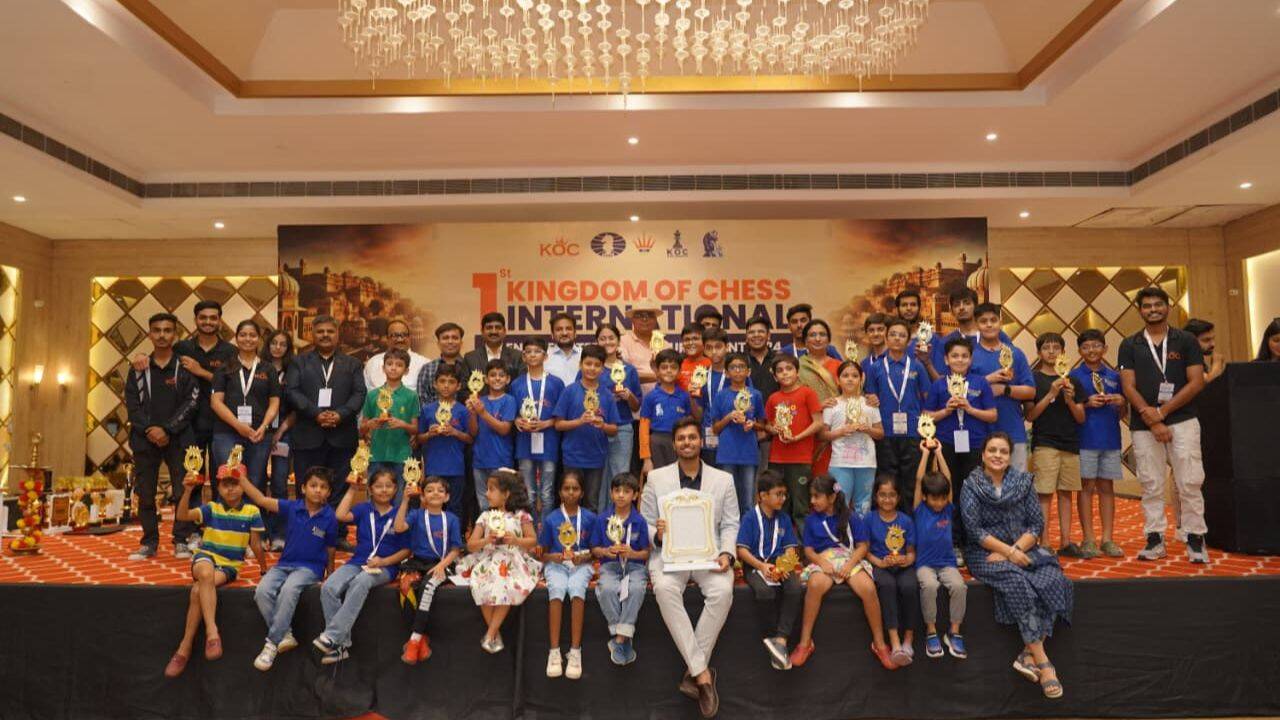
Chandrajeet Singh Rajawat in the middle (Special Arrangements)
Journey of teaching begins in Delhi
Around the same time, he picked up a college seat in mathematics, mostly for formality, at Delhi University (DU). Though, it didn’t last for long. Between tournaments, travel, and the demands of practicals and attendance, college quickly became the thing he was least invested in.By then he’d already lived through enough on his own to feel fully independent of the structure a degree was supposed to provide.It was around this same window, toward the end of 2015, still technically enrolled at DU, that he started teaching chess informally around Delhi; someone had mentioned to him that coaching could actually be a source of income, rather than something that only ate into his time.He built it up gradually through 2016, taking on students wherever he could find them, commuting across the city to teach. By 2017-18, that informal teaching had turned into real institutional work, eventually landing him a post at the British School.The early years were still a grind, bouncing between friends’ places, then renting a room from an uncle on credit.“The first three or four years were a huge struggle,” he said. “Then I realised what had seemed extremely difficult from the outside wasn’t necessarily impossible.”
The homecoming
By 2019, restless in Delhi and hearing that Rajasthan wasn’t doing enough for chess, he returned home and started a chess academy named Kingdom of Chess, teaching up to 100 students himself.The results followed with his students securing state and national titles, Commonwealth, Asian golds, and a World Championship medal.
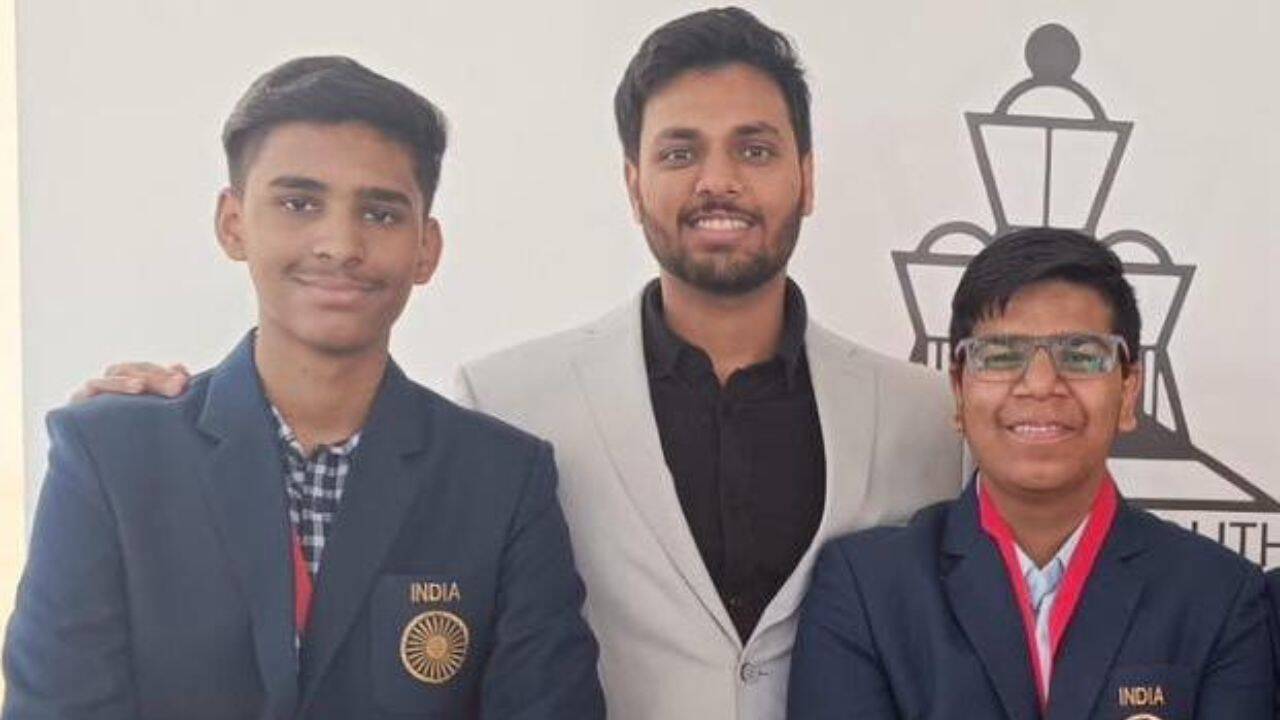
Chandrajeet Singh Rajawat with his notable students Yash Bharadia (International Master, World Championship medallist, and Commonwealth Gold medallist) and Arun kataria (FIDE master, national medallist) (Special Arrangements)
“I realised I could teach 100 children alone, but never thousands,” he said. This was the moment that pushed him towards not only teaching children directly but also training the trainers who could. Now, the academy operates in around 30 countries globally. Besides creating awareness about the game, it is also building employment opportunities.
Join conversation
Share your thoughts in the comments
Be respectful · TOI community guidelines
Nonetheless, before any of this was certain, there was a teenager who’d just walked out of his family home with nothing guaranteed.Before leaving home in 2014, though, Rajawat wrote a poem, not for an audience, but for a future version of himself.“I wrote it for my future self,” he said. “I thought that if I ever achieved something, I’d be able to look back at what I had written.”
Gali agar na chunta ye toh,Mujhko itna naam na milta.Is haseen mehfil mein tumko aaj na milta, kal na milta.Main toh apne bachpan mein hi in mahalon se rooth gaya,Maine path ko kabhi na chhoda, chahe kitna toot gaya.Roti ke tukdon se zyada maine apne sapne ko maan diya,Har pal — har ghadi, is din ke liye jiya.Maine khoob tarazu par chadhte dekha imaanon ko,Pashuon ke pairon ko chhoote dekha hai insaanon ko.Par jhoothe is sansaar mein ji rahe sab hain moh mein,Jab chahat toh kuch aur hi hai unki rooh mein.Main in rangon mein ghul jaata,Ya dhal jaata chaandi mein,Par sona phir main kabhi na banta.Jo tham jaata aalochanaon par,Aur sabhi kuch mil jaata,Mujhko mera ghaam na milta, mujhko khud ka maan na milta.Mujhko in phoolon ka, in jharno ka jaadu bharmaata chala gaya,Main bhi par inko ji bhar kar thukraata chala gaya.Meri toh keval hasrat thi duniya se takraane ki,Meri toh keval hasrat thi apna sapna ji jaane ki.Main mamooli sa reh jaata,Mujhko mera sangraam na milta.Gali agar na chunta ye toh, mujhko itna naam na milta.
Chandrajeet Singh Rajawat

Leave a Reply