

5 min readNew DelhiAug 13, 2026 09:27 AM IST
The recent backlash over a type 1 diabetes patient allegedly being denied entry to a premium cinema for carrying emergency food has sparked a wider conversation about hypoglycaemia and the medical necessity of emergency kits. Following the incident, Jyotsana Rangeen, a type 1 diabetes patient, expressed in an X tweet, “Denied entry at PVR with my emergency hypo kit despite explaining I have #Type1diabetes. The manager even said, ‘If you have this condition, you shouldn’t come to watch a movie.’ This is discrimination. Your staff needs urgent awareness training.”
DISCLAIMER: This article is based on information from the public domain and/or the experts we spoke to. Always consult your health practitioner before starting any routine.
PVR Cinemas subsequently apologised and clarified that emergency kits are allowed in a response on the same X thread. “Namaskar. We sincerely regret the inconvenience caused. Guests carrying medically necessary food, beverages or diabetes kits are always permitted at PVR INOX. In this instance, our security colleague initially treated the items as regular outside food before understanding the medical requirement. Once our Duty Manager was informed, the food items were immediately assured that such items are allowed. We are reinforcing this guidance with our teams to ensure a smoother experience for guests with medical needs going forward.”
We asked experts what hypoglycemia in type 1 diabetes is all about and why such kits are essential, even during seemingly routine outings such as a visit to the cinema.
Hypoglycemia means the blood glucose level has fallen below normal, usually below 70 mg/dL. According to Dr Vijay Negalur, HoD diabetology, KIMS Hospitals, Thane, it can lead to symptoms like sweating, trembling, hunger, dizziness, palpitations, irritability, and trouble concentrating.
While a mild episode can usually be corrected quickly with fast-acting carbohydrate, severe hypoglycaemia is a medical emergency because the brain depends on glucose. “A rapidly falling glucose level can cause confusion, abnormal behaviour, seizures, unconsciousness and, if prolonged, serious neurological consequences,” explained Dr Rajiv Kovil, diabetes and obesity specialist at Zandra Healthcare.
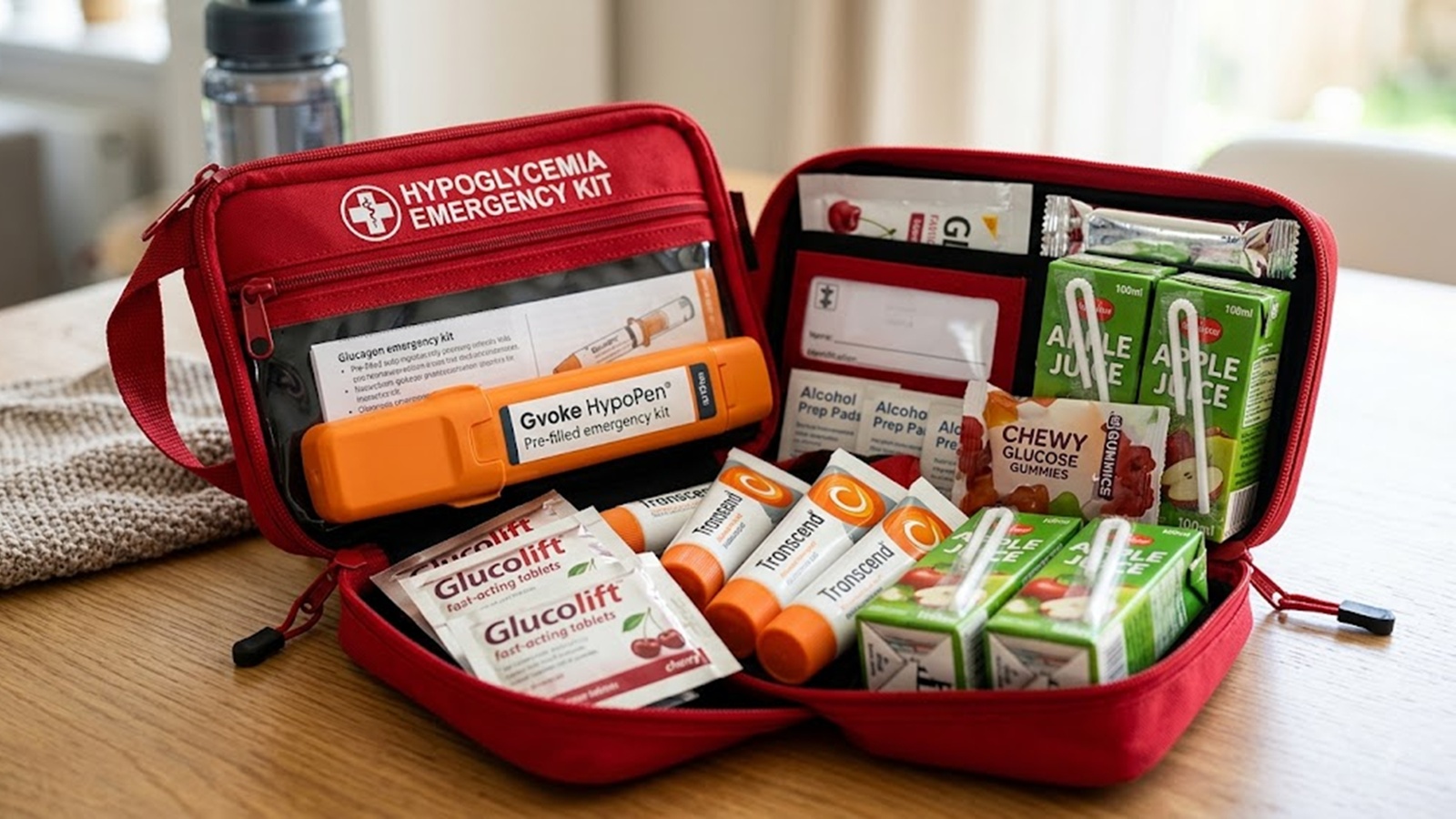 What should be in your hypoglycemia emergency kit? (Photo: AI Generated)
According to Dr Kovil, the people most at risk are those with type 1 diabetes, previous severe hypoglycaemia, impaired hypoglycaemia awareness, older adults, particularly those with cognitive impairment or dementia, and people with chronic kidney disease, where declining kidney function can increase the risk of hypoglycaemia.
Story continues below this ad
“That is why high-risk patients should not think of an emergency kit as something needed only while travelling. Even a simple cinema outing can become an emergency if hypoglycaemia strikes and the person cannot recognise it or treat themselves,” emphasised Dr Kovil.
Dr Negalur cautioned how hypoglycemia does not choose a convenient time or place. “A person might take their diabetes medication or insulin, eat later than usual, skip a meal, or be more physically active that day. Even sitting in a cinema does not eliminate the risk. In fact, a patient could be in a dark, crowded space where early symptoms might be missed,” said Dr Negalur.
For those who are prone to frequent or severe hypoglycemia, “carrying an emergency kit is a smart precaution, not an overreaction”, added Dr Negalur.
Denied entry at PVR with my emergency hypo kit despite explaining I have #Type1diabetes The manager even said, “If you have this condition, you shouldn’t come to watch a movie.”
This is discrimination. Your staff need urgent awareness training. @_PVRCinemas
— Jyotsana Rangeen (@JyotsanaRangee3) August 6, 2026
What must the emergency kit contain?
The essentials should have a quick source of glucose, like glucose tablets, sugar sachets, or a small juice pack. “Patients at risk of severe hypoglycemia might be advised by their doctor to carry a glucagon rescue kit. Including their regular diabetes medications, a medical identification card or bracelet, and emergency contact details can also be helpful,” said Dr Negalur.
Story continues below this ad
Family members and companions should know where it is and how to use it. “Glucagon becomes particularly important when the person is confused, cannot swallow safely, has a seizure or becomes unconscious,” said Dr Kovil.
What should be done in case of an emergency?
If the person is conscious and can swallow, they should consume about 15 grams of fast-acting carbohydrate and check their glucose after 15 minutes. “If it remains low, they can repeat the same step. Once they feel better, they may need a longer-acting carbohydrate, depending on the situation and their next meal,” said Dr Negalur.
If the person is unconscious, having a seizure, or unable to swallow, Dr Negalur advised that people or family members should not give food or liquid by mouth. “If glucagon is available and prescribed, it should be used, and emergency medical help should be sought immediately,” said Dr Negalur.

Leave a Reply