
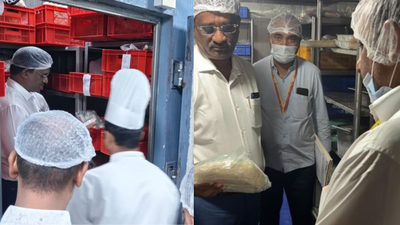
MUMBAI/BENGALURU: Food safety enforcement has intensified across Maharashtra and Karnataka, with inspections uncovering everything from unlicensed food businesses and poor hygiene to rotten meat, expired dairy products and improperly stored food. The latest action against restaurants and hotels in the two states points to a wider concern: food businesses are being found wanting not just on hygiene, but also on basic regulatory compliance.
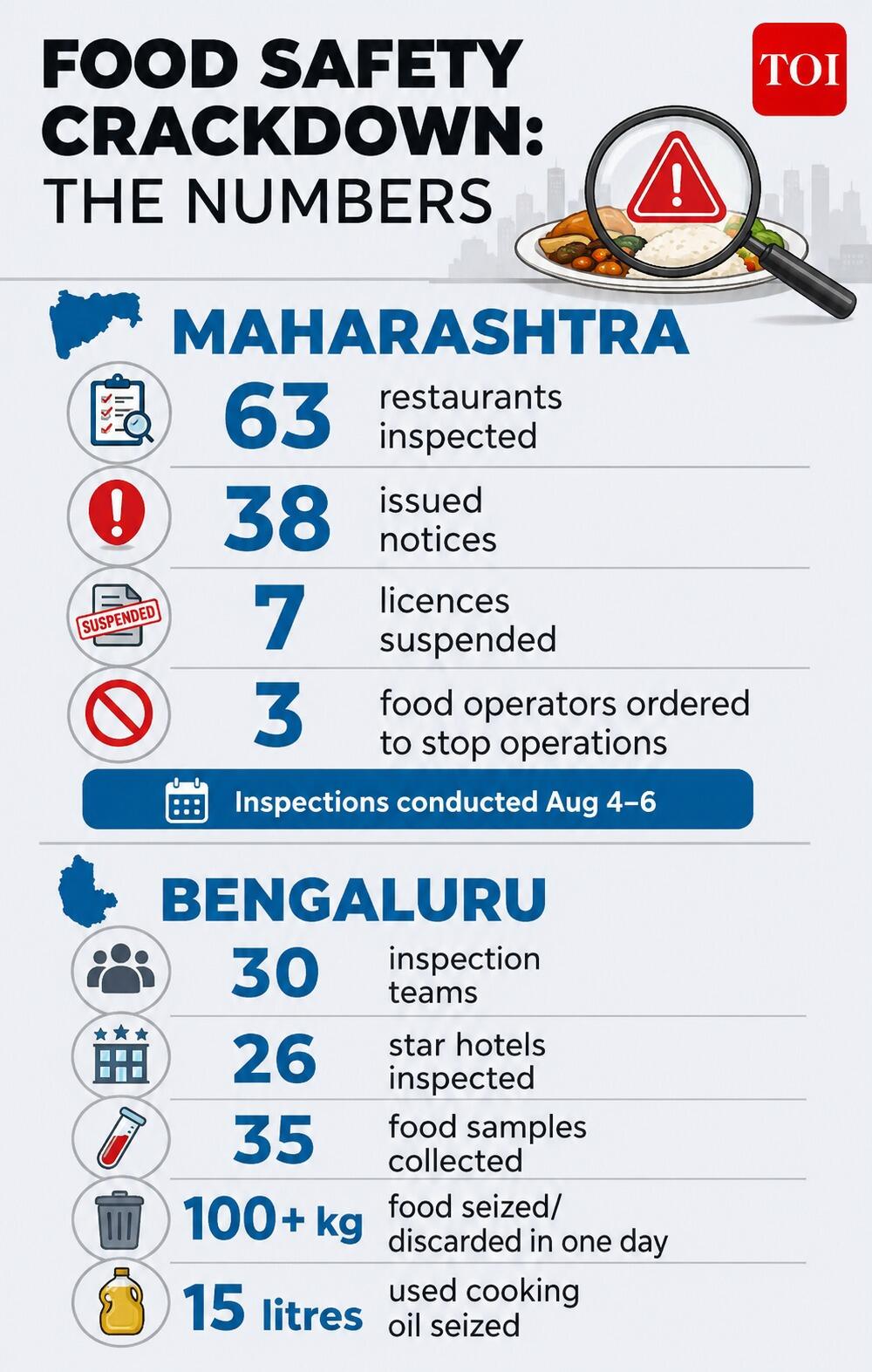
Food safety crackdown: The numbers
Mumbai restaurants face actionThe Maharashtra Food and Drugs Administration has intensified inspections under its state-wide food safety enforcement drive launched under newly appointed commissioner Tukaram Mundhe. The crackdown has extended across restaurants and other food businesses, with establishments facing action for violations ranging from poor hygiene to the absence of mandatory permissions. The FDA’s latest figures show the scale of the exercise, with 63 restaurants inspected between August 4 and August 6.Of these 63 establishments, 38 were issued notices directing them to improve hygiene and comply with food safety requirements, while licences of seven restaurants were suspended. The FDA has also suspended licences of several eateries across Mumbai and Navi Mumbai over violations linked to hygiene and mandatory permissions. In addition, notices directing three other food business operators to stop operations were issued during the enforcement drive.
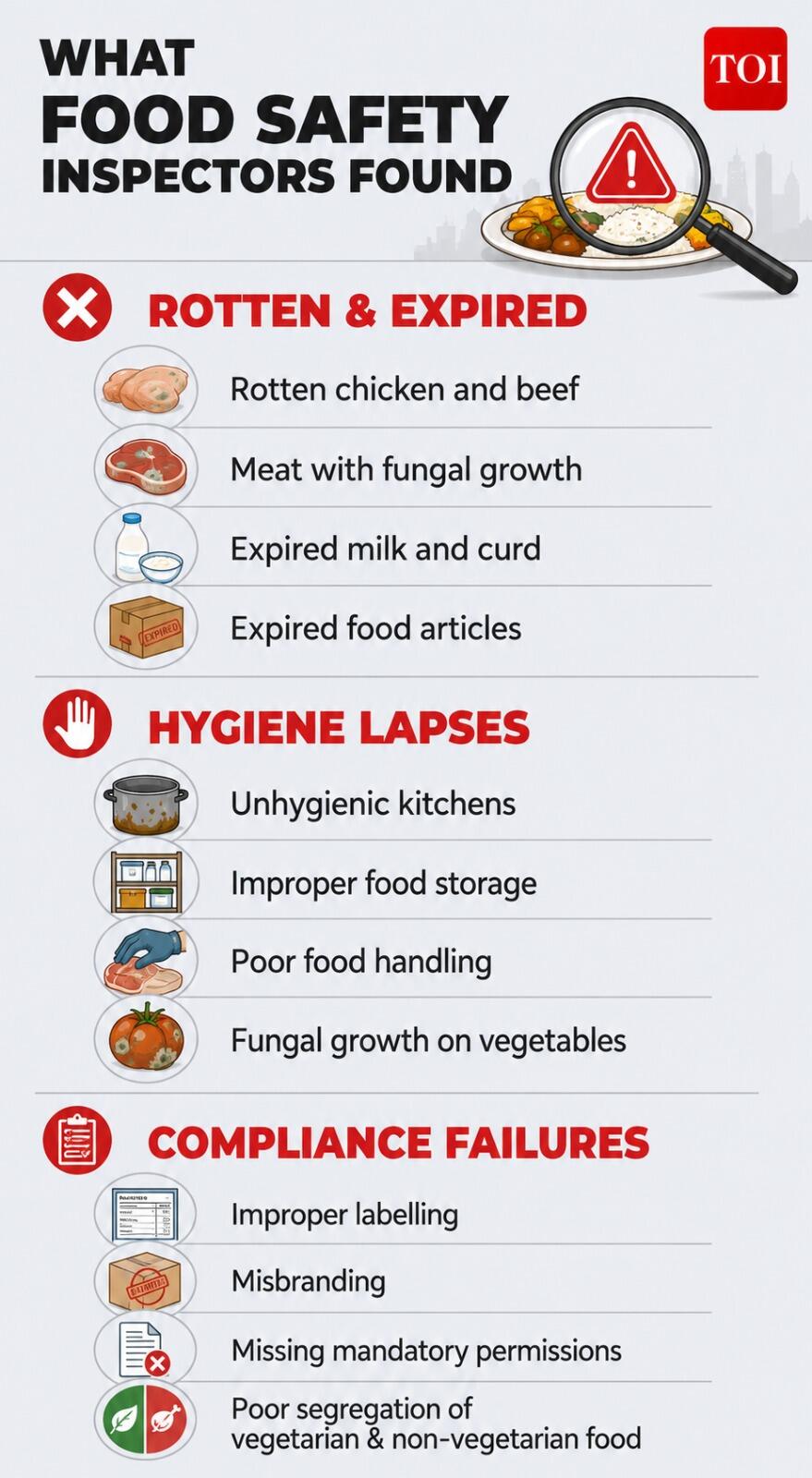
What food safety inspectors found
The Maharashtra FDA’s action is significant because the violations being detected are not limited to one type of establishment or one part of the food chain. From restaurants and dhabas to large commercial kitchens, regulators are finding gaps in licensing, hygiene and compliance with mandatory food safety requirements. The enforcement drive under the newly appointed commissioner comes amid a wider push to strengthen food safety checks across the state.Bengaluru raids uncover rotten meat, expired foodIn Bengaluru, the scale of the findings has been equally striking. The Food Safety Wing of the Food Safety and Drug Administration Department deployed 30 teams to inspect 26 three-star and five-star hotels and collected 35 food samples for laboratory testing. Officials found violations including improper labelling and misbranding, expired food products, unhygienic storage and handling, fungal growth on vegetables and inadequate segregation of vegetarian and non-vegetarian food.The inspections covered a wide range of commonly consumed products, including tea powder, chicken, mutton, fish, edible oil, chilli powder, turmeric, tomato sauce, lemon juice, cheese, papad, cashew nuts, ginger, pepper, spice powders and milk. Notices have been issued to the concerned food business operators, with adjudication proceedings under the Food Safety and Standards Act, 2006, set to be initiated before the competent authority.
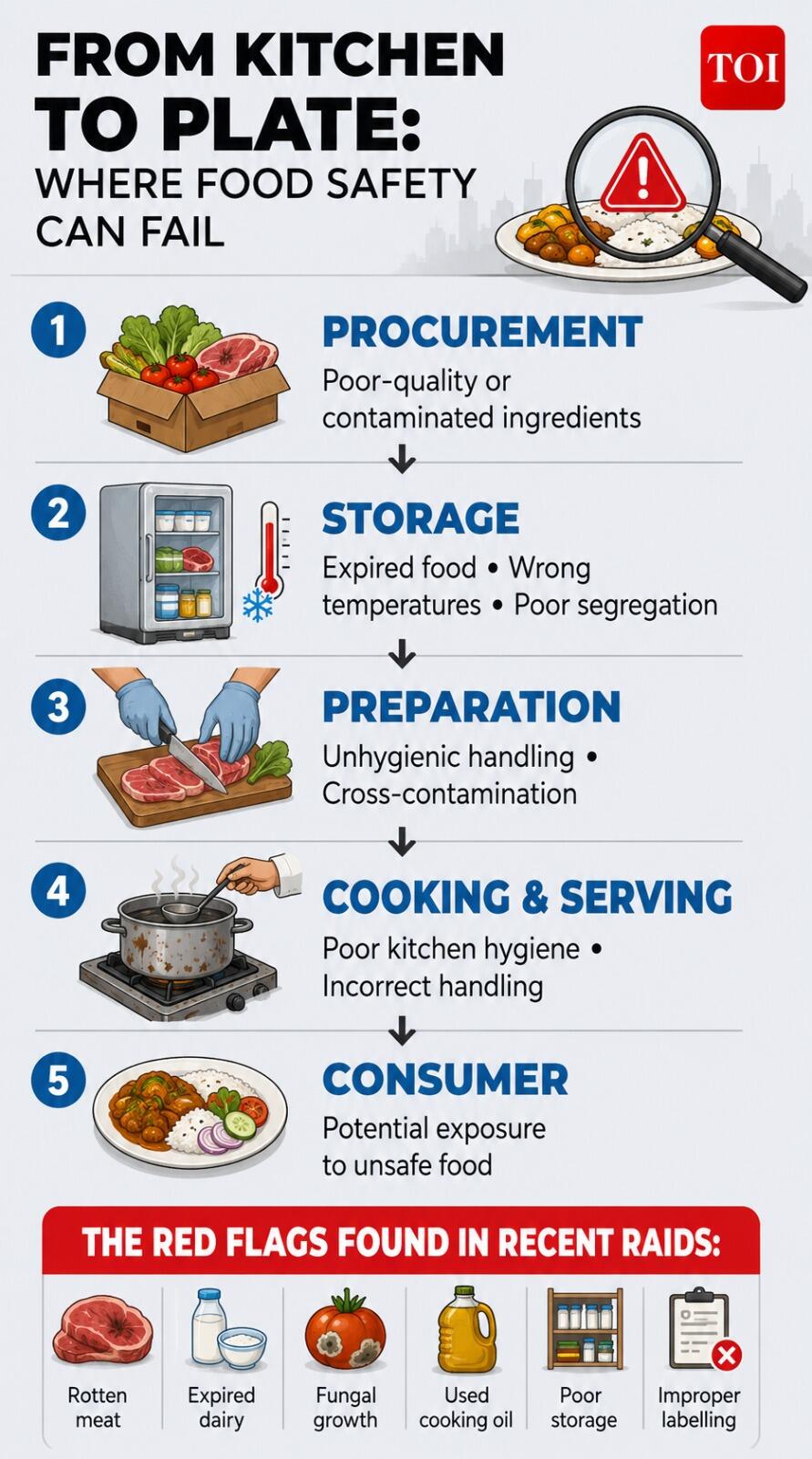
From kitchen to plate: Where food safety can fail
The third day of the Bengaluru raids brought even more disturbing findings. Officials seized or discarded more than 100kg of food articles and 15 litres of used cooking oil from six hotels. At one hotel, inspectors found 45kg of rotten chicken and beef along with 6kg of vegetable cutlets. The food, deemed unfit for consumption, was destroyed or discarded according to procedure.More than 100kg food discarded in one dayDuring Sunday’s inspections, officials also seized 50kg of duck and 5kg of fish from another hotel. At two other establishments, 5kg each of green peas and mushrooms were seized, while another inspection resulted in the seizure of 3kg of fish and the discarding of 7kg of cake, potatoes and tacos. One hotel kitchen was shut after inspectors found unhygienic conditions and improperly stored food.Officials also found rotten meat, including beef with fungal growth, during the inspections. Milk and curd packets that had expired 10 days earlier were also discovered. Such findings are particularly significant because food safety failures in commercial kitchens can affect large numbers of consumers in a short period, especially when food is prepared and served in high volumes.The latest Bengaluru action follows complaints from members of the public about food quality, hygiene and alleged unsafe practices. Karnataka Health and Family Welfare Minister UT Khader directed the constitution of special teams to conduct surprise inspections across Bengaluru and other major locations. The complaints, including those shared on social media, have added pressure on authorities to step up enforcement against establishments accused of serving substandard or improperly handled food.Friday raids reveal even bigger quantitiesThe numbers from the first two days of the Bengaluru drive underline why the authorities have intensified inspections. On Friday, officials inspected 26 star hotels and collected 35 samples, while 105kg of expired food articles were seized from one hotel. At another establishment, 76kg of meat, 200kg of vegetables and 32 litres of expired milk were seized and destroyed.Saturday’s inspections shifted focus to food storage and distribution centres, widening the crackdown beyond restaurant kitchens. The exercise is significant because food safety risks can enter the supply chain well before a meal reaches a customer’s plate. Poor storage temperatures, expired ingredients, cross-contamination, incorrect labelling and inadequate segregation can all turn routine food preparation into a potential health risk.Food safety concerns extend beyond restaurantsThe latest crackdown also comes against the backdrop of growing public concern over hygiene in India’s food-service industry. Videos and social media posts in Karnataka have recently highlighted alleged unhygienic kitchens, poor food handling and the use of artificial colours in dishes such as gobi manchurian and kebabs. These complaints have increasingly become a trigger for authorities to conduct surprise inspections rather than relying only on routine checks.Karnataka had undertaken a similar enforcement exercise last year under “Operation Eat Right”, following complaints linked to food poisoning and the use of artificial colours. The latest inspections suggest that periodic drives remain necessary because compliance cannot be assumed even at established or premium establishments. The fact that inspections of star hotels and ordinary eateries have both resulted in violations makes food safety a concern that cuts across the entire food-service chain.From licences to rotten food, basic checks remain crucialThe incidents in Mumbai and Bengaluru highlight two different but connected sides of food safety. In Mumbai, establishments were found facing action over hygiene deficiencies and regulatory violations, while in Bengaluru, inspectors found expired and rotten food, fungal growth, poor storage and labelling violations. Together, the cases show why licensing, inspection and kitchen-level hygiene checks need to work together.For consumers, the latest enforcement action is also a reminder that a restaurant’s appearance, location or price does not necessarily guarantee food safety. The real test lies behind the kitchen doors—in how ingredients are sourced, labelled, stored and handled, whether expired products are removed promptly, and whether vegetarian and non-vegetarian food is properly segregated. The latest raids suggest authorities are now looking much more closely at those basics.

Leave a Reply