
7 min readHyderabadJul 27, 2026 08:16 AM IST
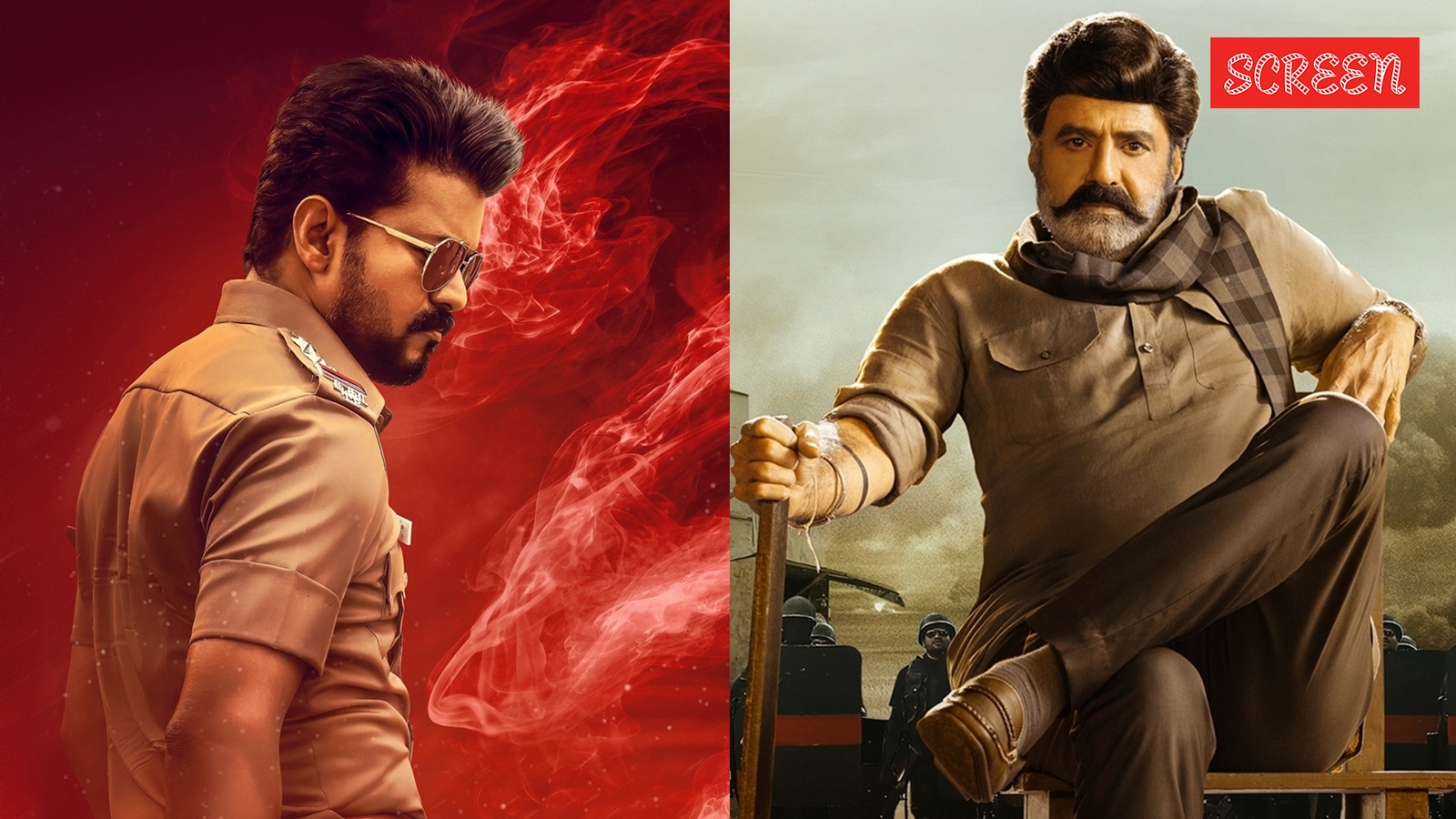
When a remake works better than the original material a filmmaker adds to it, the problem is not the remake, it is the filmmaker. Director H Vinoth said before Jana Nayagan‘s release that his film retains about 50 percent of Anil Ravipudi’s Bhagavanth Kesari. The rest is all his: His villain, politics, AI warfare, and his vision his for how Vijay should say goodbye to cinema. He probably did not expect audiences to take those numbers and use them as a scorecard.
But three days in, that is exactly what has happened. The first half, where Vijay holds a frightened girl’s hand and slowly builds her confidence, works. That is the Ravipudi half.
The second half, where Bobby Deol commands a robot army in a fictional African country rendered through AI while the film delivers democracy lectures from what feels like a campaign stage, does not work. That is the H Vinoth half. The line between the two is not something you need a review to find. You feel it in the theatre the moment the interval ends and the film you were watching becomes a different film entirely.
Also Read: Jana Nayagan movie review: Vijay’s last film unravels under pressure of being Vijay’s last film
Why the first half of Jana Nayagan holds together
The first half of Jana Nayagan follows the Bhagavanth Kesari roadmap closely. Vijay is an ex-cop who has taken charge of a dead friend’s daughter, played by Mamitha Baiju. The plot revolves around the girl, who saw her mother die, resulting in a series of panic attacks. He spends the first half slowly, patiently, sometimes clumsily, trying to pull her out of that fear.
This worked in Bhagavanth Kesari because Anil Ravipudi gave it time. He let the relationship breathe and bloom. He wrote scenes that were small and specific, a conversation about good touch and bad touch, a training sequence where the girl fails before she succeeds, moments of warmth between Balakrishna and Sreeleela that did not need a background score to land. The film trusted that audiences would care about one man trying to help one girl, and they did.
Jana Nayagan’s first half carries that same trust, mostly because it is running on the same material. The Vijay-Mamitha dynamic has real warmth, he makes you believe he cares about her. The pre-interval action block sends you into the break thinking this might actually work.
Story continues below this ad
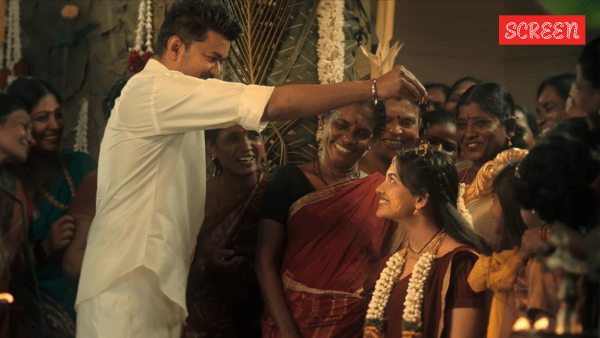 Vijay and Mamitha Baiju in Jana Nayagan.
And all of it, every bit of it, traces back to what Ravipudi wrote in 2023. Vinoth directed these scenes but the bones, emotional beats and structure are Ravipudi’s. Take away Bhagavanth Kesari from the first half of Jana Nayagan, and there is nothing left to hold onto.
Why the second half of Jana Nayagan falls apart
While the flashback is a mix of Anil Ravipudi’s and H Vinoth’s writing, somehow Jana Nayagan works. Then the interval card hits, and the Bhagavanth Kesari safety net disappears. Vinoth said only 20 percent of the original’s second half survives in his version. That means 80 percent of what you see after the break is his own material. And this is where everything goes wrong.
Bobby Deol, who is called John Himmler, was supposed to carry the second half. He runs a global arms operation out of a fictional African nation called the Republic of Swasnia. He has destabilised countries, commands drone armies and robot soldiers and plans to destroy Indian democracy through fear and technology. None of it works. Not a single frame of the Swasnia backstory has been praised by anyone. Bobby Deol, who scared people with just his silence in Animal, is given so much to do here and lands none of it. His character is written so broadly and staged so poorly that he becomes funny in scenes that are supposed to be menacing. The political speeches about democracy and unity pile up one after the other until the film stops feeling like a movie and starts feeling like a three-hour version of a party manifesto with action breaks.
Every single one of these problems belongs to H Vinoth. They are not inherited from Bhagavanth Kesari. The original had Arjun Rampal playing a local politician with a specific grudge against Balakrishna. The villain occupied real physical space because he was filmed on real locations with real lighting. There were no robot armies or fictional African nations. Just a man with power using it against a family that could not fight back. Vinoth replaced all of that with something bigger. The problem is, bigger turned out to be worse.
Story continues below this ad
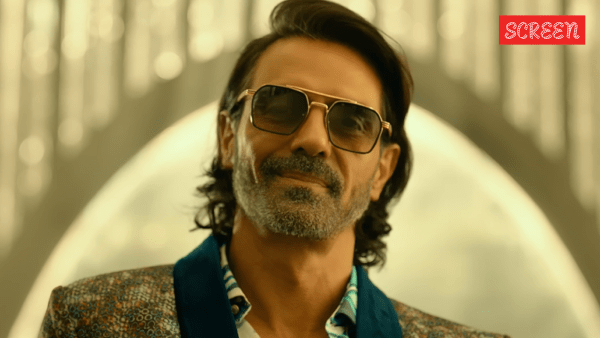 Arjun Rampal as Rahul Sanghavi in Bhagavanth Kesari
Here is the part that stings the most. Vijay personally walked the director through the original scene by scene, explaining exactly what he liked and why. Ravipudi confirmed the same story, saying Vijay called him after watching Bhagavanth Kesari and told him “a few episodes from the film were still haunting him.”
The scenes that haunted Vijay, the scenes he spent time explaining to his director frame by frame, were Ravipudi’s scenes. The father-daughter bond. The fear and the overcoming of it and the women empowerment thread. Vijay did not call Ravipudi because of a robot army. He called because the relationship between an older man and a frightened girl moved him deeply enough to want to recreate it.
Vinoth then took that material, the very material that moved his star enough to make the phone call, and buried it under politics, AI and ambition. The girl Vijay wanted to protect on screen is the same girl the screenplay abandons in the second half. The emotional core Vijay responded to is the same emotional core that gets diluted once Vinoth’s original additions take over.
Also Read: Jana Nayagan: Vijay’s propaganda film makes even Sura and Villu look like masterpieces
Story continues below this ad
The film Vijay deserved
Nobody is saying Jana Nayagan should have been a shot-for-shot copy of Bhagavanth Kesari. Remakes require adaptation, given that Tamil audiences are different from Telugu audiences. Vijay’s screen presence demands different treatment than Balakrishna’s. Cultural adjustments, tonal shifts and structural tweaks are necessary in a remake. But there is a difference between adapting a film and replacing half of it with material that does not work. Vinoth could have kept the emotional core, given Mamitha the arc and screen time that Sreeleela had, used a grounded villain with a personal grudge instead of a global arms dealer with a robot army, and trusted the father-daughter story to carry the farewell. He could have made a simple, clean, emotionally satisfying film that let Vijay walk away from cinema on a strong note.
Instead, he tried to make a statement. A political document that led to a modern warfare spectacle. He tried to make a campaign video for his dear hero. And in doing all of that, he forgot what made the original film work. Because it cared about one girl and did not try to save the world. It tried to save one person and that was enough.

Leave a Reply