
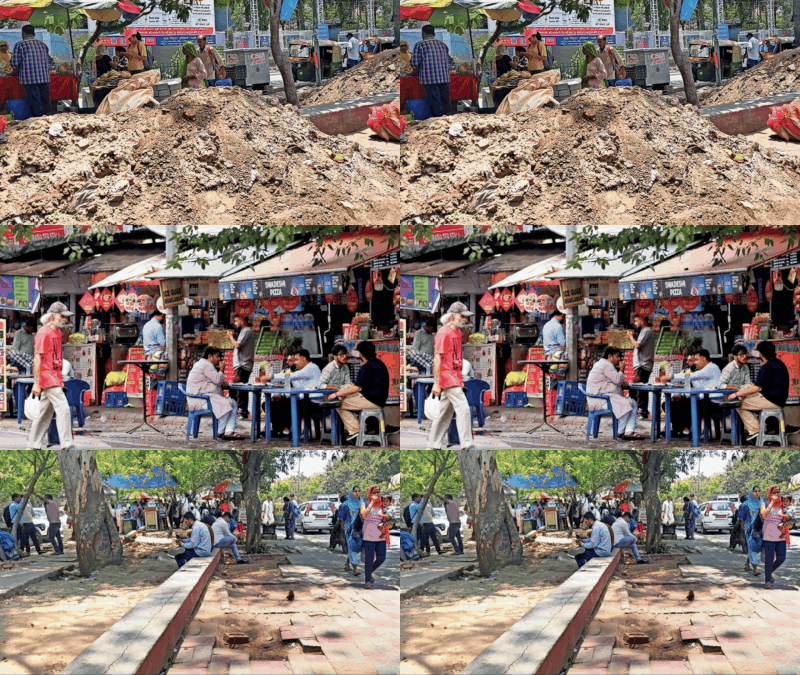
Forget Temple Run. For a real test of reflexes, balance and survival instinct, try walking on a Delhi footpath.
NEW DELHI: Forget Temple Run. For a real test of reflexes, balance and survival instinct, try walking on a Delhi footpath.Days after the Supreme Court said pedestrians have a fundamental right to walk safely on demarcated footpaths, TOI reporters Devanshi Mehta and Khushi Bhuta, and photographer Tarun Rawat went to four highfootfall stretches — a market, a hospital zone, an office hub and a school-college area — to see how much of that right exists on the ground.

The answer: in many places, barely at all.Lajpat Nagar Market: Footpath, now showroomIn Lajpat Nagar’s central market, the footpath had been promoted to retail space. Mannequins stood where pedestrians should have walked. Shops had extended displays onto the pavement.
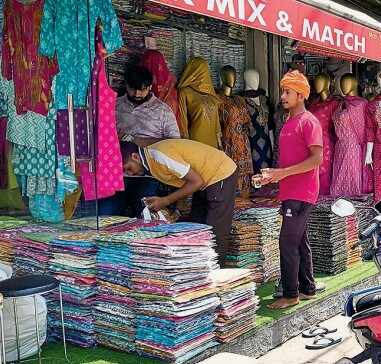
Coolers, bins, footwear and merchandise filled the walking strip. Two-wheelers parked along the road blocked even the escape route.
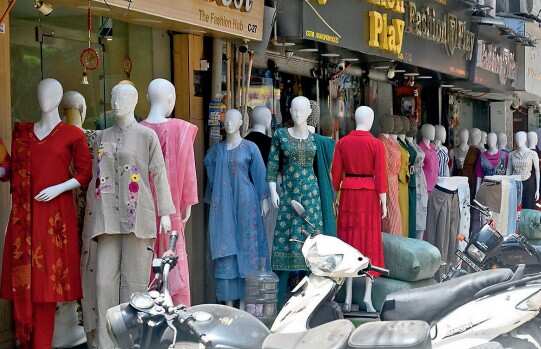
At several points, the safer option was also the illegal-looking one: step off the footpath and walk on the road. Overhead wires added a bonus level. Pedestrians had to duck, dodge or abandon the pavement altogether.Zamrudpur: School on one side, college on the other, road in betweenIn Zamrudpur, with a prominent south Delhi school on one side and LSR on the other, the footpath starts promisingly and then gives up. A few steps in, parked cars block it. Further ahead, autos, cabs and barricades break the route. Then come dug-up stretches, vendors and abrupt ends. This is a route used by students and residents. But it is difficult even for a healthy adult to walk continuously. For children, senior citizens, wheelchair users or parents with strollers, the footpath is less a facility than a warning.Near a school and college, the safe walking route ends in parked cars and police barricadesAIIMS gate 2-South Ex side: Patients, Crowds, No Clear PathOutside AIIMS Gate No. 2, the problem was more serious because of who uses the stretch. Patients, attendants, Metro users and bus commuters all need a safe walking route. What they get instead is broken paving, dug-up sections, heaps of concrete, food stalls, fruit sellers, garbage bins and sudden gaps.
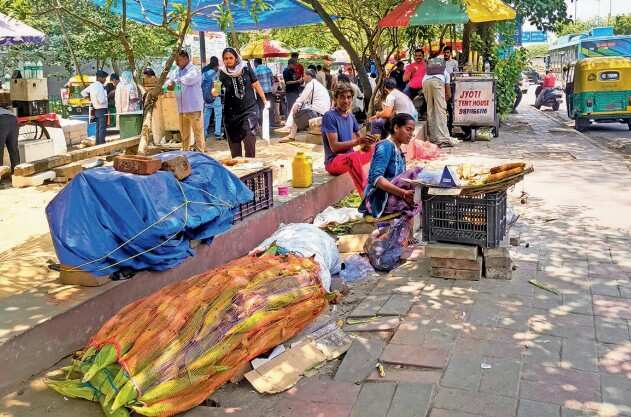
The right to walk, interrupted every few steps
A short walk from the Metro side towards AIIMS became an obstacle course. At points, pedestrians had to choose between climbing over damaged footpath sections or walking beside moving traffic. Most chose the road. For the young and able-bodied, it was inconvenient. For patients, senior citizens, persons with disabilities or families carrying children, it was close to unusable.ITO: Administrative hub, eating zone, no walking spaceNear the National Commission for Women office, on the stretch towards the Bar Council of India and other offices, the footpath has been turned into an informal food court. Carts, stalls, tables, chairs and parked vehicles occupy the pedestrian space.
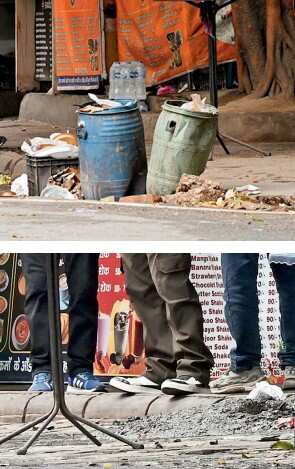
At ITO, the footpath doubles as a food court
This is not a quiet lane. It is an institutional hub with office-goers, lawyers, visitors and govt staff moving through the area every day. Yet the walking space is so compromised that two people cannot comfortably pass in several places. Pedestrians trying to avoid traffic are pushed back into it.Delhi footpaths exist everywhere except under your feetAcross the four stretches, the pattern was the same. Footpaths existed in fragments. They were broken, blocked, dug up, encroached, parked upon or simply interrupted without warning. A pedestrian who tried to stay on the footpath had to repeatedly step down, step up, detour, squeeze through, duck under or turn back. That makes walking longer, slower and more dangerous.A straight walk becomes zigzag. A short distance becomes two to four times the effort. For many, the road is not a choice. It is the only continuous path available.The Supreme Court has now said the right to walk is a fundamental right. Delhi’s footpaths seem to have filed a dissenting opinion.

Leave a Reply