
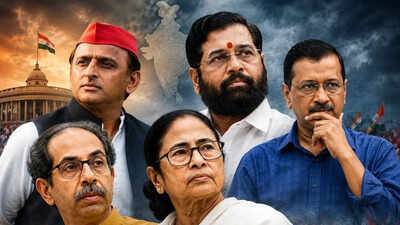
Indian politics seems to be going through a familiar cycle once again. Every few years, a major regional party suddenly finds itself staring at an internal revolt. Loyalists become rebels, whispers become headlines, and before long, a party that once looked invincible is fighting for survival from within.This year, the tremors are being felt across multiple opposition parties simultaneously.The TMC is battling its biggest crisis since its formation. Shiv Sena (UBT) is once again confronting the ghost of the 2022 rebellion. The Samajwadi Party is fending off persistent claims of an impending split. And the Aam Aadmi Party is still recovering from the shock exit of seven Rajya Sabha MPs earlier this year.Indian politics has witnessed repeated episodes of mass defections and engineered realignments. The Shiv Sena split in 2022 and the NCP split in 2023 fundamentally altered Maharashtra’s political landscape. Before that came dramatic realignments in Madhya Pradesh, Karnataka, Goa, Arunachal Pradesh and Manipur. Even parties that eventually recovered, such as AIADMK after the OPS-EPS power struggle, spent years navigating internal wars before arriving at a new equilibrium.Different states. Different leaders. Different political contexts.Yet the story sounds remarkably similar.For opposition, 2026 is increasingly beginning to resemble a season of political breakups.
First came AAP
If there was a warning sign of what was to come, it arrived in April.Seven Rajya Sabha MPs led by Raghav Chadha walked out of the Aam Aadmi Party and merged with the BJP, dealing one of the biggest blows to Arvind Kejriwal’s party since its formation.The development was significant not merely because of the numbers involved, but because it exposed a vulnerability many believed AAP had overcome after its setbacks in Delhi and Punjab.For years, AAP projected itself as a disciplined organisation born out of an anti-corruption movement. Yet the departure of some of its most recognisable parliamentary faces showed that even relatively young political parties are not immune to internal fractures.
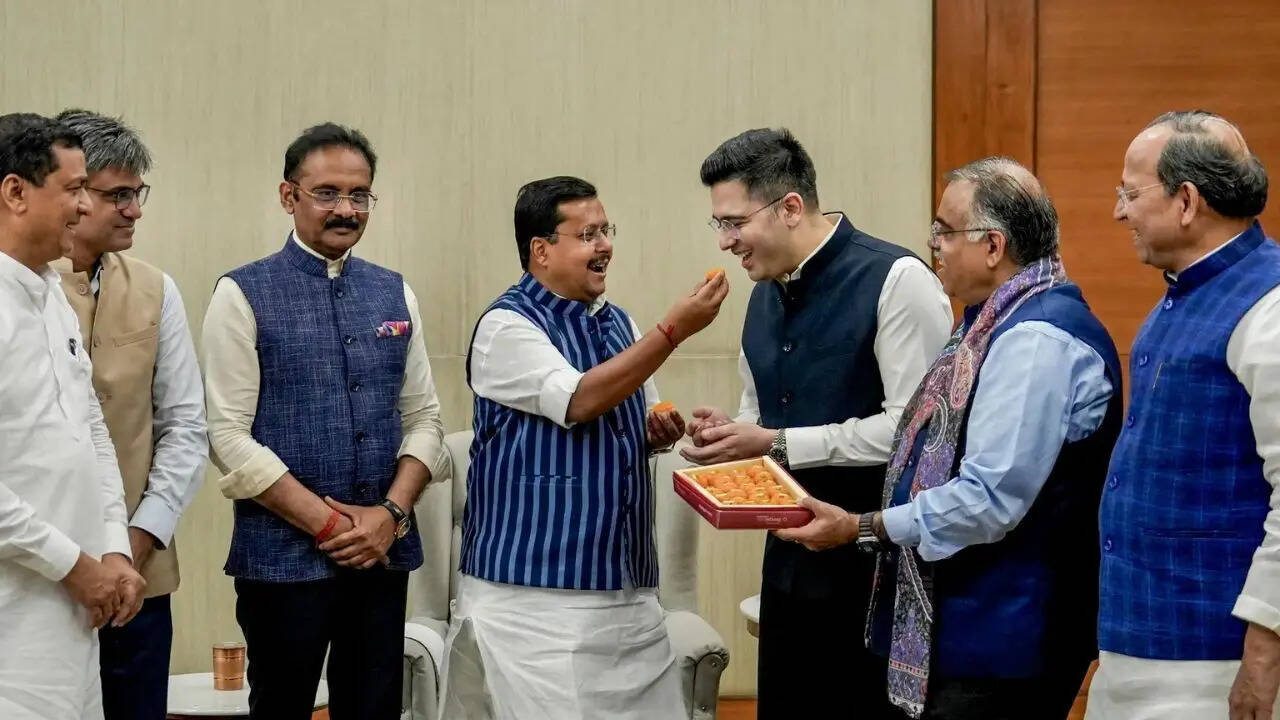
The move pushed the BJP’s own Rajya Sabha tally from 106 to 113 and the NDA’s combined strength from roughly 141 to 148 — with the BJP reportedly hoping to add another five or so seats by year-end as more than thirty Rajya Sabha seats fall vacant, inching the alliance closer to the 163-seat mark needed for a two-thirds majority in that House. Kejriwal, Punjab CM Bhagwant Mann and Sanjay Singh all publicly accused the departing MPs of betrayalAt the time, it appeared like an isolated incident.It now looks more like the beginning of a trend.
Mamata’s biggest challenge yet
The most dramatic political earthquake is currently unfolding in West Bengal.For nearly three decades, Mamata Banerjee built TMC around her personality, political instincts and unmatched ability to mobilise workers on the ground. Internal dissent existed but rarely surfaced in a manner that threatened the party’s structure.That appears to have changed.Twenty rebel MPs have now approached Lok Sabha Speaker Om Birla after announcing a merger with the little-known Nationalist Citizens Party of India (NCPI). The move has triggered an unprecedented battle over legitimacy, parliamentary recognition and ultimately control over the party’s political future.For the first time since TMC was founded in 1998, Mamata Banerjee is facing the possibility of a vertical split rather than isolated defections.The significance extends beyond Bengal.
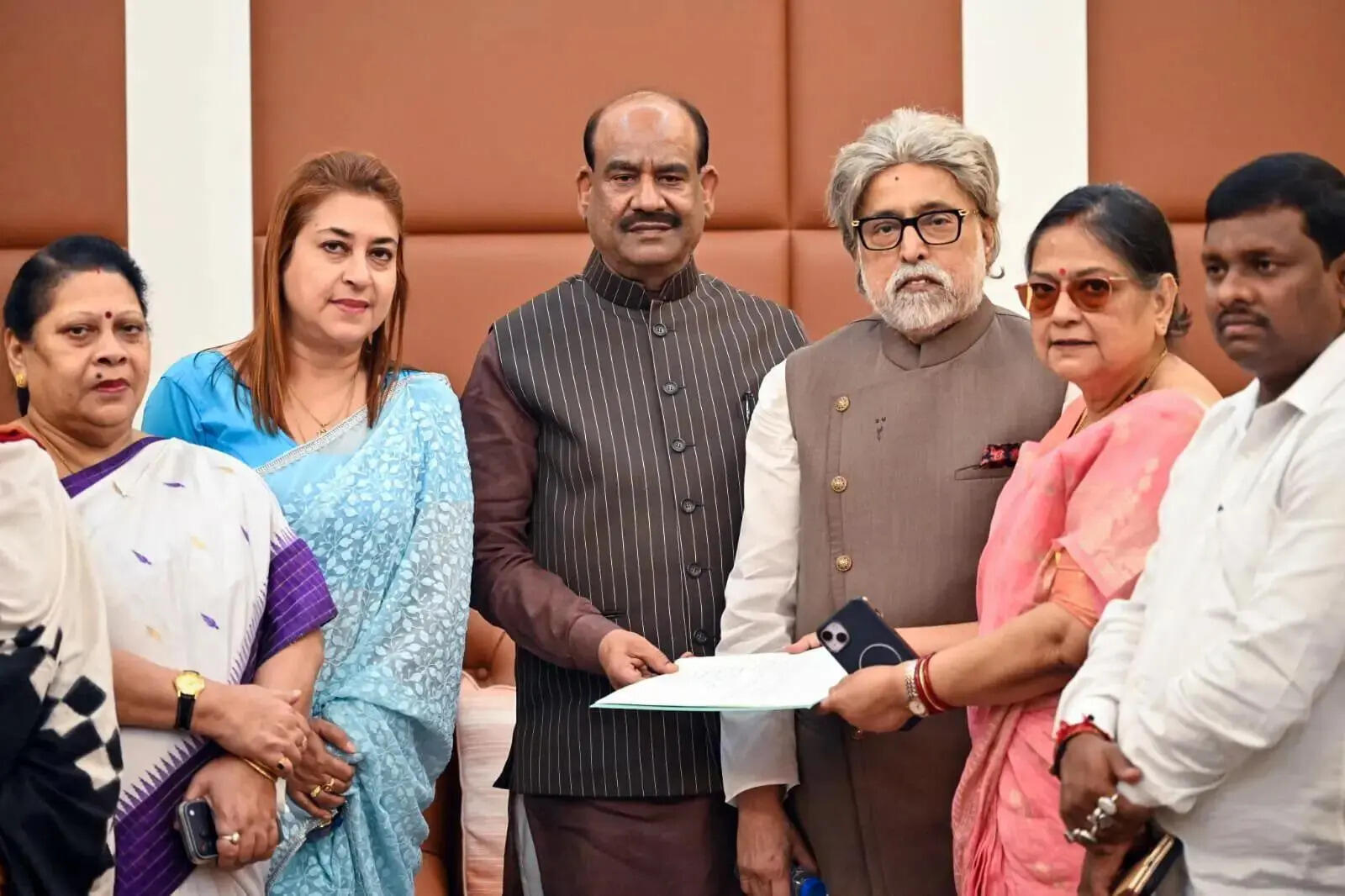
The rebels claim they command the support of a substantial section of TMC’s parliamentary strength. If recognised, the development could alter parliamentary arithmetic and provide the NDA with additional numbers at a time when the government is trying to build support for key constitutional legislation.Separately, the unrest has spread to the West Bengal Assembly, where rebel leaders claim the backing of 58 of TMC’s 80 MLAs.What makes the episode particularly remarkable is that TMC itself rose to power partly by absorbing disgruntled leaders from rival parties. Today, the same phenomenon appears to be turning inward.
Shiv Sena’s rebellion, sequel edition
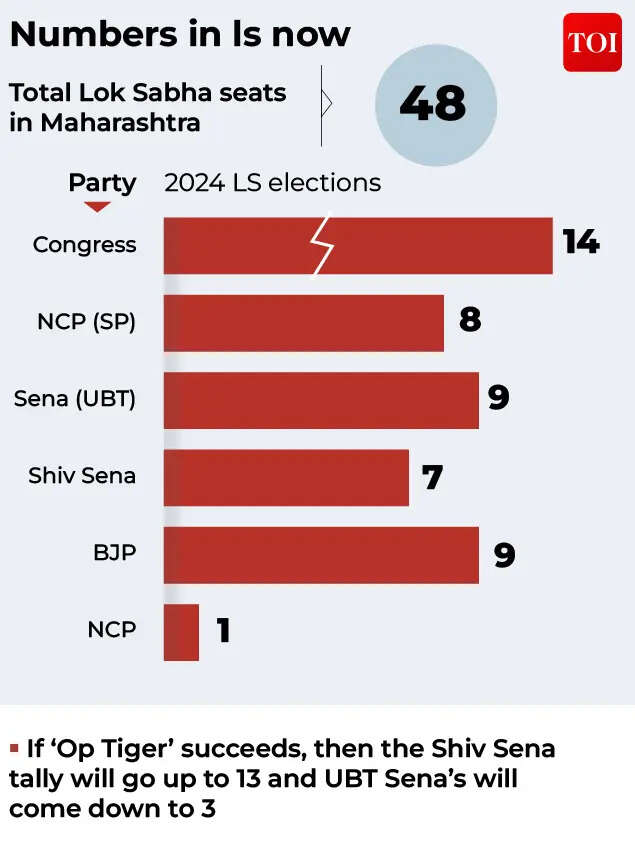
If Bengal is witnessing its first major internal rupture, Maharashtra is experiencing a sequel.Four years after Eknath Shinde’s rebellion split the original Shiv Sena and reshaped state politics, Uddhav Thackeray‘s faction is once again confronting reports of a fresh exodus.Speculation intensified after six of the party’s nine Lok Sabha MPs skipped a parliamentary party meeting in Delhi.
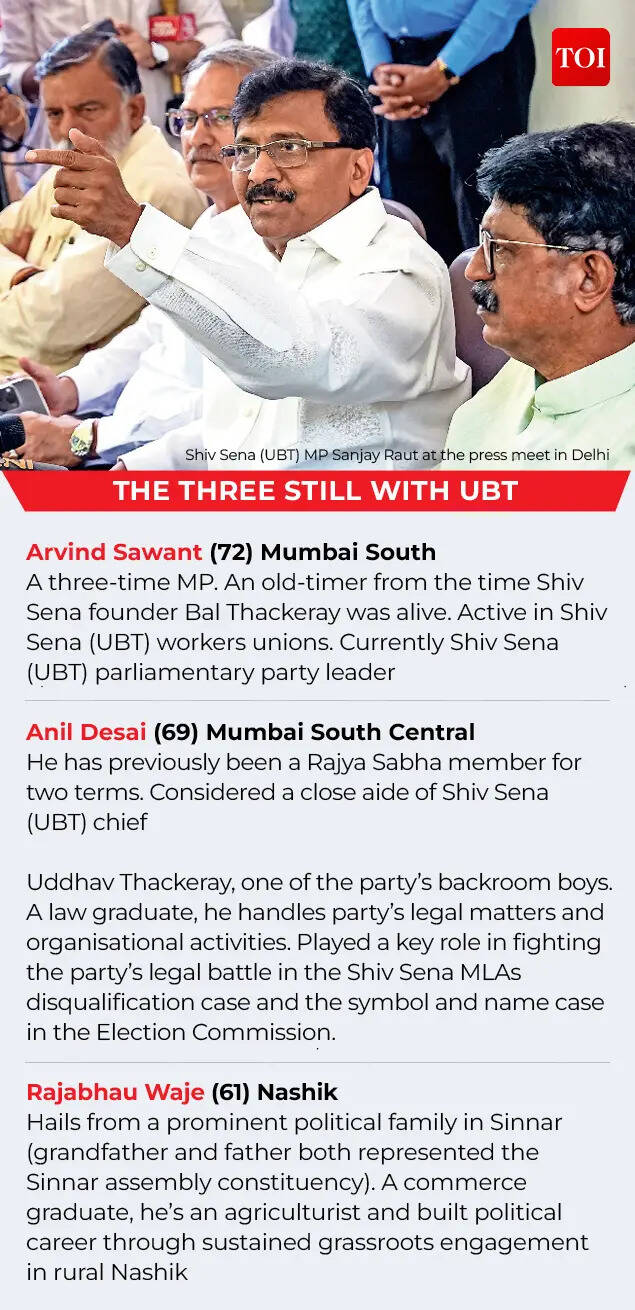
They also sent a letter to the Speaker stating they should be recognised as a separate group, in what has been called “Operation Tiger.” The numbers matter.Under the anti-defection law, at least two-thirds of a legislature party must move together to avoid disqualification. In the case of Shiv Sena (UBT), six MPs crossing over would meet that threshold.For Uddhav Thackeray, the symbolism may be even more damaging than the arithmetic.The 2022 rebellion was presented by supporters as a one-off event driven by exceptional circumstances. Another split would raise uncomfortable questions about the party’s organisational stability and ability to retain leaders.It is perhaps for this reason that Sanjay Raut’s recent comments carried both defiance and concern.“Our party is not about MPs and MLAs. They come and go,” he said, while simultaneously warning political opponents against targeting the party.
The SP rumours refuse to die
Unlike the other three cases, nothing has formally happened yet, but the claims have grown unusually specific. Uttar Pradesh deputy chief minister Keshav Prasad Maurya told reporters that 25 to 26 of the Samajwadi Party’s MPs are “ready to break away,” while insisting the BJP was not actively orchestrating any split and was simply waiting for SP’s own MPs to leave of their own accord. Maurya also argued that Akhilesh Yadav would never be able to lead the party back into power. Separately, UP minister and Suheldev Bharatiya Samaj Party chief Om Prakash Rajbhar has claimed for several days running that a “major political realignment” inside SP is imminent, predicting that a rebel faction of dissident MPs will emerge under a leader from Ballia, a claim he tied to recent anger over remarks made at an SP event that he said had insulted Brahmins. Rajbhar has repeatedly urged Akhilesh to abandon social-media point-scoring in favour of personally visiting disgruntled MPs, and has suggested that defections generally happen because individuals are open to being persuaded. Akhilesh Yadav and other SP leaders have dismissed all of this as a coordinated distraction timed ahead of the 2027 UP assembly elections, and no SP MP has so far made any public move toward leaving.
Why do parties keep breaking?
The easy explanation is opportunism.The more complicated answer lies in the structure of Indian politics itself.Most regional parties are heavily centralised around a single leader or family. During periods of success, such concentration of authority creates discipline and coherence. During difficult periods, however, it often generates resentment among leaders who feel excluded from decision-making.Then comes the question of political survival.When parties lose elections, they frequently lose access to organisational resources, local influence and patronage networks. Politicians who have invested years building careers suddenly begin looking for safer options.The incentive to switch sides becomes stronger when a dominant national party appears electorally unbeatable.The phenomenon is not new. The faces change, but the script remains remarkably consistent.
The anti-defection law’s biggest loophole
What ties these cases together is a specific feature of India’s anti-defection law, contained in the Tenth Schedule of the Constitution.Ordinarily, a lawmaker who defects to another party loses their seat. But the law carves out an exception: If two-thirds of a party’s legislators in a House move together and their decision is treated as a “merger” with another party, none of them is disqualified.Ironically, the law designed to stop defections often ends up shaping them.As a result, politicians have become increasingly sophisticated in engineering collective exits rather than individual rebellions.Instead of one legislator crossing over, entire groups move simultaneously.Instead of resigning alone, they arrive with carefully calculated numbers.What was intended as a deterrent has, in many cases, become a roadmap.
A familiar pattern
There is another reason the current moment feels familiar.Nearly every major regional party has experienced this cycle at some point.The Congress witnessed repeated breakaways throughout its history. The Janata Parivar fragmented into multiple entities. The AIADMK survived bitter internal battles after Jayalalithaa’s death before eventually stabilising. The Shiv Sena split. The NCP split. Even parties that emerge stronger after rebellions often spend years rebuilding trust and organisational cohesion.The pattern suggests that splits are not anomalies in Indian politics.They are almost a recurring stage in a party’s life cycle.
The bigger political picture
The timing of these crises is what makes them particularly consequential.In April, the government’s constitutional amendment bill on delimitation fell short, garnering only 298 votes against the 362 needed for a two-thirds majority in a full House. With three Lok Sabha seats currently vacant, the effective threshold is closer to 360 votes out of 540 sitting members. Each bloc of defectors changes that calculus: The addition of roughly 20 rebel TMC MPs would theoretically push the government’s demonstrated support from 298 toward 318, and a friendlier DMK — whose alliance with Congress has collapsed in Tamil Nadu — could add further support if it backs a revised version of the bill. The same logic applies in the Rajya Sabha, where the two-thirds mark is 163..Congress leader Jairam Ramesh has accused the BJP of actively attempting to destabilise opposition parties in order to improve parliamentary numbers.Opposition figures in Maharashtra and West Bengal have made similar allegations, some citing reports of MPs being offered large sums of money to switch sides. The BJP denies the charge and argues that leaders are leaving because opposition parties are failing to address internal grievances.Regardless of which explanation one accepts, the outcome remains the same.A fragmented opposition benefits the ruling alliance.That is why developments in Bengal, Maharashtra and elsewhere are being watched not merely as regional dramas but as events with national consequences.
What to watch next
The immediate questions are procedural: Whether Speaker Om Birla recognises the TMC and Shiv Sena (UBT) breakaway groups, and on what timeline. Beyond that, the government’s ability to revive its delimitation-linked amendment bill — and a related women’s reservation bill — in the monsoon session will depend heavily on whether DMK can be brought on board and whether the Samajwadi Party speculation turns into anything concrete. However, politics has always had a wandering class of politicians willing to cross ideological boundaries in search of power, relevance or survival.What is unusual about 2026 is not that parties are splitting.It is that so many appear vulnerable at the same time.AAP has already suffered its rupture. TMC is battling a full-scale rebellion. Shiv Sena (UBT) faces another potential exodus. SP is fighting off rumours of internal unrest.For opposition leaders, the challenge is no longer just defeating the BJP.It is keeping their own houses intact.And if the events of the past few months are any indication, the season of political breakups may only just be getting started.

Leave a Reply