
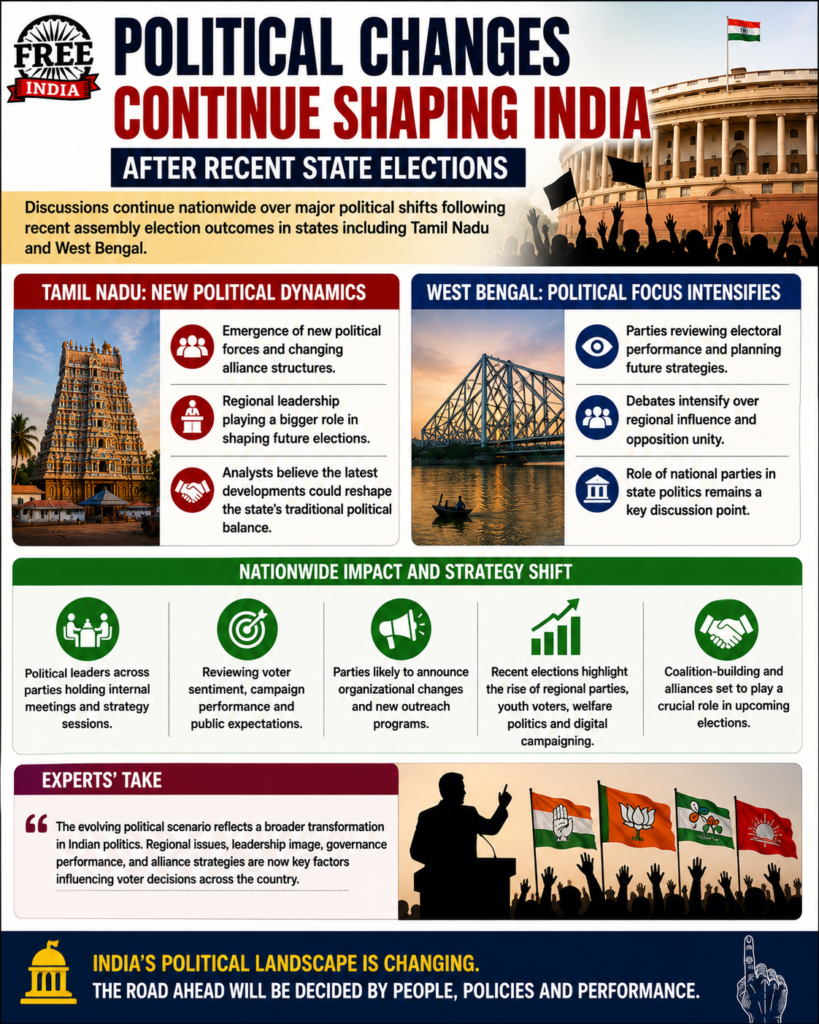
India’s political landscape continues to witness major shifts following the recent assembly election results in key states including Tamil Nadu and West Bengal. Political parties across the country are now reassessing strategies, alliances, and leadership decisions as the election outcomes continue to influence national politics.
In Tamil Nadu, discussions remain focused on the emergence of new political forces, changing alliance structures, and the impact of regional leadership on future elections. Political analysts believe the latest developments could significantly reshape the state’s traditional political balance in the coming years.
West Bengal has also remained at the center of political attention, with parties reviewing their electoral performance and planning future campaigns. The results have intensified debates over regional influence, opposition unity, and the role of national parties in state politics.
Across India, political leaders are holding internal meetings and strategy discussions to evaluate voter sentiment, campaign performance, and shifting public expectations. Several parties are expected to announce organizational changes and new outreach programs in response to the election outcomes.
Experts say the recent elections have highlighted the growing importance of regional parties, youth voters, welfare politics, digital campaigning, and coalition-building in India’s changing political environment. The results are also expected to influence preparations for upcoming national and state-level elections.
Political observers believe the evolving political scenario reflects a broader transformation in Indian politics, where regional issues, leadership image, governance performance, and alliance strategies are playing an increasingly important role in shaping voter decisions nationwide.

Leave a Reply