

Summer vacations once felt endless. Afternoons moved lazily under the whirring sound of ceiling fans, Doordarshan cartoons played somewhere in the background, and mothers called out from balconies asking children to return home before the streetlights came on. Mangoes cooled inside steel buckets filled with water, Rasna waited in bright plastic jugs, and cousins slept side-by-side during power cuts while khus curtains carried the earthy smell of water through warm rooms trying to fight the heat.Homework was forgotten till the last week of holidays, cricket matches stretched till sunset, and every child somehow believed summer would never end.If this brought back memories, you probably remember how different summer vacations once felt. And perhaps that is what makes the change today feel even harsher.Now, summers arrive differently. Playgrounds empty out before noon, school assemblies are cut short because of heat alerts, and parents quietly worry about dehydration before children even leave for school. In neighbourhoods swallowed by concrete and glass, children spend more time indoors not because they want to, but because the heat outside has become unbearable. The season that once belonged to childhood freedom is slowly turning into one of exhaustion, caution and survival.
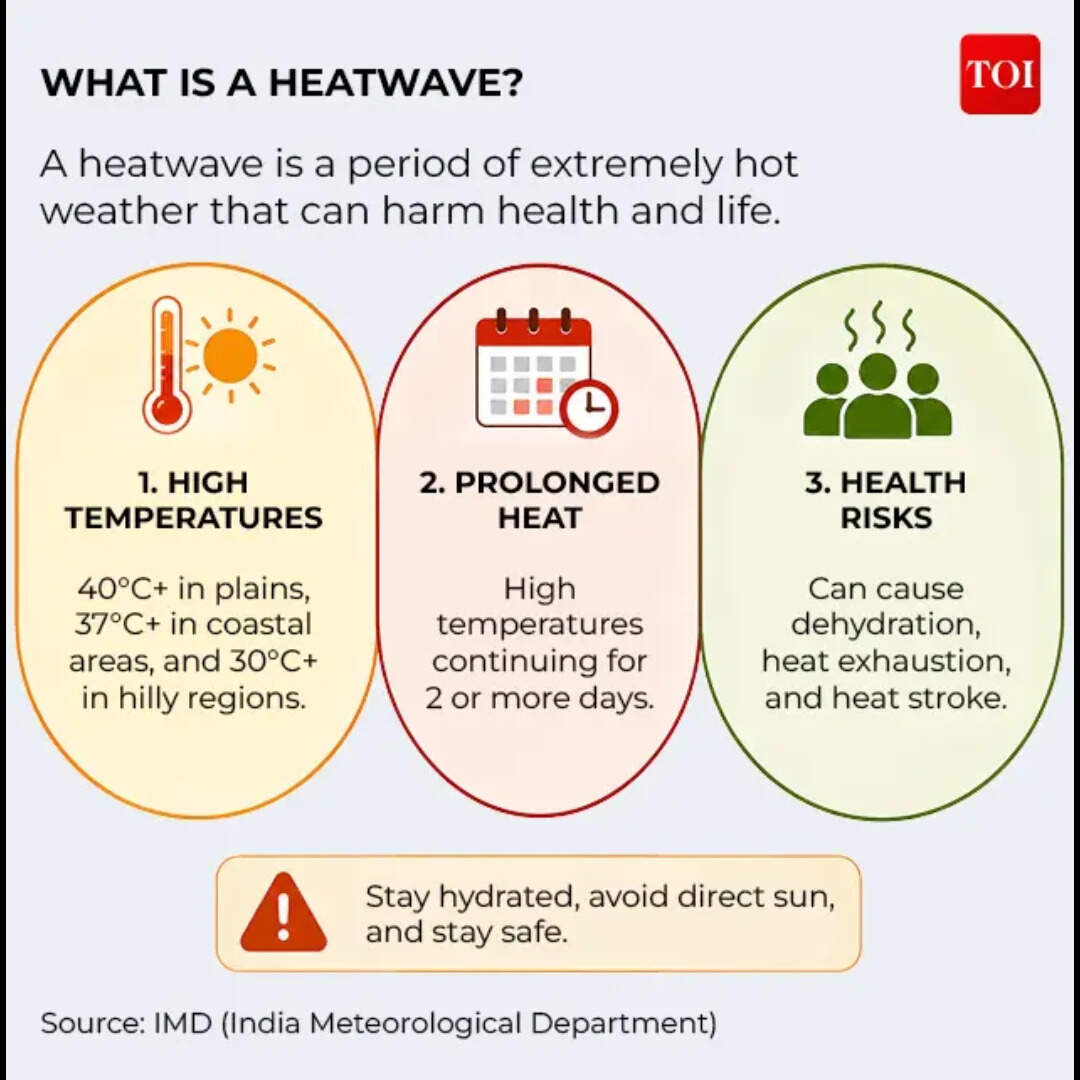
What is heatwave?
Heatwave grips several statesThe India Meteorological Department has warned of widespread heatwave conditions across several parts of the country.According to the IMD’s May 26 forecast, Delhi remains under a yellow alert, with the maximum temperature likely to touch around 45 degrees Celsius. The department has also issued forecasts for the coming week.Read full Delhi forecast:IMD Delhi Forecast
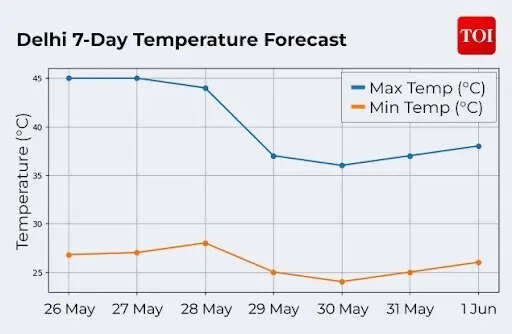
Delhi temperature forecast (IMD)
The IMD on May 25 warned that Punjab, Haryana, Chandigarh and Delhi are likely to remain under severe heatwave conditions till May 28, while Rajasthan, particularly western Rajasthan, may continue to face intense heat till May 30.Uttar Pradesh, Madhya Pradesh, Vidarbha, Chhattisgarh, Telangana, Odisha and several eastern states are also expected to witness severe heat stress over the coming days.Read full IMD release: IMD Heatwave Warning
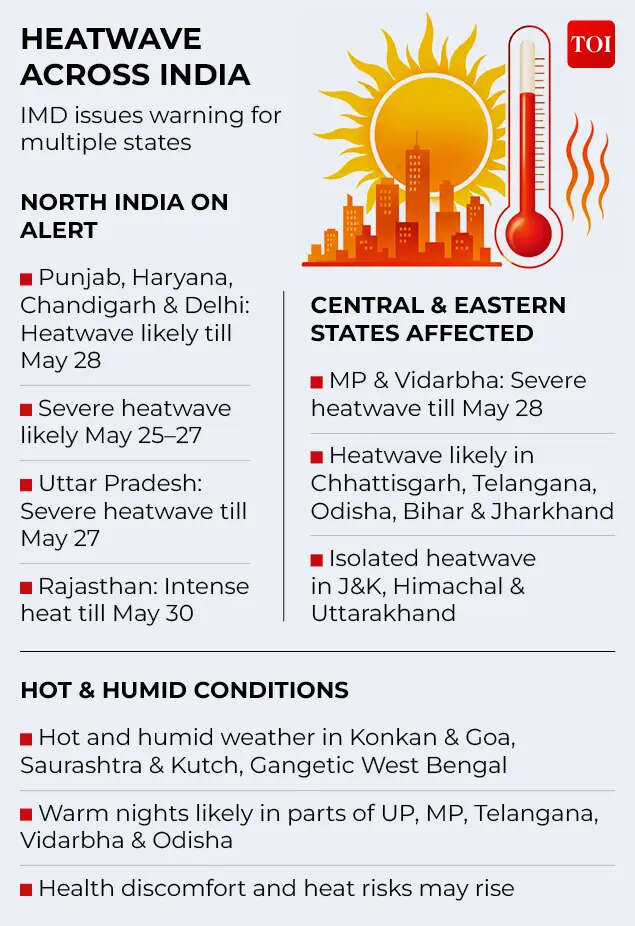
Heatwave across India- IMD
Why children are more vulnerable to heatwaveBut beyond weather warnings and rising temperatures lies a quieter crisis- the impact of extreme heat on children’s bodies, concentration and ability to learn.Dr. Ram Gopal Holla, Senior Consultant Neonatology & Pediatrics at Rosewalk by Rainbow Hospital, explained that children are physiologically more vulnerable to extreme heat than adults.“The ability of a child’s body to dissipate heat through evaporation is not comparable to that of an adult. Children do not sweat effectively and are often more active, both of which increase the risk of heat-related complications,” he said.“Environmental factors such as poor nutrition, pre-existing medical conditions, being overweight or obese, and poor ventilation in their homes are also contributing factors to the negative impact of heat on the health status of children,” he added.Dr. Jitendra Jain, Senior Consultant – Paediatric at Cocoon Hospital, Jaipur, said parents often ignore early warning signs.“Parents should watch for excessive sweating, unusual tiredness, irritability, headache, dizziness, dry mouth, reduced urination, nausea or muscle cramps. These are often mistaken for normal fatigue,” he said. “If a child becomes confused, faints, develops a very high fever or stops sweating, urgent medical care is needed.”
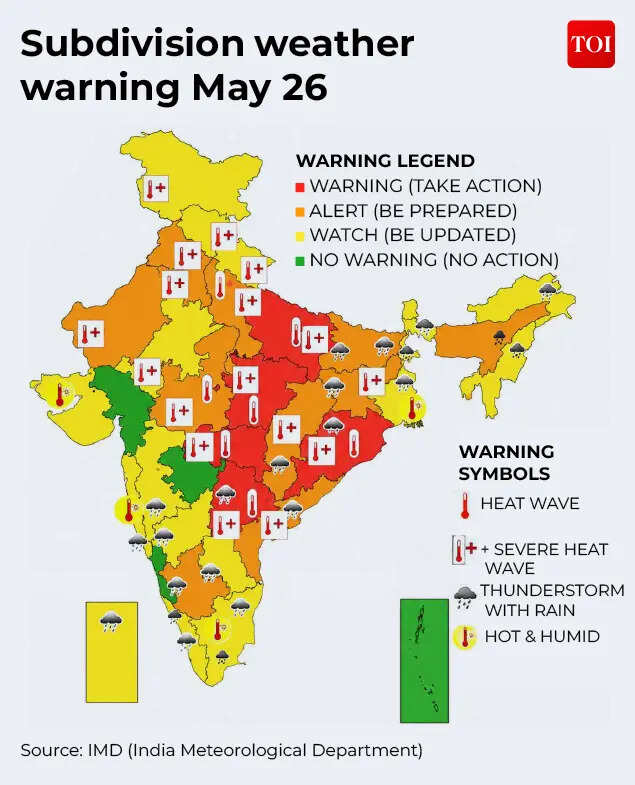
Weather warning May 26
What parents are witnessing at homeShailja Singh, a resident of Panipat, said her daughter studying in Class 11 has not been able to attend school regularly because of the heat.“The extreme temperature here is affecting her health and safety, so we are being cautious,” she said. “School timings should be adjusted. Early morning classes or extended vacations can help reduce children’s exposure to extreme heat.”To ensure studies are not disrupted, she said the family encourages self-study during cooler morning hours, keeps children hydrated and increasingly depends on online learning methods.
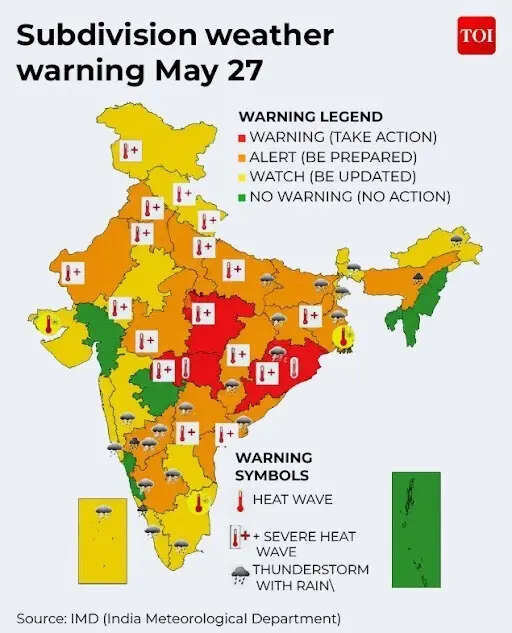
Weather warning May 27
Heat affecting concentration, attendance and learningKarabi Bhattacharjee, a teacher at Shiv Vani Model Senior Secondary School in Delhi, said extreme heat affects concentration, attendance and productivity among students.“Extreme heat reduces students’ concentration, causes dehydration and fatigue, and lowers attendance because travelling and sitting in hot classrooms becomes difficult,” she said.She added that while school timings have not been changed, outdoor activities and assemblies have been suspended due to rising temperatures. Schools are also ensuring regular water breaks and emergency medical support for students.Doctors advise low-cost protection measuresFor families without air conditioners or cooling systems, doctors stress that simple measures can still make a significant difference.Dr. Jain advised families to avoid outdoor exposure during peak afternoon hours, ensure regular water and ORS intake, and avoid sugary or extremely cold drinks.Dr. Holla suggested low-cost measures such as dressing children in lightweight cotton clothes, using wet towels, taking frequent baths and opening windows during cooler hours of the day. He also emphasised the role of schools, anganwadis and local authorities in providing access to drinking water, shaded spaces and awareness about heat-related illnesses.What needs to change before summers get worseBefore summers become even harsher, protecting children from extreme heat must become a priority at every level. Schools need better ventilation, access to clean drinking water, shaded playgrounds and flexible schedules during heatwaves, while cities need more trees and cooler public spaces instead of heat-trapping concrete.At home, parents and communities can help children stay safe through hydration, proper rest and limiting outdoor exposure during peak afternoon hours. Communities too have a role to play by protecting parks, planting trees and checking on children in vulnerable households during severe heatwaves.As temperatures continue to rise each year, adapting to extreme heat is no longer only about surviving summer — it is increasingly shaping the future of childhood itself.

Leave a Reply