
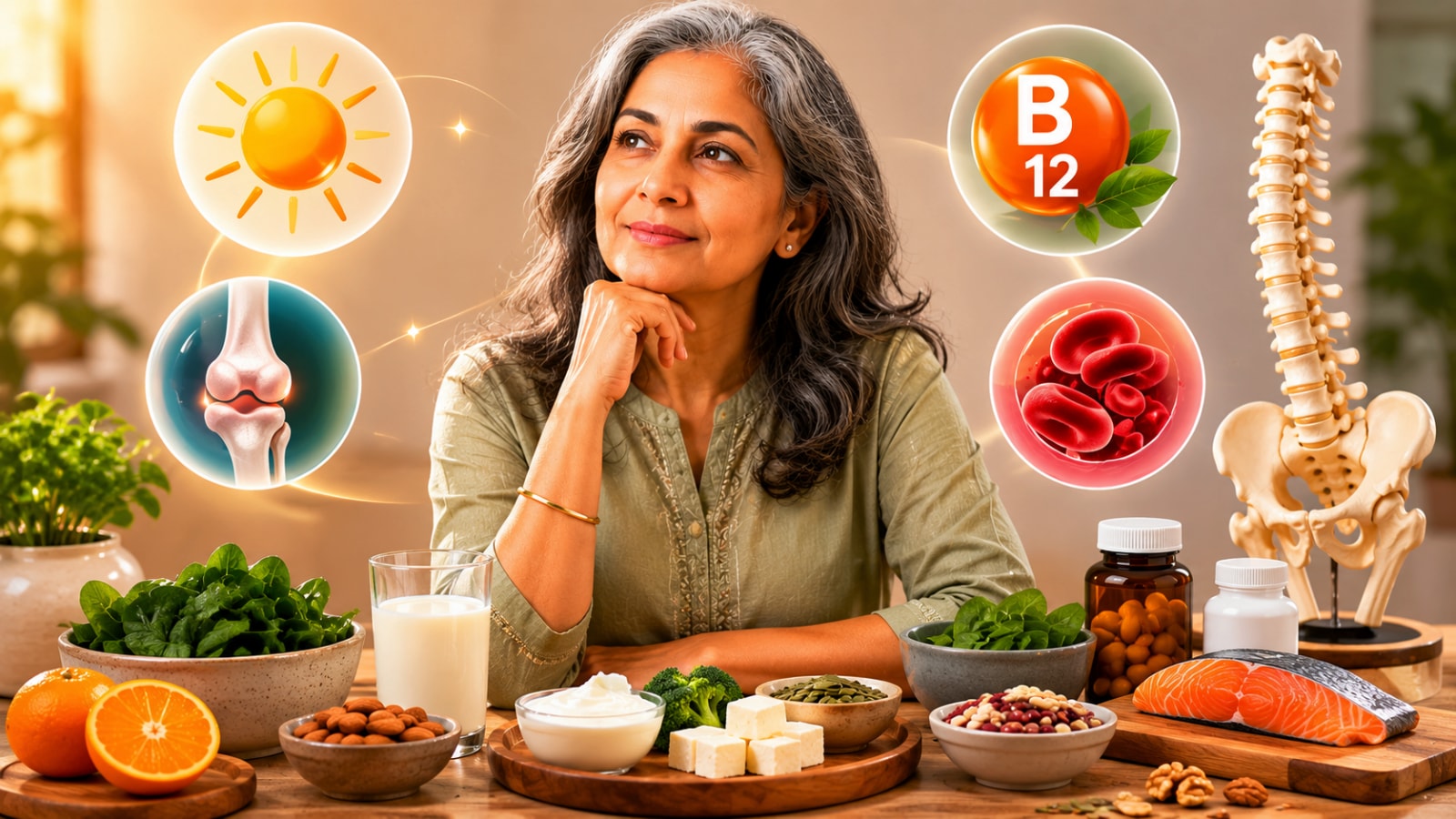
Turning 50 brings a host of changes for women. Hormonal shifts, lifestyle adjustments, and natural ageing can affect energy, immunity, and overall health. Often, these changes are linked to deficiencies in iron, calcium, vitamin B12, and vitamin D, which are surprisingly common in Indian women.
The tricky part? Symptoms can be subtle and are often mistaken for normal ageing or menopause.
However, you don’t need to worry. We have compiled a comprehensive, expert-approved list of the most common nutrient deficiencies among Indian women over 50.
Skin, intestines, kidneys and liver functions decrease with age, causing less absorption and processing of vitamin D by the body, causing its deficiency (Image: Freepik)
Vitamin D is essential for strong bones and a healthy immune system. After 50, the body’s ability to absorb and process it declines. Reduced exposure to sunlight and slower liver, kidney, and skin function make deficiency common.
“Many women venture out less after 50, which limits sunlight exposure. Combined with age-related organ changes, this reduces vitamin D absorption,” explains Prof. Dr JB Sharma, Head of Obstetrics and Gynaecology, Yashoda Medicity Indirapuram.
Dr Sunitha Mahesh, Medical Director & Senior Consultant – Infertility and Maternal Fetal Medicine, Milann – Fertility & Birthing Hospital, adds: “Women may feel fatigued or experience weakness. They often assume it’s just ageing, but it can indicate a real deficiency.”
Story continues below this ad
Low vitamin D levels can lead to brittle bones, weakened immunity, and fatigue, all of which affect daily life and long-term health.
2. Calcium: Protecting bones after menopause
Estrogen plays a critical role in calcium absorption. After menopause, declining estrogen levels increase bone loss, making women more prone to fractures and joint pain.
“Calcium absorption drops as estrogen levels fall, accelerating bone loss and increasing fracture risk,” says Dr Sharma.
Dr Mahesh notes, “Early signs like joint aches or reduced mobility are often ignored. Addressing calcium deficiency early can prevent serious complications.”
Story continues below this ad
 As most women after 50 are either menopausal or perimenopausal, there is estrogen deficiency in body which causes increased bone loss and less absorption of intestinal calcium causing calcium deficiency in the body (Image: Unsplash)
3. Vitamin B12: The silent energy drain
Vitamin B12 deficiency often develops quietly. Ageing reduces stomach acid, essential for B12 absorption, and common antacids can worsen the problem.
“Vitamin B12 absorption falls as older women produce less stomach acid. Antacids further reduce absorption, making deficiency common,” Dr Sharma explains.
“Symptoms like fatigue, poor concentration, or memory issues can be subtle and easily mistaken for normal ageing,” adds Dr Mahesh.
Without intervention, low B12 can affect energy, mood, and cognitive function.
Story continues below this ad
4. Iron: Anaemia isn’t gone with menstruation
Even after menstruation stops, iron deficiency remains widespread in Indian women. Diet, high tea and coffee intake, and chronic conditions make them vulnerable.
“Studies show 75–80 per cent of women over 50 are anaemic,” says Dr Sharma.
Dr Mahesh points out that low iron levels can lead to paleness, tiredness, and a weakened immune system, affecting daily activities and work performance.
 Doctors reccommend regular pap smears, mammography, bone densitometry, CBC, LFT, KFT,, ECG ( cardiac function), X- ray chest and lung function tests for menopausal women (Image: Unsplash)
Recognising deficiencies and taking action
Symptoms like fatigue, joint pain, or weakness should never be dismissed as just ageing. Experts recommend regular screenings, including:
Story continues below this ad
- Bone density tests
- Complete blood counts
- Routine health checkups
- Cervical and breast cancer screenings
“Vitamin D, calcium, and iron deficiencies are preventable and treatable if addressed early,” says Dr Sharma. “Awareness of early symptoms and timely doctor consultation can make a huge difference,” adds Dr Mahesh.
With proper nutrition, supplements, and routine monitoring, women over 50 can maintain energy levels, protect their bones, and reduce long-term health risks. Ageing may be inevitable, but deficiencies don’t have to be.
DISCLAIMER: This article is based on information from the public domain and/or the experts we spoke to. Always consult your health practitioner before starting any routine.

Leave a Reply