
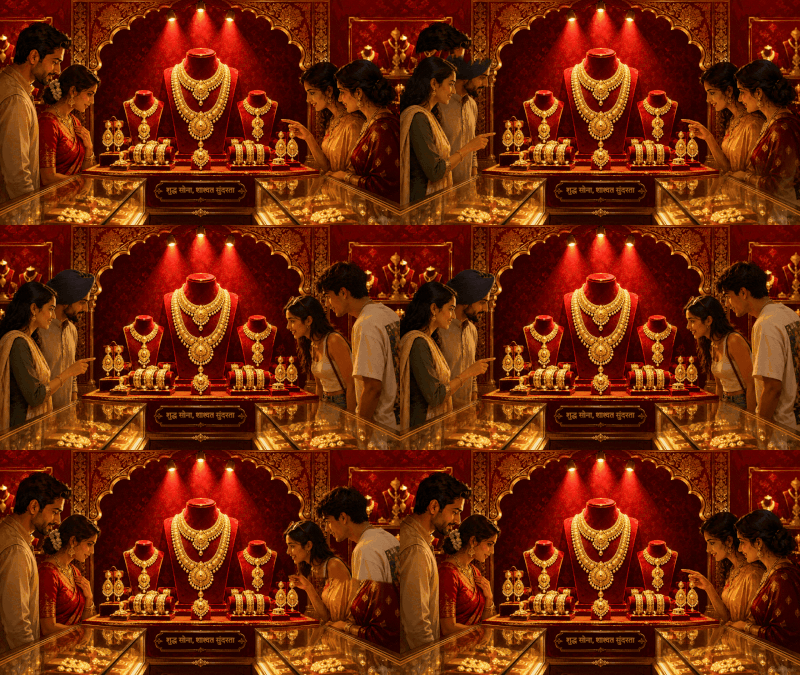
Once called the sone ki chidiya, India clearly never got over its gold fever. For desis, gold is not just a metal, rather it is rainy-day savings, wedding-season flex, family legacy and emotional support, all rolled into one shiny yellow package. Somewhere between these wedding seasons, festival offers and “bas thoda aur le lete hain”, India has quietly become one of the world’s biggest unofficial gold vaults.Indian women own one of the world’s biggest unofficial gold reserves, collectively owning more gold than the combined reserves of the United States, Germany, Switzerland and the International Monetary Fund (IMF). According to 2025 estimates by the World Gold Council (WGC), women in India collectively own a staggering 24,000-25,000 tonnes of gold.And the love is only growing stronger.India’s precious metals market, valued at around $39.73 billion in 2025, is expected to touch nearly $68.15 billion by 2032, according to Blueweave Consulting.But the modern Indian gold rush no longer lives only inside velvet-lined jewellery boxes! The heavy bridal necklace is now competing with Gold ETFs, digital gold wallets and 24K gold bars bought through mobile apps at midnight.
India’s centuries old romance with gold
More than a decade ago, when the underground vaults of the Sree Padmanabhaswamy Temple were finally opened, the world was left stunned by the big reveal. The stacks of gold went on to be seen as among the largest collections of gold discovered. Much evidently, India’s love story with gold is centuries old. Before it became an “investment,” the yellow metal was already doing everything: currency, culture, and comfort blanket. Kings traded it, temples stacked it, families passed it down like emotional savings. In ancient India, gold wasn’t just a metal, it was a full-blown cultural multitasker: part divine symbol, part currency, and part portable wealth that people trusted more than kingdoms. Trade also played a huge role, with India receiving steady inflows of gold from so-called “gold-rich lands” like Suvarnabhumi in Southeast Asia, adding to its long-term accumulation.Once in hand, gold refused to stay in one role. It became jewellery, temple offerings, ceremonial objects, coins in later periods, and a trusted store of value for families and kingdoms alike. In practice, it worked as India’s original hybrid system, money, ornament, and emotional security blanket all rolled into one glittering asset.
Figures in million tonnes
Even today, the tradition survives in rituals. During occasions such as Dhanteras and Akshaya Tritiya, purchasing gold is rarely viewed as mere consumption; it is treated instead as an investment in prosperity, auspiciousness and good fortune.
Gold-ing by the numbers
The scale of India’s gold obsession is hard to miss. Indian households are estimated to hold around $5 trillion worth of gold. While the number itself is huge, what makes it even staggering is that it is larger than the GDP of several major economies.India is one of the world’s biggest gold consumers, importing about 700 to 800 tonnes every year.
Gold prices
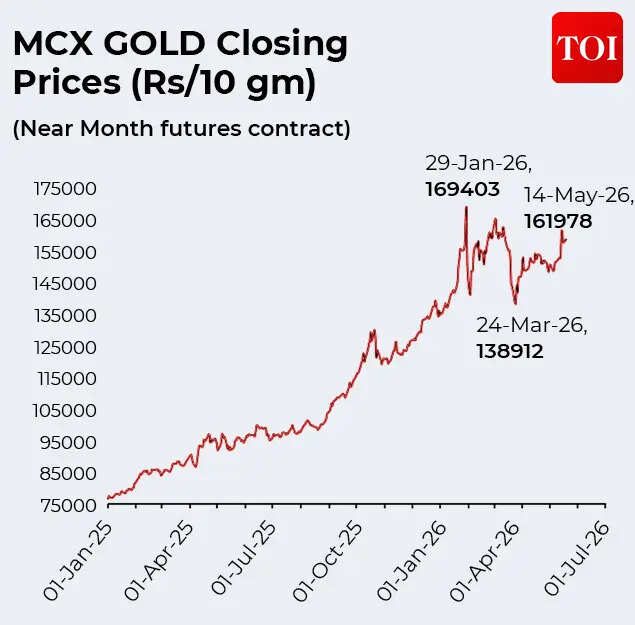
And even as gold prices continue to rise, demand for the yellow metal has stayed strong. In Q1, gold demand rose 10% year-on-year to 151 tonnes, while in value terms it jumped 99% to about $25 billion, driven largely by investment buying, according to WGC.Gen Z is adding a digital twist to this old love story. With technology deeply woven into their daily lives, they are driving fresh interest in gold through online platforms. According to an ET report, last year, when yellow metal soared from Rs 76,308 in January to Rs 1,32,640 per 10 grams by December, digital gold buying saw a sharp jump.NPCI data showed transactions surged 173%, rising from Rs 761.6 crore to Rs 2,079.31 crore over the same period. The World Gold Council (WGC) also reported that Indian investors, largely younger buyers, purchased around 12 tonnes of digital gold between January and November 2025.On the global stage too, India remains a heavyweight in gold demand, ranking among the top markets for both jewellery and investment. In FY2025, it even overtook China to become the world’s largest gold jewellery consumer, accounting for nearly 30% of global demand.Apart from investments, one industry keeping India’s gold obsession permanently alive is weddings.
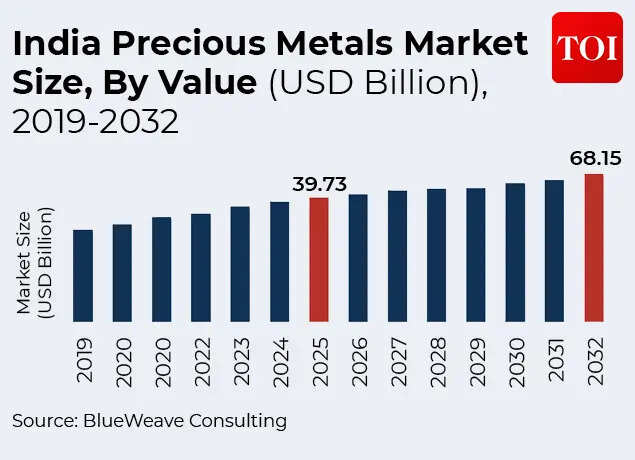
India’s metal market
Across communities and regions, weddings remain the biggest driver of gold purchases in India. Gold jewellery is not just decorative at Indian weddings. It symbolises prosperity, family honour and financial security.South India, especially states like Tamil Nadu, Kerala, Karnataka and Andhra Pradesh, account for nearly 40% of India’s gold demand because of the region’s strong wedding jewellery culture.
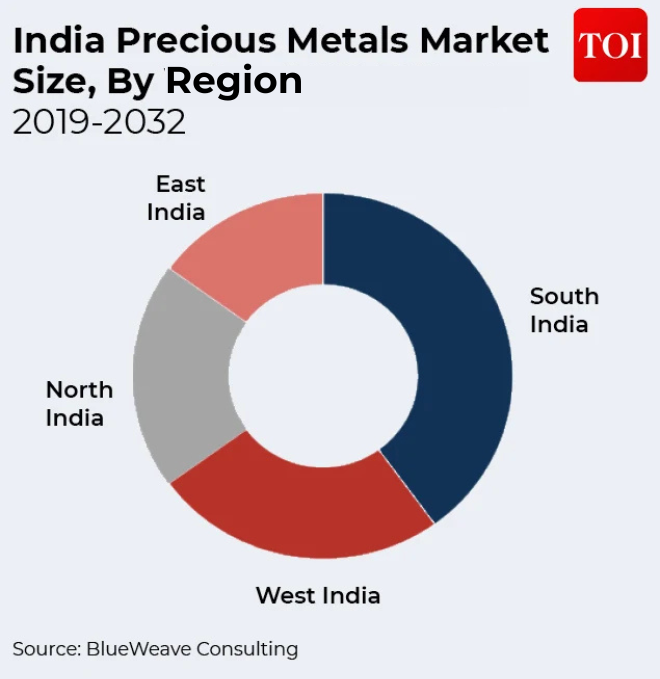
India’s metal market by region
From necklaces to notifications: How India is buying gold now
India’s gold buying habits are continuously evolving — first it was jewellery, then gold bars and now your latest purchase comes as a pop up notification!For years, jewellery dominated the market. But younger Indians are increasingly treating gold as an investment product rather than just something to wear during weddings.
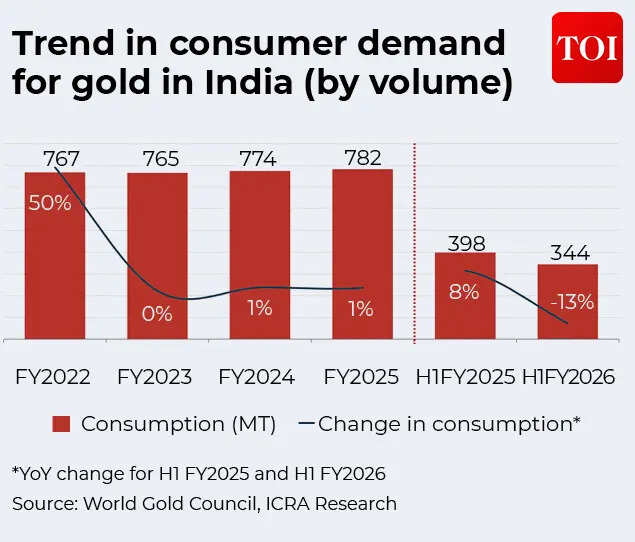
Even with a growing buffet of modern investment options, gold still refuses to lose its charm. A Smytten PulseAI survey of 5,000 consumers aged 18 to 39 found that 61.9% would pick gold if given Rs 25,000 to invest today. Around 62% of respondents still called it their preferred investment choice, showing how it continues to outshine mutual funds, equities, and crypto in popularity, according to a PTI report.According to data by ICRA and ASSOCHAM, gold jewellery consumption fell 26% year-on-year in the first half of FY2026, while demand for bars and coins rose 14%.A growing number of consumers, especially younger and tech-savvy investors, now see gold as a financial asset rather than just a piece of jewellery.“This trend is heavily shifted in favour of younger buyers and tech-savvy investors due to fractional ownership with digital gold offering consumers to invest as little as Rs 1 to Rs 100 via UPI on fintech apps. Meanwhile Gold ETF demand has seen a huge interest in recent years in India as Globally, it accounted for 32% of ETF demand in Q1 2026, making it the second only to China,” Commodity expert Maneesh Sharma told TOI.
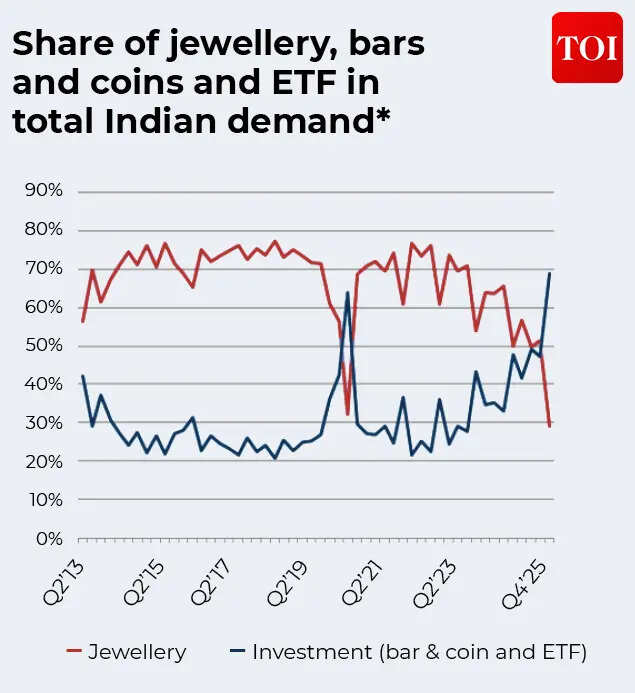
Data till 31 March 2026 (Source: Metals Focus, World Gold Council)
Even physical gold buying has evolved. Instead of heavy jewellery purchases, more consumers are choosing 24K gold bars and coins, which come with lower making charges and clearer investment value. Jewellery preferences, too, are shifting toward lighter, lower-carat, and studded designs, reflecting a balance between tradition and practicality.Overall, gold in India is no longer just worn. It is planned, invested in, and strategically held.
What makes gold dearer than platinum or diamonds
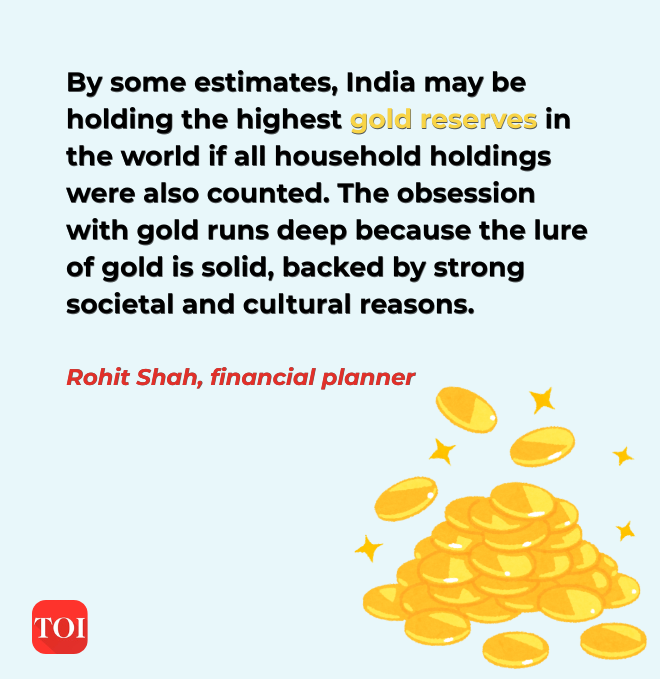
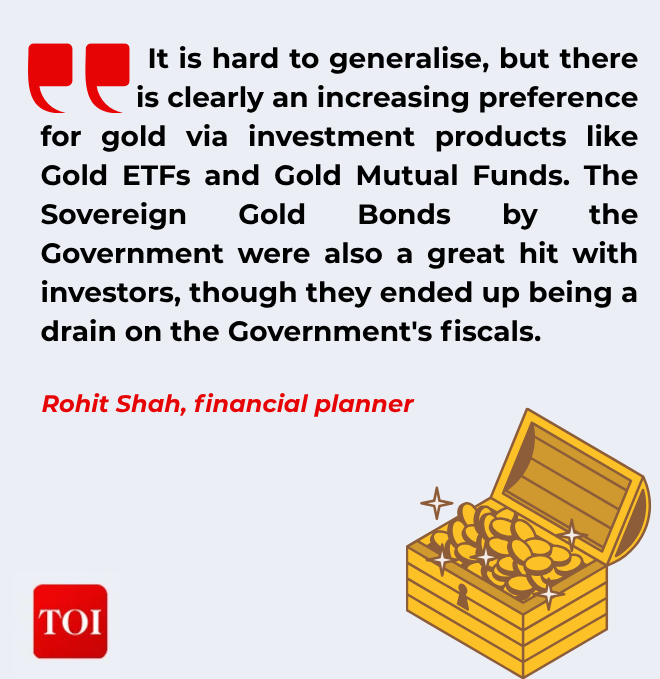
For many Indians, gold isn’t a luxury, it’s comfort, like that one family friend who always shows up when things go south.According to financial planner Rohit Shah, India’s relationship with gold is backed by both cultural belief and practical thinking. “By some estimates, India may be holding the highest gold reserves in the world if all household holdings were also counted. The obsession with gold runs deep because the lure of gold is solid, backed by strong societal and cultural reasons,” Shah told TOI.But here comes a key question: why, even with precious metals like platinum, silver, and palladium, and gemstones like diamonds and rubies, does gold continue to stand out? Unlike silver or platinum, gold has historically been viewed as more stable and reliable.
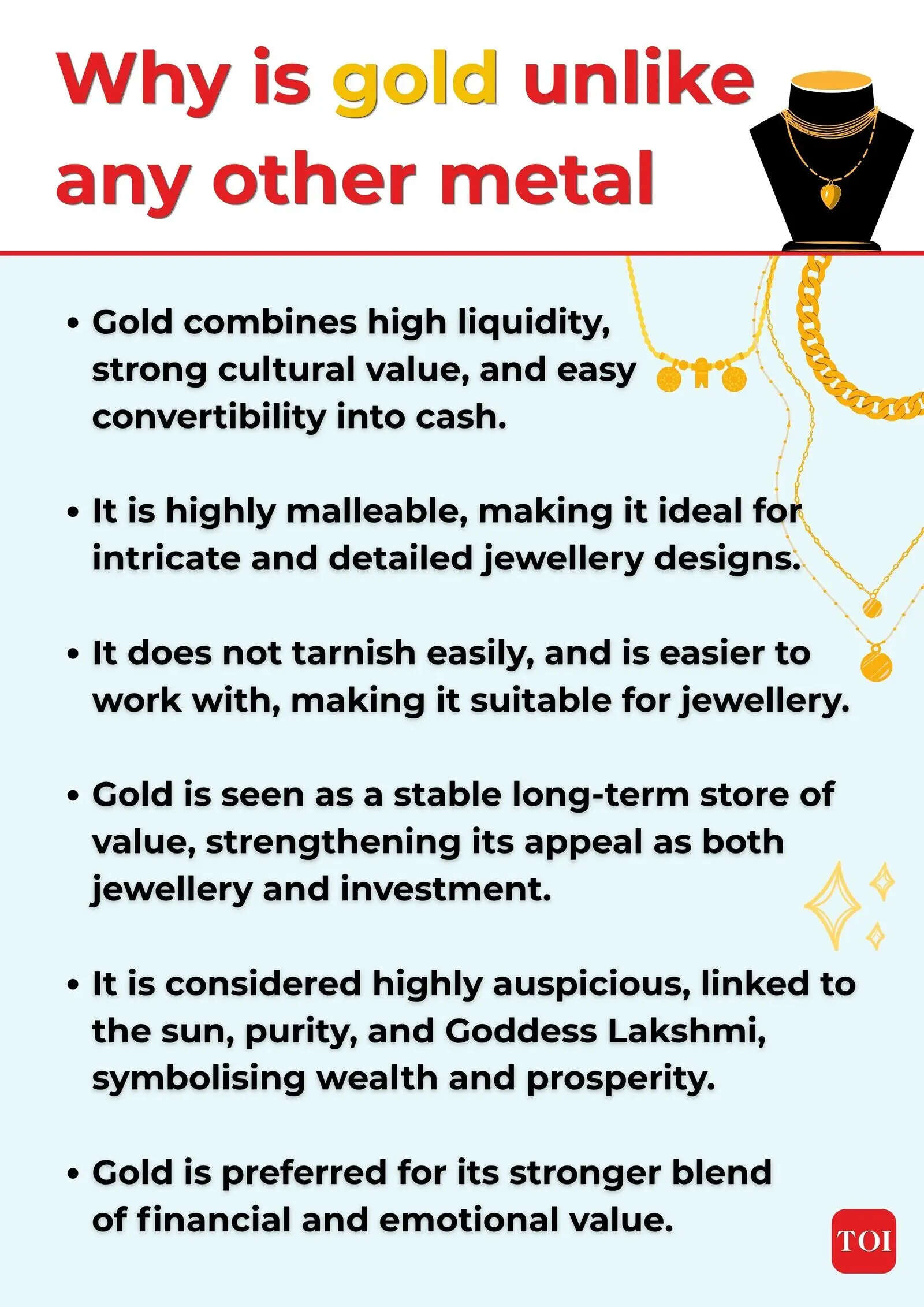
Why is gold more precious
The yellow metal isn’t just another precious metal, it plays a very different game. While silver and platinum are busy doing industrial heavy lifting, gold mostly stays out of factories and in people’s lives and lockers, with only about 6–7% used in tech. Silver gets around 60% industrial use, and platinum even more at 60–70%.Instead, gold rules where it matters most to people: jewellery, which makes up roughly 27–32% of its demand. It wins over silver and platinum because it’s easy to shape, doesn’t lose its shine like silver, and is far more wearable and liquid than tricky-to-work-with platinum.In India, it goes beyond utility into emotion and belief. Gold isn’t just “precious,” it’s auspicious, tied to the sun, Goddess Lakshmi, and ideas of wealth and protection. Silver, linked to the moon and calmness, stays the more budget-friendly cousin for everyday use.Furthermore, “Unlike silver, gold has been a far better store of value and far less volatile,” Shah said.India’s obsession with gold is a blend of cultural & social tradition, while also being viewed as a form of social security in rural areas in the country. This is in contrast to western countries where it is viewed primarily as a form of luxury investment, explains Maneesh Sharma.
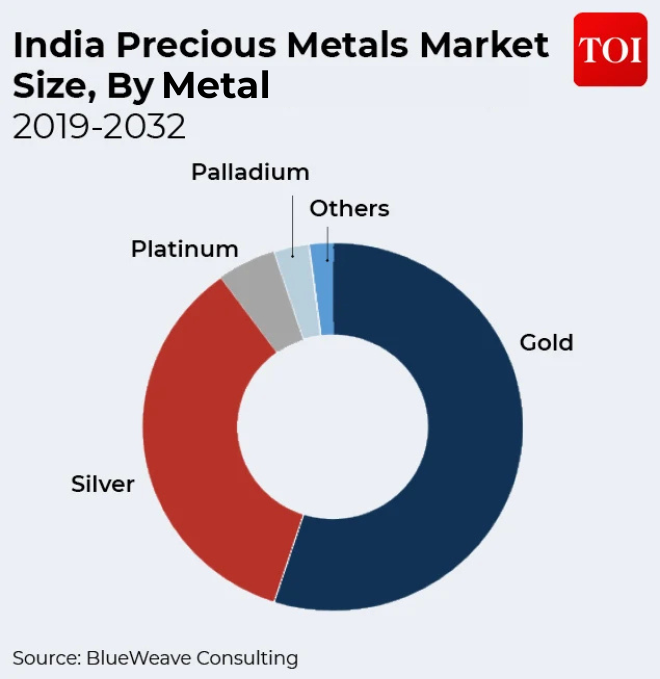
India’s metal market
That difference matters.In many rural parts of India, gold acts like a backup bank account. Families may not have bank accounts, but they often own gold jewellery that can be sold or pledged quickly during emergencies.Gold loans have become especially popular because they allow families to borrow money without permanently selling their jewellery. And unlike digital investments, gold feels visible and reassuring.
So, where is this obsession headed?
Experts believe India’s relationship with gold is entering a new phase rather than fading away.Investment-grade gold such as bars, coins and ETFs is expected to grow much faster in the coming years. Digital gold platforms and Sovereign Gold Bonds are also likely to become more popular among younger investors.
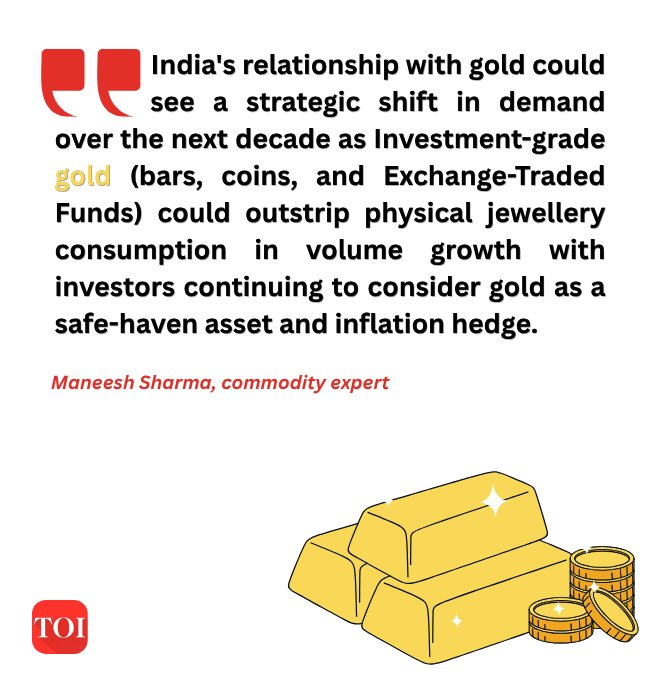
At the same time, rising prices may continue pushing consumers toward lighter jewellery and lower-carat designs.Large organised jewellery chains are expected to dominate more of the market as consumers increasingly prioritise trust, hallmarking and transparency.But despite all these changes, one thing is unlikely to disappear anytime soon: India’s emotional connection with gold.Shah believes gold should remain part of every investment portfolio, though not the entire portfolio.“As a thumb rule, a 5 to 10% allocation to gold is sensible for most investors, and this can go up to around 15% in uncertain times,” he said, adding, “Also, since India relies on imports for roughly 85 – 90 % of its demand, leading to declining foreign exchange reserves, the government could likely enforce stricter import duties and could promote domestic gold mining & refining.”Over the next decade, if jewellery demand declines, the industry may shift from small, unorganised jewellers to large national retail chains offering standardised, hallmarked, and exchangeable products, the expert told TOI.At the same time, bigger institutional players like pension funds and insurance companies may enter the gold market, expanding investment options and boosting gold ETF offerings in India.
The bottom line
From hidden temple vaults to a tap on a phone screen, India’s gold story just keeps getting bigger and shinier. What started as tradition, trust and a bit of temple treasure has now turned into jewellery, investments, digital wallets and everything in between. The format keeps changing, but the feeling doesn’t. Whether it’s coins, bangles or ETFs, gold still means safety, luck and “just in case” for most Indians.And that’s the twist. In a country that’s always moving forward, gold somehow stays stuck in the heart of it all, quietly shining through every generation like it never went out of style.India might be modernising its money, its heart still measures wealth in gold!

Leave a Reply