
3 min readNew DelhiApr 29, 2026 10:00 PM IST
Starting a fitness journey can feel overwhelming, especially when choosing the right weights. Picking weights that are too heavy can lead to injury, while going too light may limit progress. According to Dr Ashish Choudhary, MD Orthopaedic, Aakash Healthcare, the key lies in prioritising control, form, and gradual progression.
“An absolute beginner must begin with a weight they can move in a controlled manner with a full range of motion and proper joint positioning,” says Dr Choudhary. “The right weight is one where the last few repetitions feel moderately challenging, without shaking or compensatory movements.”
DISCLAIMER: This article is based on information from the public domain and/or the experts we spoke to. Always consult your health practitioner before starting any routine.
He suggests starting with lighter weights and gradually increasing until you find a level where you can perform 10–12 repetitions with good form. If your posture breaks before that, the weight is likely too heavy.
Light weights vs heavy weights
“Beginners should start with lighter weights and higher repetitions to build a strong foundation,” explains Dr Choudhary. “This improves neuromuscular coordination and helps the body learn correct movement patterns.”
Jumping into heavy lifting too soon can strain joints, especially the shoulders and lower back. Instead, he recommends a progressive overload approach, where resistance is increased gradually as technique improves, he explains.
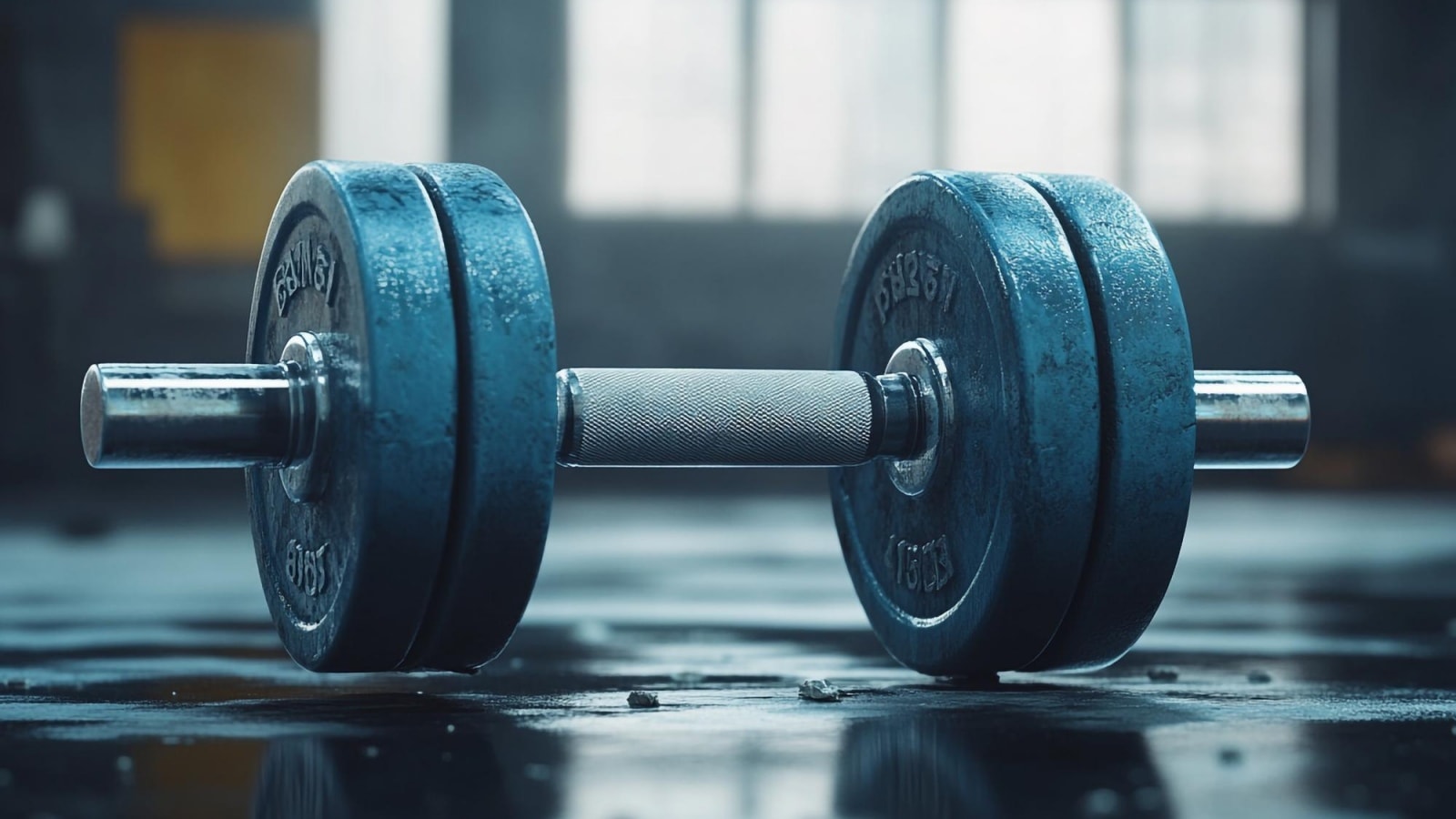
 What dumbbell weights should I lift as a beginner (Photo: Freepik)
When should you increase your weight?
Story continues below this ad
“A beginner should consider increasing weight when they can comfortably perform more than 12–15 repetitions without fatigue,” says Dr Choudhary. “Other signs include minimal muscle engagement and lack of post-workout soreness.”
However, progression should be slow and steady. “Weight should ideally be increased in small increments every one to two weeks,” he adds. “Sudden jumps can overload muscles and joints, increasing the risk of injury.”
Does your goal change your starting weight?
Your fitness goal, fat loss or muscle gain, can influence how you train, but not how you begin, says Dr Choudhary. “Regardless of the goal, beginners must first master technique with manageable weights.”
Once a base is built:
Story continues below this ad
For fat loss: lighter to moderate weights, higher reps, shorter rest periods
For muscle gain: slightly heavier weights, moderate reps, controlled movements
“The adjustments come later,” he says. “In the beginning, safety and consistency matter more than intensity.”
DISCLAIMER: This article is based on information from the public domain and/or the experts we spoke to. Always consult your health practitioner before starting any routine.

Leave a Reply