
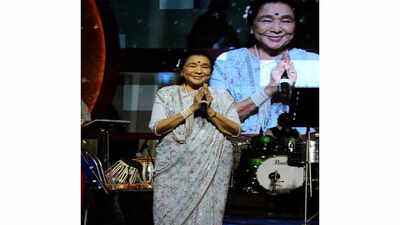
Asha Bonsle is dead. In the constant churning of outrage news factories on social media, when this news broke Sunday, our collective childhood went into a permanent void. This void we all went to, after the news broke, was musical. We could all hear ‘Do lafzon ki hi dil ki kahaani’, Dum Maaro Dum’ or ‘In Aankhon ki masti mein’ or ‘Aaiye Meherbaan’ loudly and clearly. Whatever our age, wherever in the world we were. Such was the power of the last legend of our childhood playback singing icons. Kishore da (Kishore Kumar) left us too early. Burman da (RD Burman) followed within the next decade. Bappi da (Lahiri) and Lata Tai (Mangeshkar) left us in the last decade. Asha Bhosle was the only one holding fort, till Sunday.When our grandfathers went to watch a movie, she was blaring behind the screen. And when we watched Dhurandhar in the cinemas recently—which is still playing in cinemas now—the halls reverberated with ‘Monica o My Darling’, one of Asha Bhosle’s most famous songs brought to life on screens, in the 1960s, by the inimitable screen legend Helen. Asha Bhosle was 92. Out of her 92 years in this world, 83 were made of singing songs. Unforgettable melodies that live and breathe with us, and will continue to till we breathe our last. There are some artists we choose, and then there are some who quietly choose us. Asha Bhosle, fondly known as Asha Tai (elder sister in Marathi) belongs to a third category. She chose everyone. She chose every generation.
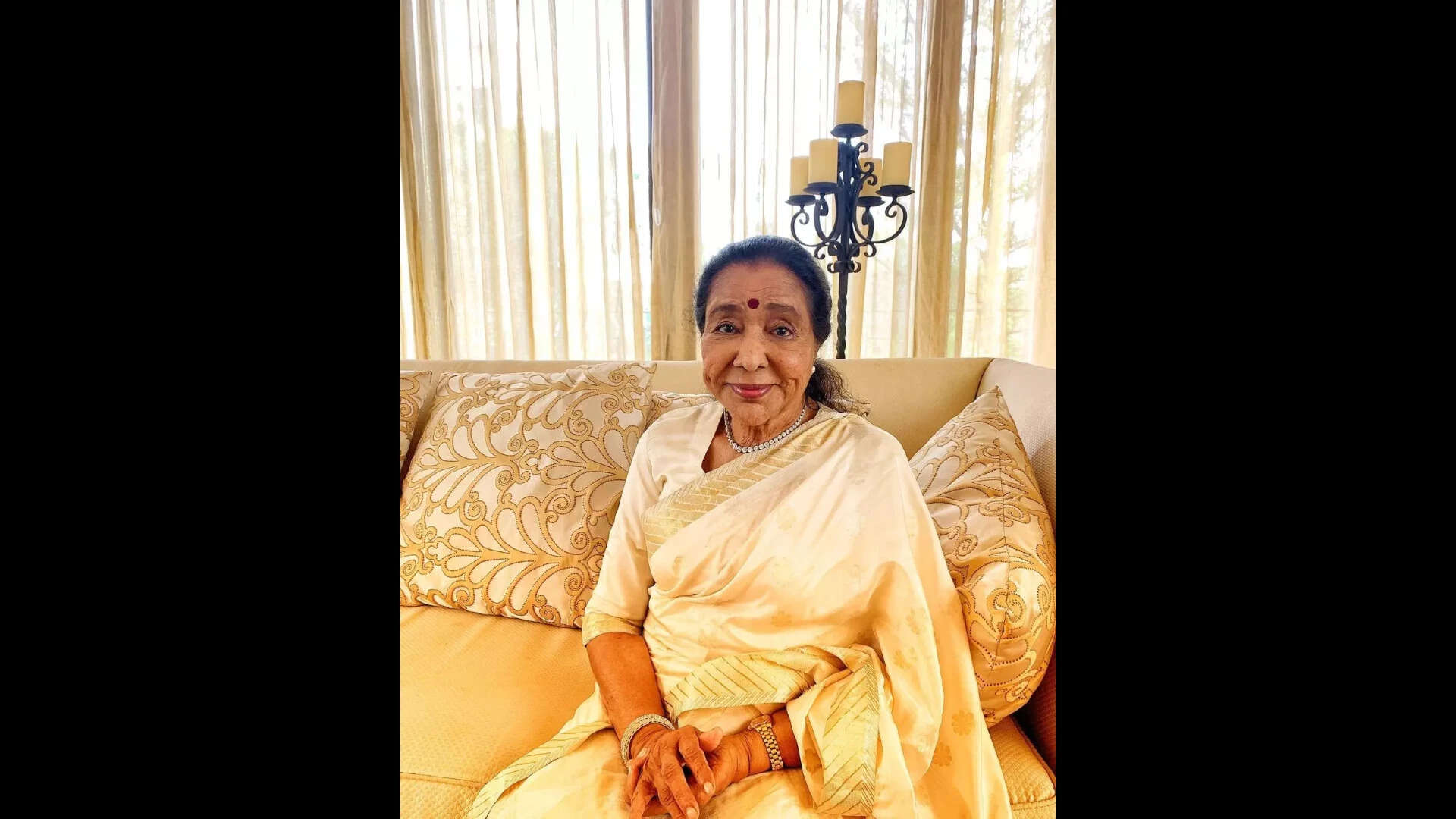
There are some artists we choose, and then there are some who quietly choose us. Asha Bhosle, fondly known as Asha Tai (elder sister in Marathi) belongs to a third category. She chose everyone. She chose every generation.
We don’t remember when Asha Tai first entered our lives. There was no dramatic moment of discovery, no conscious initiation. One day, we simply realised, she has always been there. In the background of family road trips, in the grainy warmth of Sunday radio, in wedding playlists, in late-night solitude. An invisible friend, humming across decades. Eighty of them. From vinyls to cassettes, from walkmans to ipods. From our grandparents’ generation to our parents’ and then ours.To speak of Asha Bhosle is to speak of a shared cultural inheritance. Not divided by age, not confined by genre, not limited by language. Somewhere between our parents’ nostalgia and our own accidental discoveries lie an “Asha Bhosle collection” that doesn’t sit on a shelf – it lives in all of us. Somewhere along the way, without announcement or spectacle, she became one of the most recorded voices in human history. Thousands of songs across 20 languages, genres, and moods. She moved effortlessly from the playful abandon of cabaret to the intricate discipline of classical forms, collecting not just awards but entire eras within her voice. The National Award, the Padma Vibhushan, the Dadasaheb Phalke Award – these feel almost incidental when placed next to the everyday intimacy of how we heard her – and still do. Her collaborations, especially with RD Burman (also her husband from 1980 till his death in 1992), didn’t just define a musical phase – they reshaped how Hindi film music could sound, feel, and breathe. And yet, even at her most experimental, there was never distance. Whether she was singing for a courtesan, a rebel, or a lover, she made each voice feel like it belonged to us. That is why her passing doesn’t feel like the loss of a singer. It feels like silence discovering us for the first time.Her instinct to stay relevant without ever sounding forced was perhaps most evident in the company she kept and the risks she embraced. She lent her voice to the delicate, introspective world of ghazals alongside maestros like Ghulam Ali and Jagjit Singh, most memorably in albums such as ‘Meraj-e-Ghazal’ and ‘Asha & Friends’, respectively, where her voice shed its cinematic flourish for something more intimate, almost conversational. And then, just when you thought you had placed her in a certain musical universe, she reappeared in the glossy remix boom of the 1990s, collaborating with Adnan Sami in pop videos that played on loop on television, reaching an entirely new generation raised on cable and countdown shows. That ability to move—from ghazals steeped in old-world charm to the pulsating, visual-forward music culture of the remix era—was not reinvention for survival. It was proof of a rare artistic elasticity. Asha Bhosle didn’t chase trends; she absorbed them, reshaped them, and, in doing so, quietly remained ahead of time.
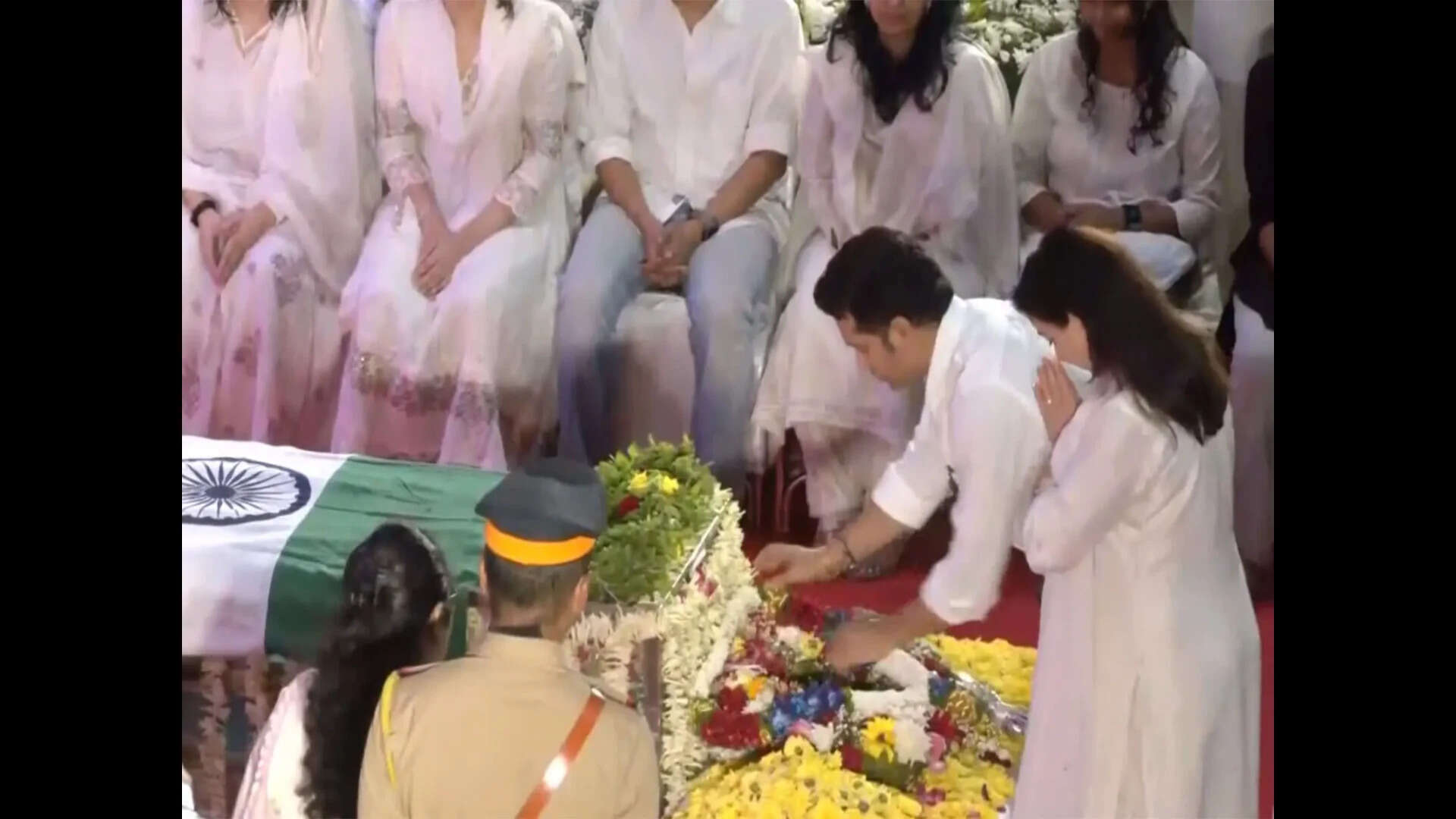
Sachin Tendulkar couldn’t hold back his tears while paying his final tribute to Asha Bhosle, in Mumbai, today
The soundtrack that raised us
For many, the first brush with her voice came not through deliberate listening, but through osmosis. Perhaps it was ‘Aaja Aaja Main Hoon Pyar Tera’ from Teesri Manzil, bursting through old speakers with a rebellious energy that felt far ahead of its time. Or ‘Yeh Jawani Hai Deewani’ from Jawani Diwani, capturing a youthful abandon that never seems to age. In Umrao Jaan, her voice becomes something else entirely. ‘Dil Cheez Kya Hai’ is not just sung; it is inhabited. We feel the old-world charm in every note, restraint in every flourish, as if she understood the weight of silence as much as sound.How does one singer traverse such emotional landscapes without ever sounding out of place? She didn’t just sing songs. She adapted herself to them, and then somewhere down the line we all dissolved into them.
The RD Burman alchemy
Any conversation about her inevitably leads to RD Burman – the life partner and collaborator, who didn’t just compose for her, but unlocked something feral, playful, and daring in her voice. Together, they created a universe. From the electrifying beats of ‘Piya Tu Ab To Aaja’ in Caravan to the breezy romance of ‘Chura Liya Hai Tumne’ in Yaadon Ki Baaraat, their partnership redefined what Hindi film music could sound like. There was jazz, there was cabaret, there was folk, there was something unmistakably modern, often all within the same song.And yet, what makes their collaboration endure isn’t just innovation. It’s intimacy. There is a sense that these songs were conversations, between composer and singer, between rhythm and voice, between mischief and melancholy, and between the singer and her listeners. Listen closely, and we all hear it: a laugh tucked into a lyric, a sigh stretched across a note. These are not just performances. They embody the playful yet chameleon-like voice of the singer. She sang for Madhubala. She sang for Mumtaz. She sang for Asha Parekh. Urmila Matoondkar, Kajol. She sang for Shamita Shetty. From ‘Aaiyen Meherbaan’ to ‘Sharara Sharara’, how many lives did Asha Tai live?
The many lives of Asha Tai
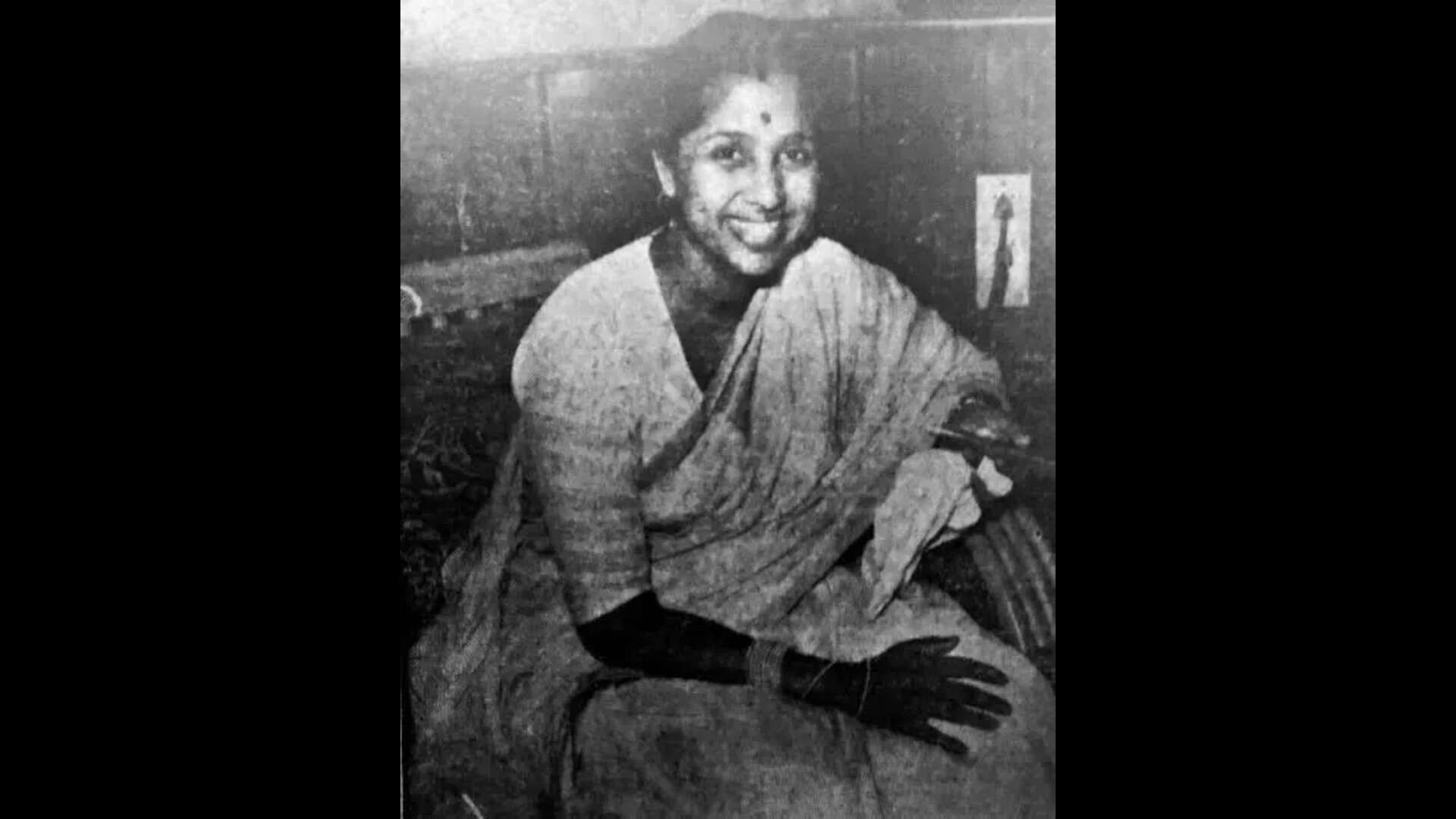
When our grandfathers went to watch a movie, she was blaring behind the screen. And when we watched Dhurandhar in the cinemas recently—which is still playing in cinemas now—the halls reverberated with “Monica o My Darling”, one of Asha Bhosle’s most famous songs brought to life on screens, in the 1960s, by the inimitable screen legend Helen. Asha Bhosle was 92. Out of her 92 years in this world, 83 were made of singing songs.
In The Great Gambler, she leans into glamour and intrigue. In Rangeela, she reinvents herself yet again, sounding as fresh and contemporary as singers half her age. ‘Tanha Tanha’ and ‘Rangeela Re’ don’t feel like a veteran holding her ground. They feel like an artist discovering new ground. And then there are the quieter corners of her repertoire – the ghazals, the semi-classical pieces, the regional songs that rarely make it to mainstream playlists but live fiercely in personal archives.This is perhaps why it’s so difficult—almost futile—to name a single “favourite” Asha Bhosle song. Because our relationship with her voice isn’t built on one defining track. It is built on accumulation. On fragments. On moods. A song for heartbreak. A song for mischief. A song for longing. A song we didn’t even know we remembered until it played somewhere and stopped us mid-step.
The invisible friend
There is something deeply personal about how we carry Asha Bhosle with us. She is there in the kitchen, in the background of conversations that don’t require full attention. She is there in auto-rickshaw rides, crackling through FM radio. She is there in playlists curated by algorithms that don’t quite understand her, but try anyway. Unlike artists who demand to be seen and celebrated in grand gestures, Asha Tai slips in quietly. She doesn’t insist on centrestage in our lives. She is content being woven into it.And perhaps that is why she feels like an invisible friend. Not the kind we consciously turn to, but the kind who shows up exactly when needed. When a melody matches your mood before you’ve even named it. When a lyric echoes something you couldn’t articulate.What is also remarkable about Asha Bhosle’s reach is not just its breadth, but its continuity. For one generation, she is the daring voice of the 60s and 70s, breaking norms with cabaret numbers and Western influences. For another, she is the refined elegance of “Umrao Jaan.” For yet another, she is the surprising presence in 90s soundtracks, refusing to be left behind by changing tastes. There hasn’t been any need to “introduce” Asha Bhosle to anyone. She arrives pre-installed, like memory itself. And yet, each generation feels like they’ve discovered her anew.
A collection that isn’t curated
We often speak of music collections as deliberate acts, playlists carefully assembled, vinyl records lovingly stored. But an Asha Bhosle collection doesn’t work that way. It is accidental. It is the song your father hummed absentmindedly. It is the tune your mother played on repeat during a long drive. It is the track we stumbled upon late at night and couldn’t stop replaying. Over time, these fragments gather. Not in chronological order, not by genre, not even by preference, but by association.And one day, we suddenly realised: we have a collection. Possibly not one we curated, but one that curated all of us. Ask someone to name their favourite Asha Bhosle song, and you’ll often be met with hesitation. Not because there aren’t enough choices, but because there are too many selves tied to too many songs. Choosing one would mean letting go of the others. Of the memories attached to them. Of the versions of ourselves that existed alongside them. We want to carry them all.In an era obsessed with visibility, branding, and constant reinvention, Asha Bhosle’s enduring presence feels almost radical. She didn’t need to be an “era.” She became all of them.
Asha Bhosle: A journey
A look through her extraordinary life only deepens the sense of what we have lost. Asha Bhosle, born on September 8, 1933, and widely regarded as one of the most recorded artists in music history, built a career that spanned over seven decades and more than 12,000 songs across languages and genres. Born in Sangli, Maharashtra, and the younger sister of Lata Mangeshkar, she began singing at just 10 after her father’s death to support her family. Her early years were marked by struggle—an unhappy marriage at 16, raising three children, and a film industry that initially offered her songs others turned down. Yet, through sheer persistence, she carved her own space, breaking through in the 1950s with films like Parineeta and Naya Daur.Her collaborations with OP Nayyar and later RD Burman—whom she married in 1980—redefined her as the voice of cabaret, romance, and westernised sound, before she seamlessly transitioned into ghazals and global projects, even earning a Grammy nomination in 1997 for ‘Legacy’. A recipient of the National Award, the Dadasaheb Phalke Award, and the Padma Vibhushan, she continued to evolve well into her later years, even making her acting debut at 79. Behind the staggering achievements was also a life marked by personal loss, including the death of two of her children. And yet, through it all, she remained defined by an unmatched resilience—one that turned every setback into a song, and every phase of her life into music that outlived it.

Leave a Reply