
4 min readNew DelhiApr 9, 2026 06:00 AM IST
Rains bring much-needed respite from the sweltering, scorching heat, but off-season showers can take a toll on one’s digestive system. Acidity, indigestion, vomiting and gastritis are common problems that rear their ugly head during this period. To learn why it happens, and keep such gut issues in check, indianexpress.com reached out to health experts and got some clarity.
Dr Rakesh Kochhar, former head of the department of gastroenterology at PGIMER, Chandigarh, explained that many gastrointestinal diseases in the monsoon are primarily due to contaminated water and food. “The humidity, along with high heat, creates perfect conditions for bacteria, viruses and fungi to grow and multiply in both food and water. Sometimes, flooding and overflowing drains mean that the dirty water leaches into fresh water supplies, contaminating them,” he told indianexpress.com.
DISCLAIMER: This article is based on information from the public domain and/or the experts we spoke to. Always consult your health practitioner before starting any routine.

Contaminated food and water can lead to food poisoning, an infection or irritation of your digestive tract caused by bacteria. It acts after 12-48 hours, causing vomiting and diarrhoea within hours of ingestion. “If a person has a high fever or the fever lasts beyond 48 hours, there could be a need for antibiotics to be taken under a doctor’s supervision. Diseases like cholera or typhoid need to be confirmed by tests,” said Dr Kochhar.
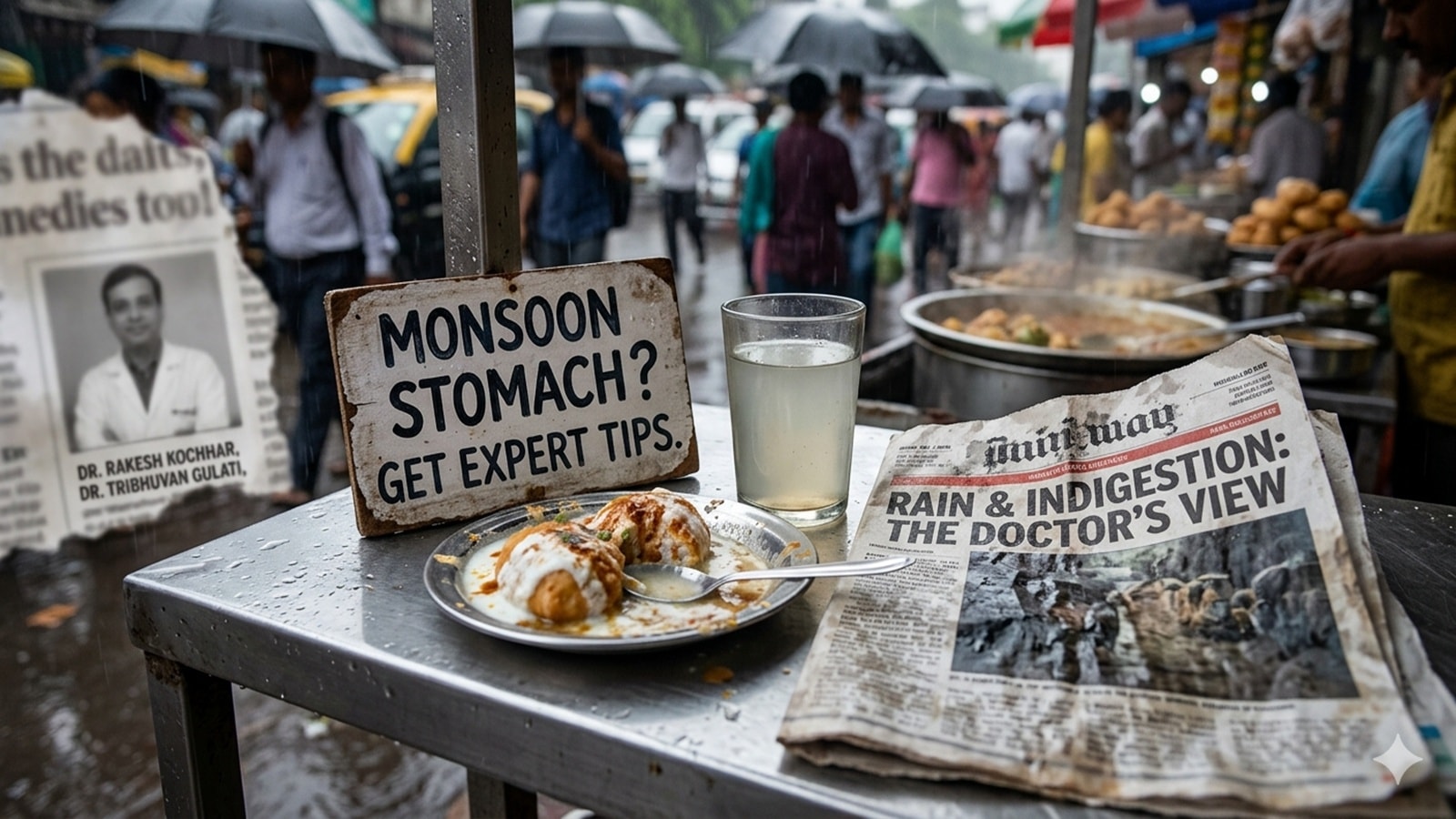
Dr Tribhuvan Gulati, an expert on diabetes, thyroid, and metabolic disorders, added that consuming heavy foods slows digestion and can lead to acidity and indigestion during this time. “If you are prone to having chaat or juice from the streets, beware of stomach infection as the water used to prepare these things may be infected with bacteria,” he said.
 How rain impacts gut health. (Freepik)
How can you keep stomach issues at bay?
Dr Gulati shared some tips and tricks to avoid falling ill during this period:
Include probiotics in the diet: Opt for yoghurt, buttermilk, cheese, kefir, kombucha, and soybeans. Probiotics are packed with beneficial bacteria that support the digestive system and boost immunity.
Story continues below this ad
Hydration is key: Water can eliminate toxins from the body and keep the digestive system healthy.
Avoid raw vegetables: Have steamed or boiled veggies instead, as they are loaded with bacteria and viruses that can make you susceptible to stomach problems.
Drink boiled water: Avoid drinking tap water. Try to carry a water bottle with you whenever you venture out for work during the monsoon.
Stay away from seafood: During the rainy season, there are high chances of water being contaminated, and the fish you may eat can give you diarrhoea.
Story continues below this ad
Say no to green vegetables: It is a no-brainer that leafy green vegetables contain all the vital nutrients. But they are not recommended during the rainy season, as the humidity and dampness can invite germs to grow on them.
“Typhoid and other water-borne diseases are also very common in this season. Hence, only have properly washed and freshly home-cooked food in this season,” Dr Gulati further mentioned.
DISCLAIMER: This article is based on information from the public domain and/or the experts we spoke to. Always consult your health practitioner before starting any routine.

Leave a Reply