

Diabetologist Dr Siddhartha Mukherjee recently shared a concerning case of a 45-year-old MNC employee who was suffering from acid reflux for over three years. “He wakes up with a burning sensation in his upper chest and a sour taste in his mouth. He works for an MNC in a senior position. He underwent an endoscopy, which revealed his LES valve (Lower Esophageal Sphincter) was weak and loose, allowing acid and food to be thrown back up to his esophagus, causing a burning sensation and a lump-like feeling in his throat. He was put on antacids and proton pump inhibitors. When he came to me, he was bloated, had indigestion and was constipated. He was physically active, 3 days of yoga, 3 days of brisk walking for 30 minutes/day and went swimming on Sunday,” the expert shared in a Facebook post.
DISCLAIMER: This article is based on information from the public domain and/or the experts we spoke to. Always consult your health practitioner before starting any routine.
Adding that he was eating home food most of the time, and slept six hours a night, Dr Mukherjee continued: “Stress levels were high, and he seemed to be anxious, constantly looking at his phone. As I dived deeper into his lifestyle, I found that his breakfast would be over in 4 minutes, lunch was always a working lunch, done in 6 minutes, and dinner would be less than 10 minutes. He was a fast eater, ate at regular intervals, and many times ate his breakfast sandwich while driving to work. The medications were not working anymore, in spite of increasing his dosage to a higher one (the amount was increased, and alginic acid-based antacids were given), but his bloating increased. He was ready to do anything to feel better.”

Dr Mukherjee then asked him to “sleep on an incline pillow at night to reduce the discomfort”. “I asked him to fix his meal timings and make sure they were the same every day, all meals. For one week, he had to chew his food, put away the time, take 15 minutes to finish his meal at home and not in the car, and no working lunches, just eat it alone. I moved his dinner from 10 pm to 7 pm, and asked him not to go for the increased dosage of antacids,” Dr Mukherjee said.
The results? “In exactly 9 days, all his symptoms disappeared. I stopped his antacids and even the PPI. His bowel movement was perfect, and his bloating had reduced to 90 per cent. No diet plans, just lifestyle tweaks. When we eat too fast, at different times, and swallow food without chewing, we damage the LES (Lower Esophageal Sphincter), leading to acid reflux. Simple lifestyle changes can repair parts of the human body and alleviate symptoms. Lifestyle is a powerful medicine. Be educated, not influenced.
Not that there are pills for every ill,” said Dr Mukherjee.
Can the results show up so quickly?
Dr Manish Dodmani, consultant gastroenterology, KIMS Hospitals, Thane, concurred that eating too quickly can significantly affect digestion and may lead to symptoms like acidity, bloating, and reflux. “Digestion starts in the mouth, where chewing breaks food into smaller pieces and mixes it with saliva. When meals are finished in just a few minutes, food often reaches the stomach not properly chewed, which can put extra strain on the digestive system,” Dr Dodmani told indianexpress.com.
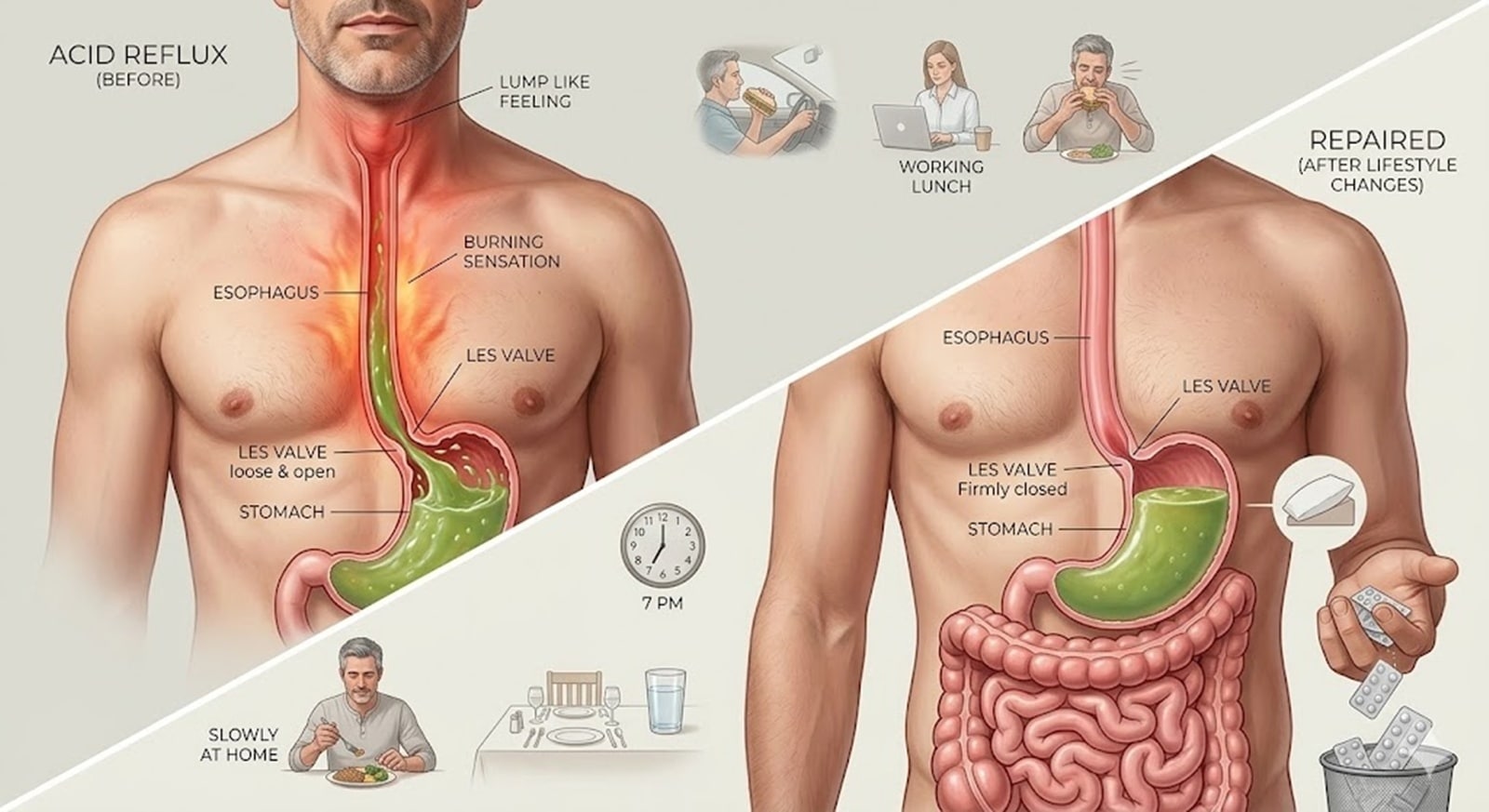 Do you eat too fast? (Photo: AI Generated)
In people with acid reflux, the lower esophageal sphincter (LES), which separates the esophagus from the stomach, may already be weaker or more relaxed than usual. “When a person eats very quickly or consumes large amounts of food in a short time, the stomach can become too full. This added pressure can push contents upward, causing acid reflux symptoms like burning in the chest, a sour taste in the mouth, or discomfort in the throat,” explained Dr Dodmani.
Story continues below this ad
According to him, eating rapidly can also cause the swallowing of excess air, which may lead to bloating and a feeling of fullness in the abdomen. “Over time, this habit can worsen symptoms in people who are already prone to acid reflux or indigestion. Taking time to eat slowly allows digestion to begin properly and helps the stomach process food more effectively.”
What helps?
Simple changes in behaviour can often make a big difference. “Slowing down during meals, chewing food thoroughly, and setting aside at least 15 to 20 minutes for a meal can help improve digestion. It’s also wise to avoid eating while working, driving, or using electronic devices, as distracted eating tends to lead to faster consumption,” said Dr Dodmani.
Maintaining regular meal times and finishing dinner a few hours before bed can further reduce reflux symptoms. “In many cases, adjusting these everyday habits can help manage acidity effectively, alongside medical treatment when needed.”
DISCLAIMER: This article is based on information from the public domain and/or the experts we spoke to. Always consult your health practitioner before starting any routine.

Leave a Reply