
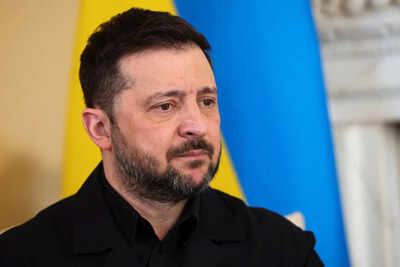
Ukrainian President Volodymyr Zelenskyy claimed that Russia captured satellite images of US air bases in the Gulf region, including Prince Sultan Air Base in Saudi Arabia, “multiple times” ahead of an Iranian attack.Also Read | Iranian strike on Prince Sultan Air Base in Saudi Arabia injures 12 US troops, 2 seriously woundedAccording to Zelenskyy, Russian satellites photographed the base on March 24 and 25, indicating that Tehran may have been preparing for the strike. The Ukrainian leader, visiting the Middle East amid the ongoing US-Israel and Iran conflict, announced 10-year defence agreements with Saudi Arabia and Qatar — both Gulf states — covering co-production and energy security.“I was briefed that US military facilities in the Middle East and the Gulf region were photographed by Russian satellites in the interests of Iran.
Israel Iran War
On March 24, they imaged the US-UK joint military facility on Diego Garcia in the Chagos Archipelago in the Indian Ocean. They also captured Kuwait International Airport and parts of the Greater Burgan oil field. On March 25, images were taken of the Prince Sultan Air Base in Saudi Arabia. The Shaybah oil and gas field in Saudi Arabia, Incirlik Air Base in Turkiye, and Al Udeid Air Base in Qatar were all photographed on March 26,” Zelenskyy posted on X. “There are no Ukrainian facilities on this list. But who is helping whom when sanctions are lifted from an aggressor that earns daily revenue and provides intelligence for strikes against American, Middle Eastern, UK, and US-UK bases? When surveillance is conducted over facilities in Ukraine, we always understand they must be protected, as plans are underway to destroy them — energy and water infrastructure, military facilities, and more. Everyone knows repeated reconnaissance signals preparations for strikes. How can sanctions be eased if this is what the Russians are doing?” he added.
Zelenskyy highlighted Kyiv’s strengths in drone warfare and defence systems, pointing to a comprehensive package that includes drones, electronic warfare, and integrated defence capabilities.Also Read | ‘We know who’s talking to who’: US defence secy Pete Hegseth on reports of Russia aiding Iran “We want to prepare drone deals for partners supporting us and be ready for any challenges. A drone deal includes drones, electronic warfare systems, and, most importantly, a complete defence framework. We may not have enough ‘Patriots,’ but we do have a system capable of integrating multiple defensive layers. This is Ukraine’s most valuable asset today — the experience of our military. If Ukraine is to be treated at a high level, it’s not just about drones; it’s about our specialists and armed forces. The combination of experienced personnel with both private and public sectors in a unified system is what we aim to offer as a long-term export model — ensuring benefits for all. We have already begun such steps with three countries,” he posted.Also Read | Pentagon weighs redirecting Ukraine-bound weapons to Middle East as Iran war strains US munitions: Report He also underscored Ukraine’s emergence as a defence tech hub, drawing on its experience countering Iranian drone systems.“As a result of this war, and because our enemy extensively uses Iranian ‘Shahed’ drone technology, we have developed our own systems. Today, we are sharing these developments with countries in the Middle East. Ukraine is highly regarded for this. We have reshaped the geopolitical landscape. It is clear that Russia is sharing intelligence with Iran, and equally clear that, in terms of expertise, no one can assist the way Ukraine can,” the Ukrainian president stated.Also Read | ‘Protection against ‘Shaheds’’: US asked Ukraine for help against Iranian drones in Middle East, says ZelenskyyKyiv has developed its own drone technology and is now sharing it with partners in the Middle East, alongside offering expertise in weapons production, energy cooperation, and resource exchange. Iran has targeted Gulf countries hosting America’s military bases in retaliation for the joint US-Israel strikes across the Islamic Republic that triggered the ongoing conflict on February 28. Regional governments are reportedly weighing whether to join the war while remaining sceptical about the prospects of a deal between President Donald Trump and Tehran, leaving them at the mercy of an “angry” Iranian regime.

Leave a Reply