
Fasting for extended periods has gained popularity for weight loss and metabolic health. But what actually happens inside the body when someone stops eating for two days and survives only on water?
According to Dr Vijay Negalur, HOD – Diabetology at KIMS Hospitals, Thane, the body undergoes several metabolic changes as it tries to maintain energy levels without food. “When a person consumes only water for about 48 hours, the body begins to shift the way it produces energy,” explains Dr Negalur.
DISCLAIMER: This article is based on information from the public domain and/or the experts we spoke to. Always consult your health practitioner before starting any routine.*

Here’s what happens during this period.
The body switches its energy source
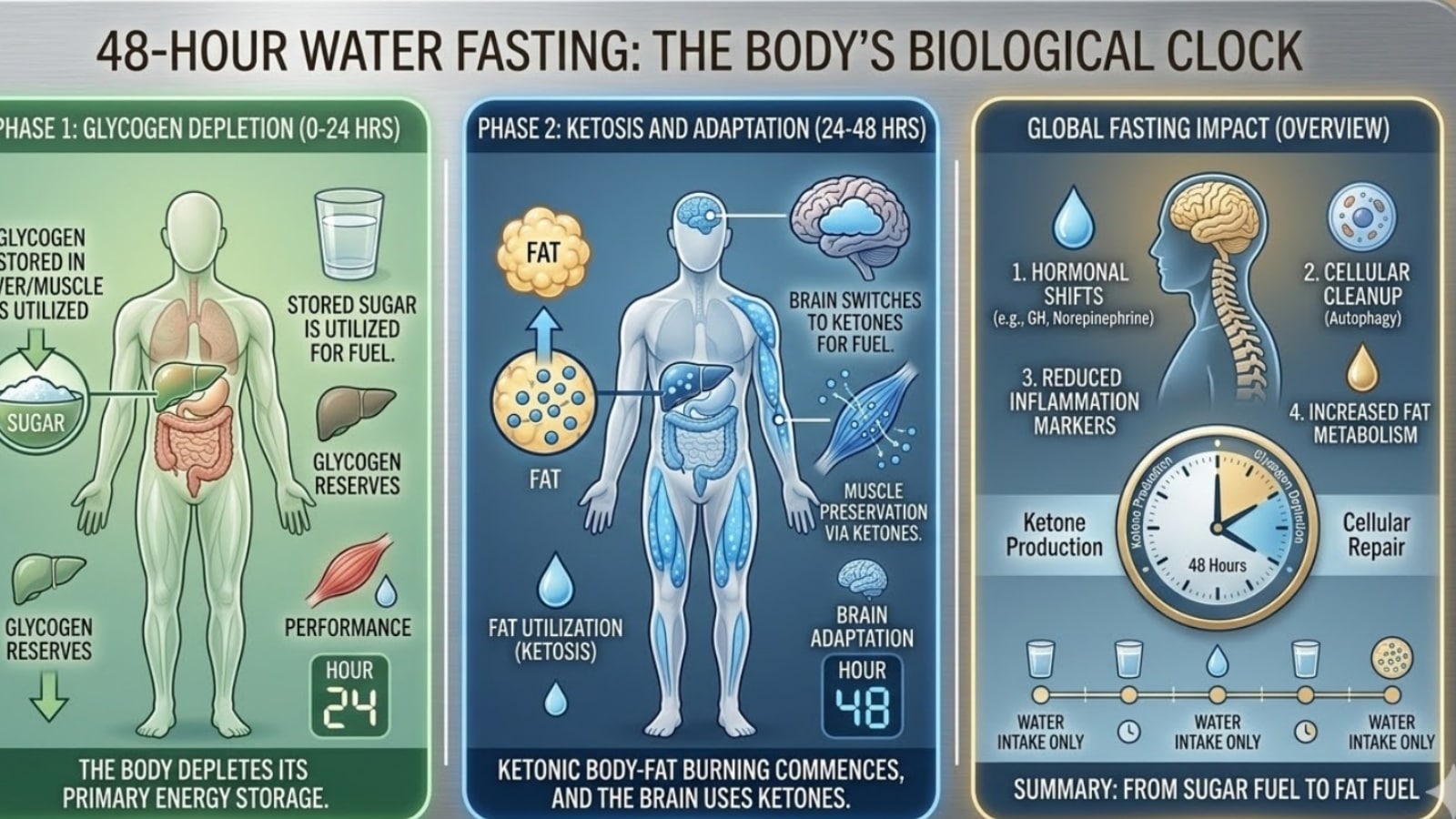
In the early hours of fasting, the body still relies on stored carbohydrates. “During the first 12–24 hours, the body mainly uses stored glucose from the liver,” says Dr Negalur.
However, once these glucose reserves are depleted, the body looks for alternative energy sources. “As these reserves get depleted, the body gradually turns to stored fat for fuel. During this phase, insulin levels fall, and the body may begin producing ketones, which act as an alternative energy source,” he adds. This metabolic shift allows the body to continue functioning even without food.
Common symptoms people may experience
While the body adapts to fasting, many people notice certain physical and mental changes. “Some individuals may experience tiredness, irritability, headaches, or trouble concentrating as the body adjusts to the lack of food,” says Dr Negalur.
Other symptoms may include:
Story continues below this ad
- Fatigue or weakness
- Dizziness
- Mood changes
- Difficulty focusing
These effects often occur because the body is adjusting to lower blood sugar levels and reduced calorie intake.
 How does a water diet help people survive? (Photo: AI)
Is a 48-hour fast safe?
According to Dr Negalur, a 48-hour fast may be manageable for some healthy adults, but it should not be considered universally safe.
“A short fast like this may be manageable for some healthy individuals, but it is not suitable for everyone,” he explains. The body’s response to fasting can differ depending on several factors such as overall health, hydration levels, and daily activity.
“Some individuals may experience dizziness, weakness, low blood sugar, or dehydration during a prolonged fast,” he adds.
Story continues below this ad
Potential benefits and drawbacks
Some people adopt fasting as part of weight management strategies. “During a fast, the body may rely more on stored fat for energy,” says Dr Negalur.
However, the drawbacks can also be significant. “Going without food for such a long period can lead to fatigue, headaches, mood changes, and difficulty carrying out regular daily tasks,” he explains. This is why fasting approaches should be carefully considered rather than followed as a trend.
Who should avoid a 48-hour water fast?
Dr Negalur stresses that certain individuals should not attempt prolonged fasting because it can lead to serious health complications.
“Pregnant or breastfeeding women, people with diabetes, individuals taking medications that influence blood sugar, those with a history of eating disorders, and people living with chronic health conditions should avoid extended fasting,” he says. For these groups, going without food for long hours can disrupt blood sugar balance and create potentially dangerous health risks.
Story continues below this ad
DISCLAIMER: This article is based on information from the public domain and/or the experts we spoke to. Always consult your health practitioner before starting any routine.*

Leave a Reply