

Leg swelling is a common complaint that many people brush off as a temporary issue, a result of standing too long, travelling for hours, or simply feeling tired at the end of the day. In many cases, the swelling may be harmless and resolve on its own. However, persistent or unexplained swelling in the legs can sometimes signal something more serious happening inside the body.
But what are the most common reasons behind swollen legs, and how can people tell the difference between harmless swelling and something that needs medical attention?
DISCLAIMER: This article is based on information from the public domain and/or the experts we spoke to. Always consult your health practitioner before starting any routine.
Dr Palleti Siva Karthik Reddy, MBBS, MD general medicine, FAIG, consultant physician at Elite Care Clinic, tells indianexpress.com, “Leg swelling, medically known as oedema, can occur for a variety of reasons and in many cases it is linked to lifestyle or temporary factors. Prolonged standing or sitting, long travel, high salt intake, pregnancy, and certain medications can lead to mild swelling that usually improves with rest, leg elevation, or movement. In such cases, the swelling is typically symmetrical, mild, and resolves within a short period.”
However, he notes, swelling should not be dismissed if it is persistent, progressively worsening, or accompanied by other symptoms. “If one leg is significantly more swollen than the other, or if the swelling is associated with pain, redness, warmth, shortness of breath, or sudden weight gain, it may indicate an underlying medical issue. When swelling does not improve with simple measures or keeps recurring, it is advisable to seek medical evaluation to rule out more serious causes,” states Dr Reddy.
Persistent leg swelling and why it is important not to ignore it
According to Dr Reddy, persistent leg swelling can sometimes be a sign of an underlying health condition that requires medical attention. One important cause is deep vein thrombosis, he says, where a blood clot forms in the deep veins of the leg. This condition can become dangerous if the clot travels to the lungs. Heart failure can also lead to fluid accumulation in the legs because the heart is unable to pump blood effectively.
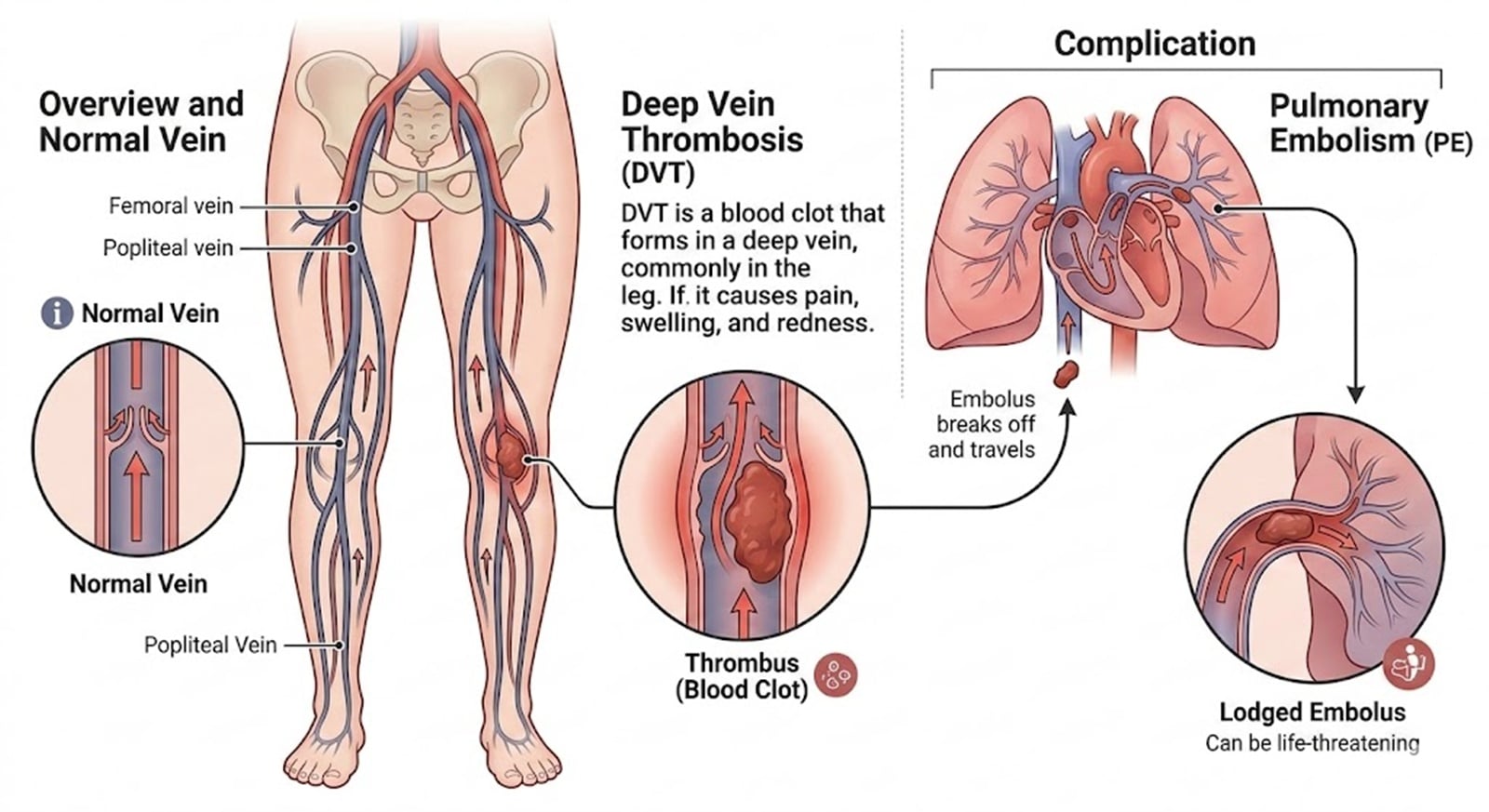 Deep vein thrombosis is when a blood clot forms in the deep veins of the leg. (Source: AI Generated)
Dr Reddy mentions, “Kidney disease and liver disorders may cause the body to retain excess fluid, which can manifest as swelling in the legs and feet. Chronic venous insufficiency, a condition in which the veins struggle to return blood efficiently to the heart, is another common cause, especially in older adults. Lymphedema, which occurs due to blockage in the lymphatic system, can also lead to persistent swelling.”
Story continues below this ad
Ignoring such symptoms may delay diagnosis and treatment, Dr Reddy states, allowing the underlying condition to worsen. Early medical evaluation helps identify the root cause and ensures that appropriate treatment can be started before complications develop.
Warning signs that should prompt immediate medical care
“Immediate medical attention should be sought if leg swelling appears suddenly, affects only one leg, or is accompanied by symptoms such as severe pain, redness, warmth, chest pain, or difficulty breathing,” explains Dr Reddy, adding that these signs could indicate conditions such as deep vein thrombosis or a cardiovascular issue that requires urgent care.
He reveals that other warning signs include rapid worsening of swelling, swelling accompanied by fever, or swelling associated with unexplained fatigue, reduced urine output, or abdominal discomfort. These symptoms may point toward kidney, liver, or heart-related problems.
“When evaluating leg swelling, doctors typically begin with a detailed medical history and physical examination. Depending on the suspected cause, investigations may include blood tests to assess kidney, liver, and heart function, and ultrasound scans to evaluate the veins and rule out blood clots. Identifying the cause early allows doctors to tailor treatment and prevent complications,” concludes Dr Reddy.
Story continues below this ad
DISCLAIMER: This article is based on information from the public domain and/or the experts we spoke to. Always consult your health practitioner before starting any routine.

Leave a Reply