
.
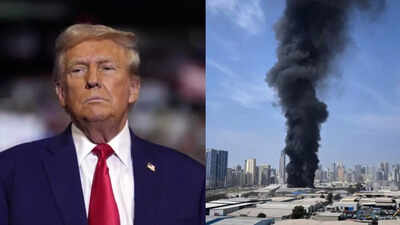
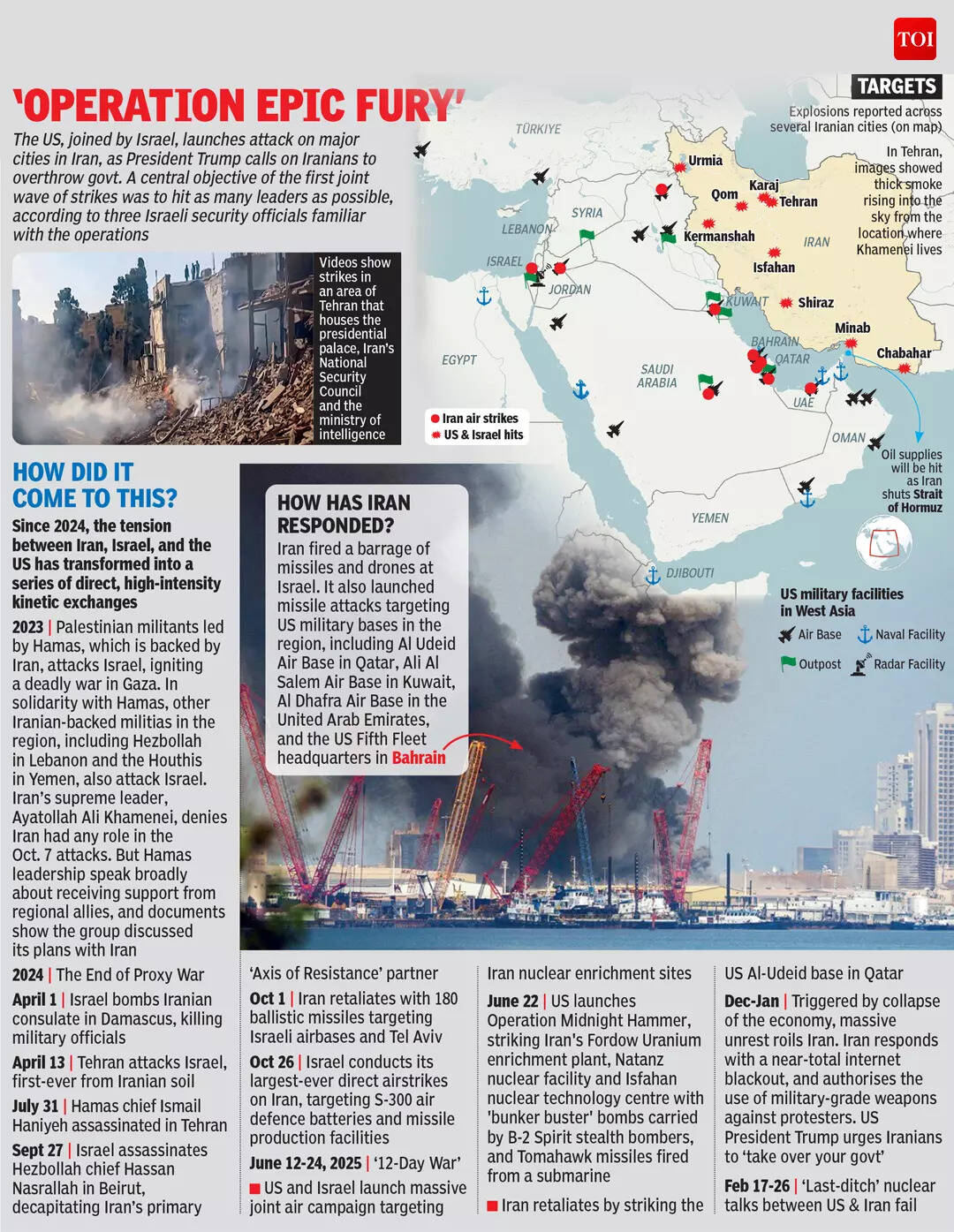
US President Donald Trump on Tuesday boasted of America’s military capability, claiming an “unlimited supply of weapons” and saying the “war can be fought forever” amid escalating tensions with Iran. The remarks came after a joint US-Israeli strike killed Iran’s Supreme Leader Ayatollah Ali Khamenei.The situation in the Middle East continues to evolve, as Iran has launched retaliatory strikes following the death of its long-serving Supreme Leader Khamenei, an operation reportedly planned by Trump.
Most recently, the Khamenei-less and angered Tehran regime attacked the US embassy in Iran, while the US military said it had destroyed Iran’s “command and control” center in Tehran.
Israel attacks Iran
Meanwhile, Israel and Hezbollah continue exchanging missile strikes, targeting each other’s positions.US-based Human Rights Activists News Agency (HRANA) has reported that more than 700 civilians have been killed in Iran since the war began, including 176 children and hundreds more were injured.
Top developments
Can fight wars ‘forever’: TrumpUS President Donald Trump said on Truth Social on Tuesday that America’s munitions stockpiles at the “medium and upper medium grade” have “never been higher or better.” He claimed the United States has a “virtually unlimited supply” of such weapons and added, “Wars can be fought ‘forever,’ and very successfully, using just these supplies.”Trump said that while the country has a good supply of high-end weapons, it is “not where we want to be,” adding that additional high-grade weaponry is stored in other countries.Trump said he rebuilt the US military during his first term and continues to strengthen it. “The United States is stocked, and ready to WIN, BIG!!!” he wrote.US embassy attacked in RiyadhSaudi Arabia’s defence ministry said two drones hit the US diplomatic mission in Riyadh early Tuesday. A ministry spokesperson said preliminary assessments confirmed the embassy had been targeted. “The attack resulted in a limited fire and minor material damage to the building,” the statement noted.AFP journalists and residents reported hearing loud explosions in the diplomatic quarter, with one resident saying the blast shook homes nearby.Saudi forces also later said they intercepted and destroyed eight drones near Riyadh and Al Kharj. Trump signals retaliationUS President Trump said the US would response to the attack on its embassy in Riyadh. “If action is not taken now, it may never be possible in the future. You’ll soon find out,” he said.Trump also indicated the conflict could last longer than initially expected, saying the United States has the capability to continue operations if required.Vice President JD Vance meanwhile told Fox News the strikes were aimed at ensuring Iran “could never have a nuclear weapon.” He also said the administration did not intend to enter a multi-year conflict like Iraq or Afghanistan.
.
Netanyahu defends actionIsraeli Prime Minister Benjamin Netanyahu said the attack on Iran was urgent. He claimed Iran had begun constructing underground bunkers that would soon make its nuclear and missile programmes immune from air strikes.“The reason that we had to act now is because after we hit their nuclear sites and their ballistic missile program… they started building new sites, underground bunkers that would make their ballistic missile program and their atomic bomb program immune within months,” Netanyahu claimed in an interview with Fox News.“If no action was taken now, no action could be taken in the future,” he added.“Iran for 47 years has been chanting death to America,” he Netanyahu.”They bombed your embassies.They tried to assassinate Donald Trump, the president of the United States, twice. They murdered their own people, they massacred so many. And they spread a worldwide web of terror,” he added.
Israeli targets Iran’s air defencesIsraeli fighter jets have struck Iran’s air defence systems and missile launch platforms, according to Israeli military spokesperson Avichay Adraee. In a post on X, Adraee said aircraft targeted personnel operating radar installations and missile launchers, and also hit sites linked to Iran’s ballistic missile platforms.Meanwhile, United States Central Command (CENTCOM) said it destroyed facilities belonging to the Islamic Revolutionary Guard Corps, including command centres, air defence systems, and missile and drone launch sites. CENTCOM did not provide evidence but said it would continue taking “decisive action” against what it called imminent threats from Iran.‘War of choice’: AraghchiIran’s Foreign Minister Abbas Araghchi accused the United States of entering a “war of choice” to support Israel, responding sharply to remarks by US Secretary of State Marco Rubio. In a post on X, Araghchi said, “Mr. Rubio admitted what we all knew: US has entered a war of choice on behalf of Israel. There was never any so-called Iranian ‘threat’.”He added that “shedding of both American and Iranian blood is thus on Israel Firsters,” and said the American public “deserve better and should take back their country.” Rubio had earlier told reporters that Washington was aware of Israel’s plans to strike Iran and joined the operation, arguing that Tehran was likely to retaliate against US assets in the region. Israel’s warning in Lebanon Israel asked residents in at least 59 locations across Lebanon to evacuate immediately, citing alleged activity by Hezbollah. In a post on X, Israeli military Arabic spokesperson urged civilians to move at least 1,000 metres away from their villages to open areas for their own safety. “Anyone present near Hezbollah elements, their facilities, and their combat means is endangering their life,” it wrote, adding, “Protect your safety and the safety of your loved ones and evacuate immediately.”
.
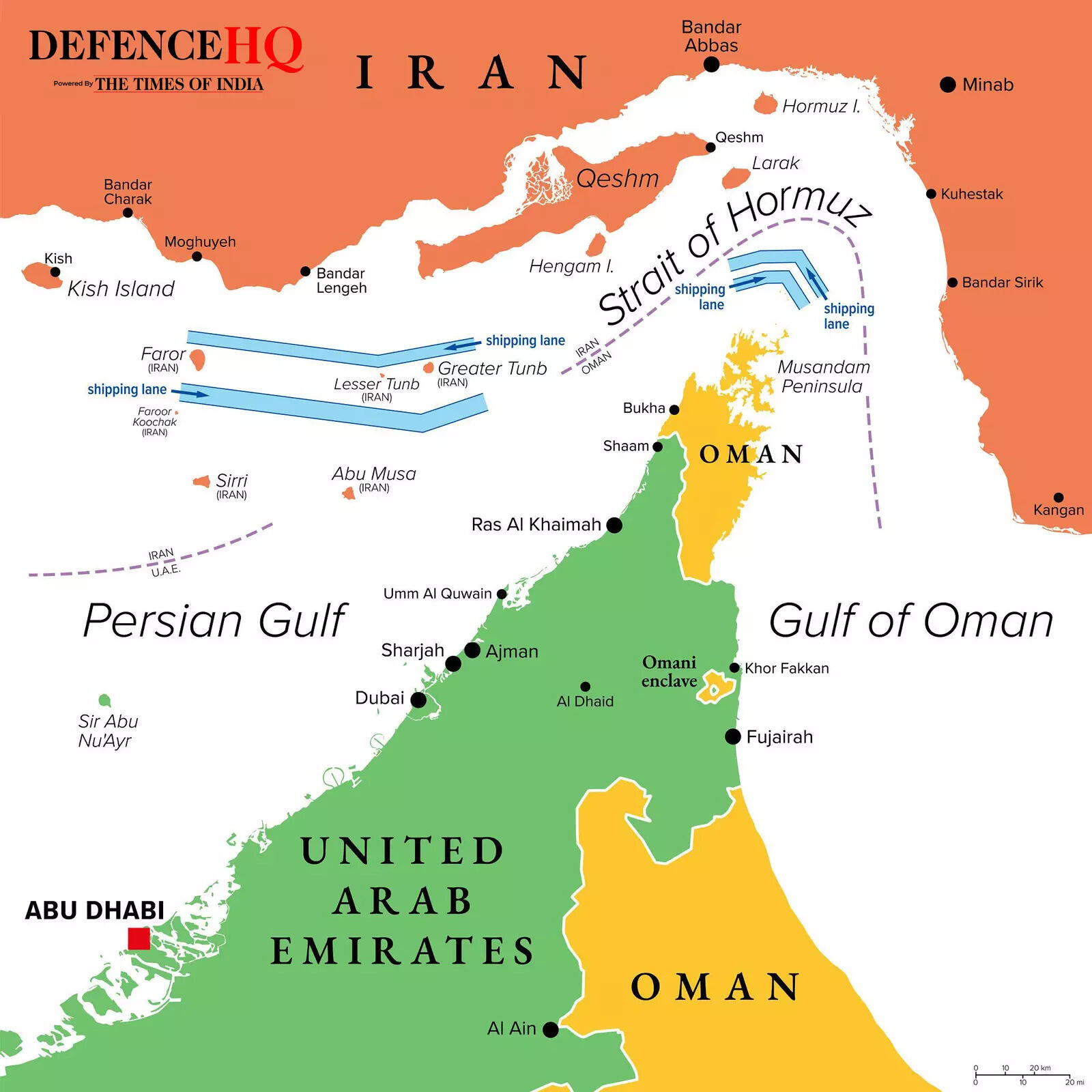
Oil prices climbOil prices rose for a third straight day amid fears of supply disruption through the Strait of Hormuz. Brent crude crossed $79 per barrel on Tuesday as markets reacted to the escalating conflict. The situation remains fluid, with both sides signalling further military action.“With no quick de-escalation in sight, the Strait of Hormuz effectively closed and Iran showing a willingness to target energy infrastructure in the region, upside risks remain and they grow the longer the conflict drags on,” Tony Sycamore, IG market analyst, was quoted by Reuters as saying.

Leave a Reply