
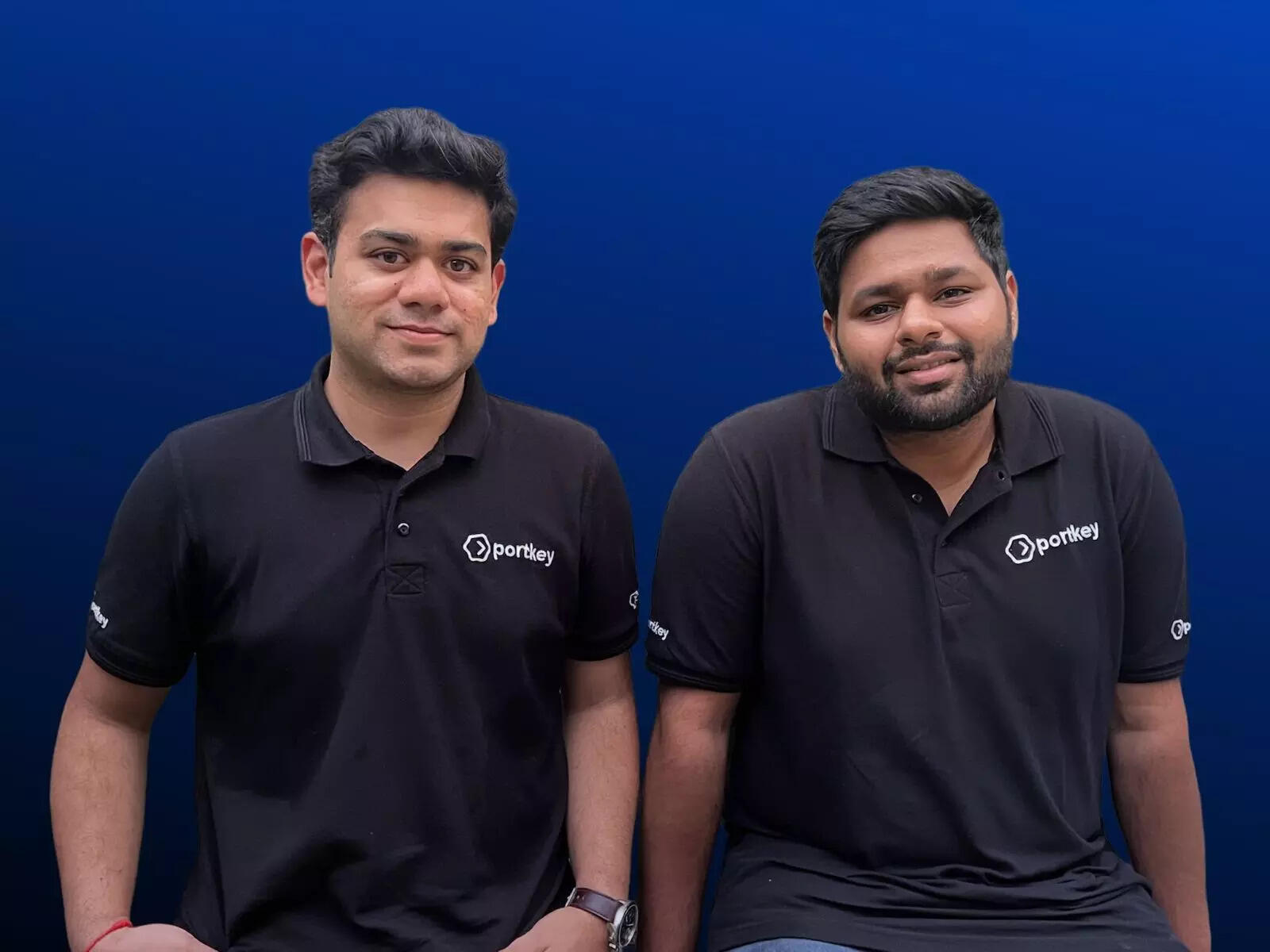
 (L-R) Rohit Agarwal and Ayush Garg, founders, Portkey.
Language model operations (LLMOps) startup Portkey has raised $15 million in a round led by Elevation Capital, with participation from Lightspeed.
The company plans to use the fresh capital to expand its AI control plane and scale its go-to-market operations as enterprises increasingly deploy large language models (LLMs) and AI agents in mission-critical workflows.
Founded by Rohit Agarwal, Portkey provides an in-path AI gateway that helps enterprises manage reliability, governance, observability, and cost control across AI applications. The platform sits directly in the flow of AI traffic, allowing companies to monitor performance, enforce policies, and track spending in real time as usage scales, the startup said in a statement.
Portkey said it is already processing over 500 billion LLM tokens across 125 million requests per day, managing more than $500,000 in daily AI spend for over 24,000 organisations globally. Its customers include AI-first companies such as Postman and Snorkel AI, among others.
“Over the last year, AI has moved from pilots to becoming load-bearing infrastructure,” Agarwal said. “Once AI becomes mission-critical, companies need a control plane to manage provider volatility, ensure traceability, and keep spending accountable as usage scales.”
Headquartered in San Francisco, Portkey said it currently manages more than $180 million in annualised LLM spend for enterprises across sectors such as finance, pharma, and technology.
Investors said the need for such infrastructure is becoming urgent as enterprises move toward autonomous, agent-driven AI systems. “As AI becomes embedded across products and workflows, companies need one in-path system to keep AI governable, reliable, and accountable,” said Krishna Mehra, partner at Elevation Capital.
Alongside the funding, Portkey announced that its core enterprise AI gateway will be available for free, aiming to lower barriers for companies looking to introduce governance and observability early in their AI deployment lifecycle.
It is also working on expanding support for agentic AI systems, including tools for permissions, identity, access boundaries, and budget controls.


Leave a Reply