
Trump’s “Lowlife” Attack and Massie’s Response
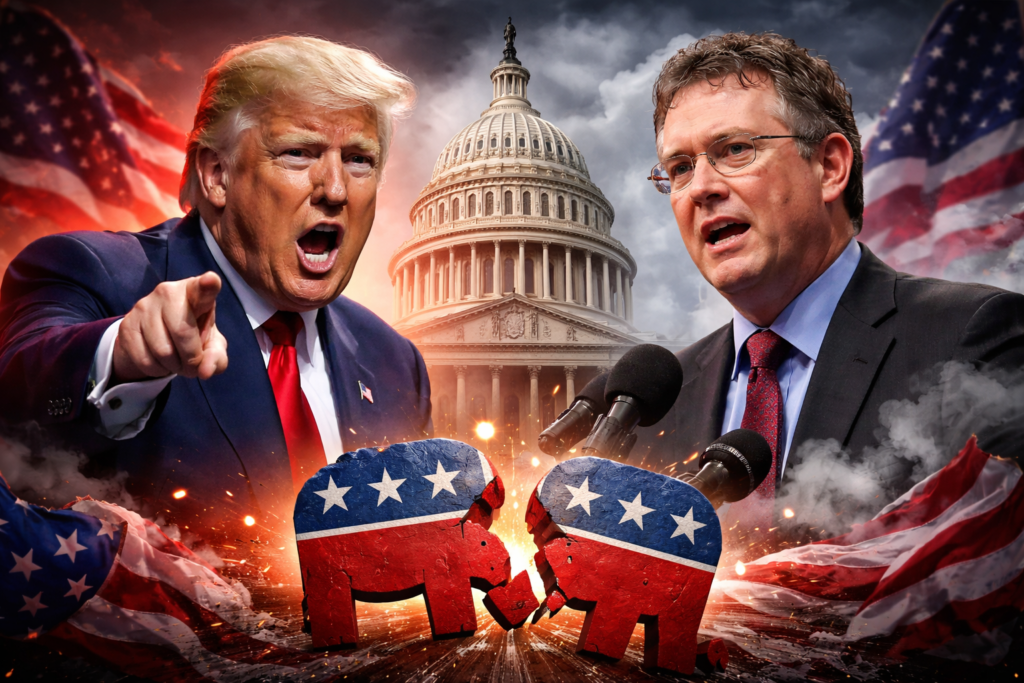
A significant fracture within the Republican Party emerged in late December 2025 after former President and current GOP leader Donald Trump publicly attacked Republican Congressman Thomas Massie of Kentucky on social media. Trump labeled Massie a “lowlife” Republican on Truth Social following Massie’s role in co-authoring the Epstein Files Transparency Act, a bipartisan bill requiring federal release of documents related to the Jeffrey Epstein case.
Rather than retreating, Massie turned the insult into a political opportunity, using Trump’s comment to boost donations for his 2026 re-election campaign. Within hours of his social media posts, supporters had contributed thousands of dollars to Massie’s campaign, highlighting how intra-party conflict is already shaping campaign strategies.
Trump’s criticism appears tied to deeper tensions: Massie has frequently broken with Trump’s agenda, including opposing certain budget and legislative initiatives and pushing for greater transparency on sensitive federal matters like the Epstein documents.
Meanwhile, Trump endorsed an alternative Republican candidate — retired Navy SEAL Ed Gallrein — to challenge Massie in the GOP primary, underscoring the active effort by the Trump camp to replace dissenting Republicans rather than unify the party.
Wider Republican Infighting
Other GOP Fractures and Departures
The discord with Massie is part of broader unease within the Republican caucus:
- Several prominent Republicans have publicly distanced themselves from Trump, including high-profile cases like Representative Marjorie Taylor Greene, whose resignation announcement stirred controversy and highlighted ongoing GOP fractures.
- Republican lawmakers are also retiring ahead of the 2026 midterms, signaling strategic withdrawals that may reflect concerns about electoral viability and Trump’s influence — although specific retirements are emerging gradually.
Trump’s Approval Ratings and Party Challenges
The political rift coincides with declining public support for Trump, which in turn has repercussions across the GOP:
- Aggregate polling from multiple organizations shows Trump’s approval rating in the low 40s nationally, with disapproval outpacing support in most surveys.
- Independent polls — including recent Gallup data — suggest Trump has dropped to historically low approval levels compared with peers, and in some cases is eclipsed by unelected officials, such as Federal Reserve Chair Jerome Powell.
- Analysts report erosion within Trump’s traditional base, including among younger voters and Hispanic Republicans, which could translate into headwinds for down-ballot GOP candidates if the 2026 midterms unfold with Trump as an influential but polarizing figure.
These trends add pressure on Republican lawmakers who must balance loyalty to Trump with electoral realities in competitive districts.

Policy Disagreements Amplify Tensions
Conflict within the GOP is not only personal but also policy-driven:
- Trump has pushed for eliminating the Senate filibuster, seeking to advance his legislative priorities without bipartisan support — a stance that has drawn concern from more traditional conservatives wary of procedural upheaval.
- Figures like Massie have opposed aspects of the Trump agenda over fiscal and constitutional concerns, intensifying rifts between Trump loyalists and ideological conservatives.
What It Means for 2026 and Beyond
The Massie episode reflects a broader struggle over the identity and future direction of the Republican Party. As Trump remains a dominant force — shaping endorsements, fundraising narratives, and campaign infrastructure — an increasing number of Republicans are forced to decide whether to align closely with him or assert independent identities, even at political risk.
With midterm elections just 11 months away, these internal conflicts may not only influence primary battles but could impact the GOP’s ability to retain control of Congress, particularly if disunity deters swing voters or depresses turnout.

Leave a Reply